| Planning factor | Value | Planning use |
|---|---|---|
| Independent kiteboarder lesson package | 10 hours over 4 days | A realistic training block to finish before asking for a seat on an open-water team |
| Ultimate experience lesson package | 15 hours over 5 days | A longer block for riders who want more supervised time before an expedition |
| Weather cancellations in lesson packages | Package rate applies despite wind and weather cancellations | Plan spare days so a calm spell does not end the trip |
| Learning water at Long Bay Beach | Knee to waist deep water over miles of sand | Shallow, forgiving water suits skill-building long before any offshore leg |
| Instructor credential | IKO instructor diplomas held by KiteAcademy coaches | Ask any coach or trainer which recognised qualification they hold |
| Live wind sensor reading | 9.5 knots wind, 11.3 knots gusts (single reading, no time given) | Always read the steady wind and the gust figure together |
Figures come from the Kite Provo lesson package page and the KiteAcademy team page; they describe training and conditions, not expedition requirements.
A kitesurfing team expedition works when the riders, a support vessel and a safety structure are organised before anyone launches a kite. Start with rider skill, then the boat, then the weather window.
This pillar maps the decisions in the order most teams meet them. For the step-by-step sequence, read how to plan a kitesurfing expedition, then return here to choose which subject to study next. If you are new to team travel on the water, read the sections in order. Experienced organisers can move straight to the wind and safety sections, because the limits set there shape every other choice in the plan.
How a team expedition is organised
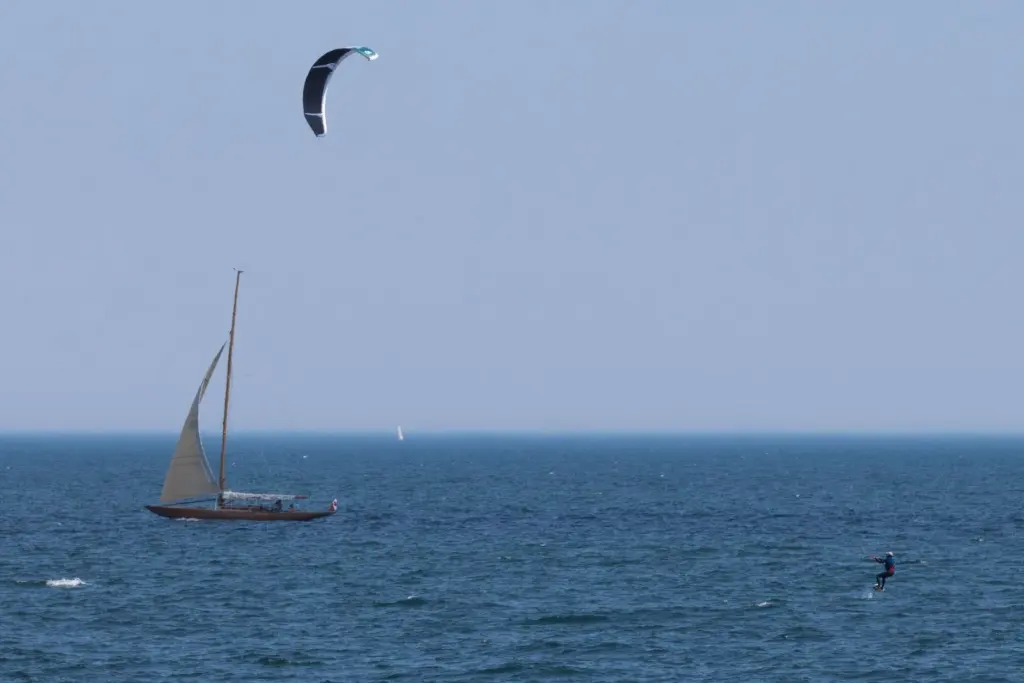
A boat-supported expedition combines a route, a vessel and a rotation of riders. The route sets how far the team travels between points of shelter. That distance decides the type of boat you need, the number of people required on board and how much margin the weather must provide before you commit. A short coastal route with frequent landing options asks far less of the organiser than a passage where the next landing is a long way off.
The second decision is who the trip is for. A team of mixed ability needs a plan that works for its least experienced rider, and the group should be honest about whether it wants a shared challenge or a set of individual rides supported by the same boat. Those two goals lead to different routes, rest schedules and expectations about pace.
Choosing a format
Formats differ mainly in how far from help the team will be and how the riding is shared. Match the format to the weakest rider in the group, not the strongest. The three common patterns below differ on those two points.
- Downwinder: the team rides with the wind and finishes somewhere other than where it started. It suits groups building route-planning habits, because the leg has a defined start, a defined finish and a clear reason to keep pace. The kitesurfing downwinder guide covers how these days are structured.
- Relay: riders take turns on the water while others rest on board, so the team keeps moving without one person carrying the whole distance. Rotation only works with clear handover rules, which should be written down before departure. The kitesurfing relay rider rotation topic deserves its own planning time.
- Open-water crossing: the team travels between landmasses with the support vessel as its base. This is the most demanding format. It leaves the least room for a forgotten item or a late decision, so treat a kitesurfing ocean crossing as a separate planning exercise rather than a longer version of a coastal day.
If the group is unsure, choose the shorter format first. A short format lets the team test the routine of signals, handovers and rest before the route puts more distance between riders and shore. Teams that skip that rehearsal tend to discover their gaps at the point where turning back is hardest.
Shore preparation before each leg
Every leg starts on land or on deck. Kites are laid out, lines are checked, the plan for the leg is said out loud and each rider knows who they follow and who follows them. Skipping this step is the most common way a well-planned expedition becomes a disorganised one, because small faults found on the water cost far more time than faults found on the beach.
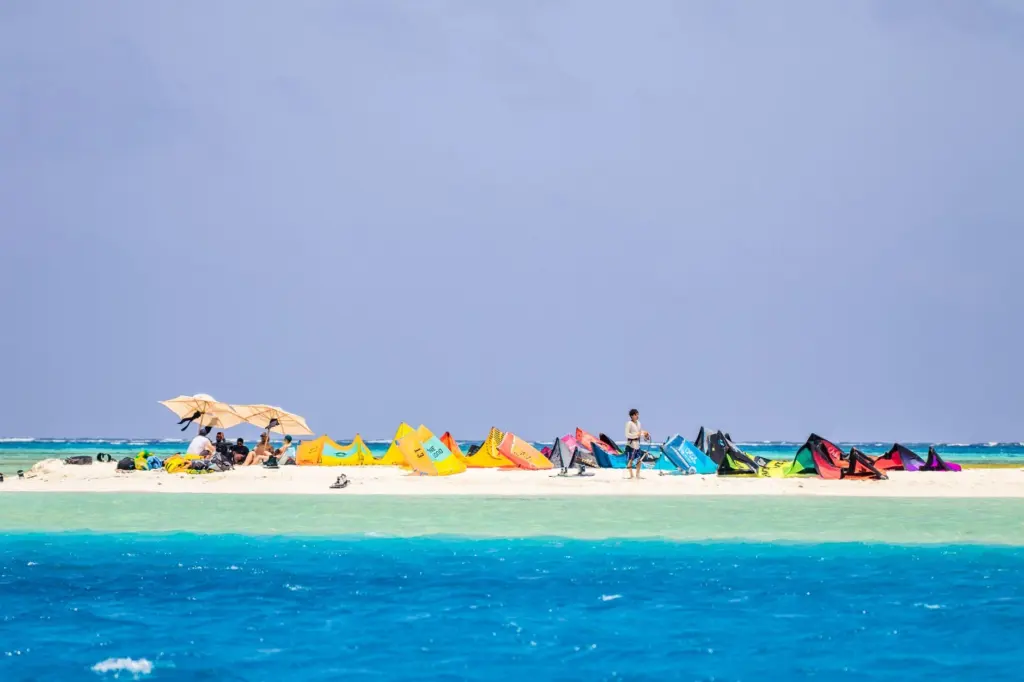
A useful briefing is short enough that everyone remembers it on the water. It should cover four things: the route and the first landing point, the go and stop signals, the order in which riders leave the beach and the name of the person who calls a stop. If a rider does not repeat the signals back correctly, the briefing is not finished.
Skills to have before you join
Everything starts with the riders, because their ability sets the limits of the route, the pace and the conditions the team can accept. A team moves at the speed of its least confident member, and a support boat cannot replace the ability to control a kite and return to a planned position.
Baseline riding ability
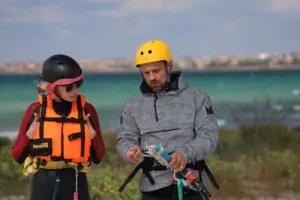
Before a team seat is realistic, you should be an independent kiteboarder: able to launch, ride upwind, control speed and land the kite without an instructor beside you. Kite Provo describes its Independent Kiteboarder package as 10 hours over 4 days and its Ultimate Experience package as 15 hours over 5 days. Treat those as examples of structured instruction time, not as a promise that every learner reaches independence in that time.
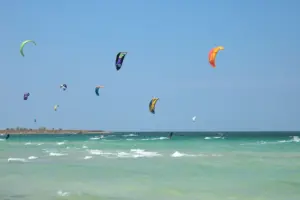
The same provider describes Long Bay Beach as having knee to waist deep turquoise water over miles of sand, with consistent winds. Shallow water of that kind suits the early stages of learning, when falling and relaunching are frequent. Once a rider can launch, ride and land without help, water depth stops being the main constraint. The question becomes how the team handles deeper, moving water, and that calls for different skills.
Individual progress varies widely. KiteAcademy notes that its coach Céline Rodenas started competing only 3.5 months after learning to kitesurf, which shows that a fast learner can move quickly. It is an exceptional case, not a planning assumption, so judge readiness by what you can do reliably rather than by the time spent learning.
Skills specific to open water
Riding competence on a flat lagoon does not automatically transfer to offshore conditions. Before joining an expedition, practise these abilities and be honest about the gaps.
- Controlled upwind riding: if you cannot hold ground against the wind and tide, you cannot rejoin a support boat that is upwind of you.
- Self-rescue: you must be able to pack down and recover yourself when equipment fails. The guide to kitesurfing self rescue explains the techniques and why rehearsing them in safe conditions matters.
- Gear handling in motion: launching and landing a kite from a moving or anchored vessel is a different skill from doing it on a beach.
- Endurance and judgement: a long day asks for stamina and the discipline to call for a break or a swap before you are too tired to ride safely.
Use the list as a self-test. Ask a coach to watch you perform each item in conditions close to the planned route, and ask for a plain answer. If any item is weak, start with shorter, closer-to-shore sessions and ask the organiser what they require. A good organiser will tell you directly whether your level fits the planned route.
Boats and on-water support
The support vessel is what makes a team expedition a team activity. It carries spare equipment, provides rest and shelter, acts as a visible reference point and gives the safety crew a base. Pick it for the job it must do, then fit the team around it. Before booking, confirm on paper who crews the boat, whether it carries spare kit and how quickly it can reach a rider who has stopped.
Support boat or mothership
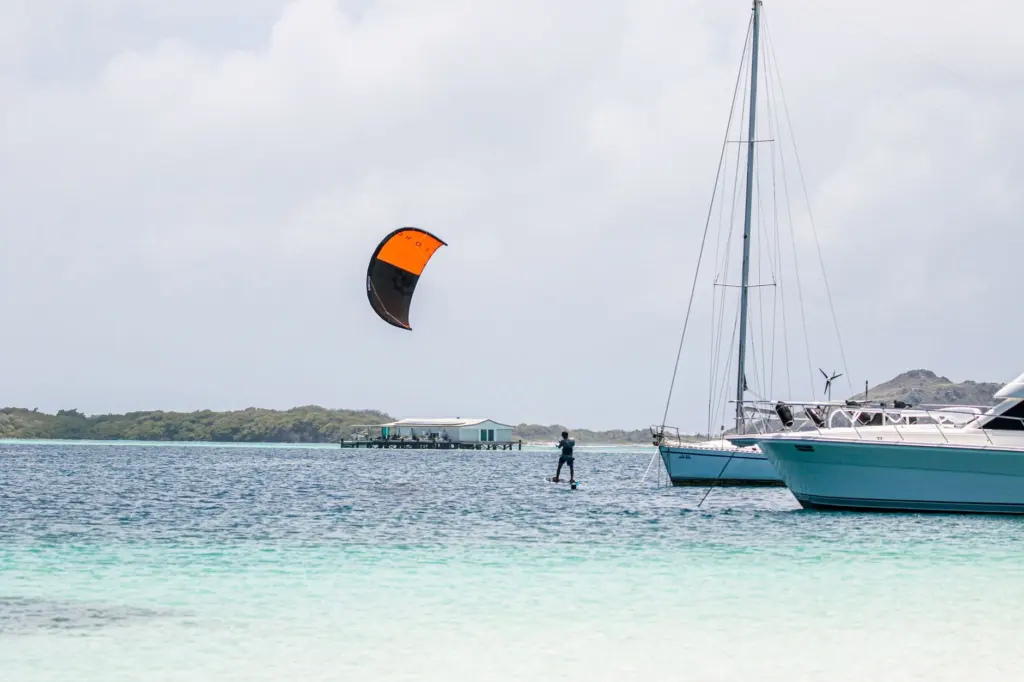
A smaller support boat for kitesurfing expedition work stays close to the riders, follows the route and responds quickly. It suits short legs where the team returns to a home base at the end of each day. A larger kitesurfing mothership expedition vessel can house the team, store gear and act as a floating base for multi-day plans. It makes more sense once the route includes nights away from home port. The choice depends on distance, number of overnight stops and how much gear and crew the route demands.
Chase boat and rescue cover
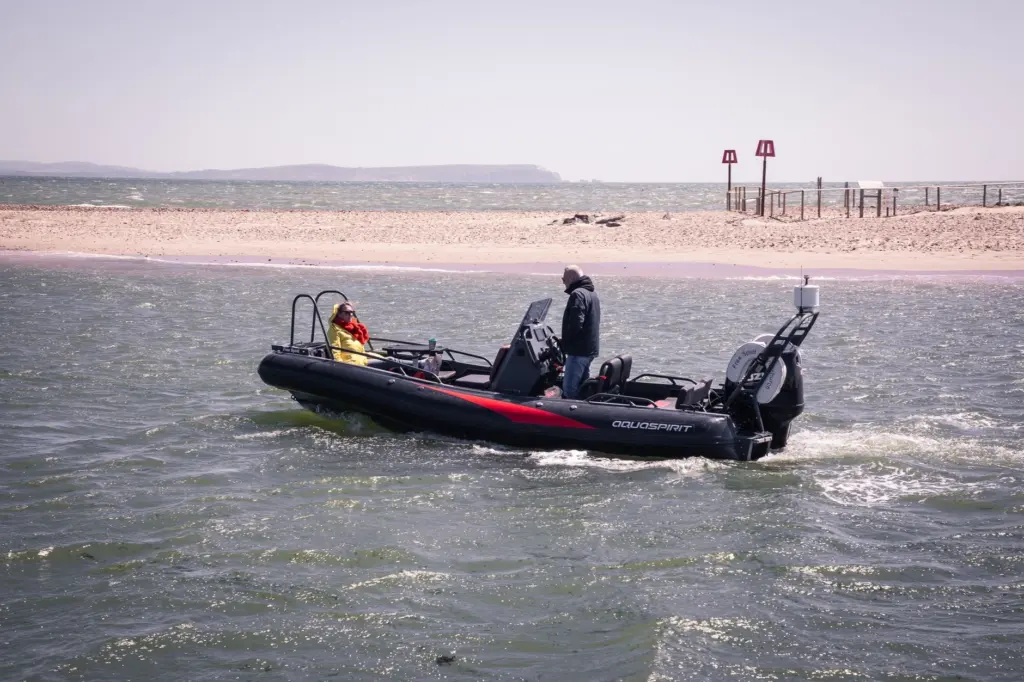
Riders on the water need a boat that can reach them quickly. Whatever the hull, the chase boat should have crew whose only job is watching the riders. Navigating, cooking or fixing kit pulls attention away from the water, so those tasks belong to someone else. The chase boat should also have a clear route back to the team, agreed before the first launch.
Safety, team roles and rotation
Safety on an expedition is a structure rather than a piece of kit. It names who watches the riders, who decides to stop, who communicates with the shore and what everybody does when something goes wrong.
Roles and authority
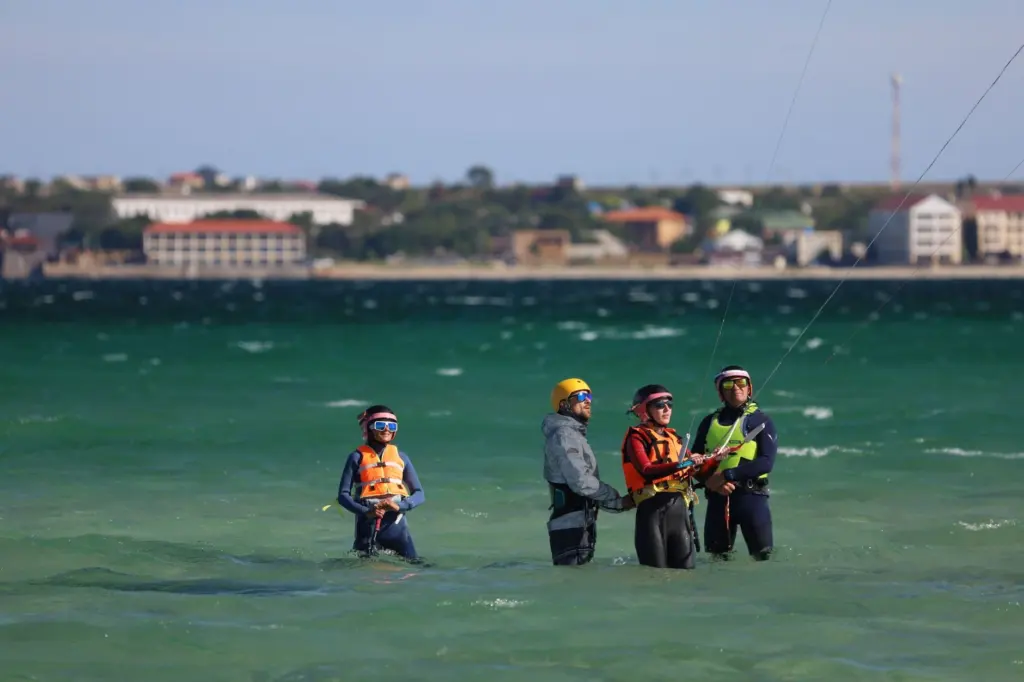
Each task needs a named owner. Typical roles include riders, a skipper, chase boat crew and a person responsible for safety decisions. The guide to kitesurfing expedition team roles is the right place to work through how these roles fit together. The page on the kitesurfing expedition safety officer role explains why one person should hold the authority to pause or end riding. Authority only works if the whole team agrees to it before departure.
Written plan
A written plan removes arguments in the middle of a stressful moment. A kitesurfing expedition safety plan should cover the route, weather limits, emergency actions, communication methods and who is responsible for each. Rehearse it on a calm day so the first time anyone uses it is not an actual emergency. Keep a printed copy on the support boat, because a plan stored only on a phone is no use if the phone is wet or out of charge.
Rotation and rest
In a relay, rest is part of safety. Plan who rides when, how handovers happen and what signals mean continue, return or stop. Put tired riders on board before they ask, because fatigue is a quiet cause of poor decisions. A rider who is coming off the water should report to the boat with a simple status call, so the crew knows who is resting, who is ready and who is still out.
Wind and sea conditions
Wind decides whether an expedition can start, continue or must wait. Teams should agree one unit, knots, and use it on every radio call and in the written plan, so nobody has to convert figures in their head during a session.
Reading a wind report
A single live reading shows what to look for. Kite Provo’s real-time sensor reported 9.5 knots wind with 11.3 knots gusts, and the page gives no time for that reading, so treat it as a snapshot rather than a forecast. The useful lesson is that a report gives both a steady speed and a gust speed. Gusts, and the gap between them and the steady wind, matter for kite choice and for how demanding the day will feel.
Read a report as a trend where you can. A steady wind with small gusts and a steady wind with large gusts are different days even when the average is the same, and the team should decide in advance which of those it will ride. One reading does not define a suitable range, so work out limits per rider and per kite from your own training and local forecasts.
Setting go and no-go limits
Agree limits in advance, in writing, and keep them conservative. Include both a lower limit, below which riders cannot keep moving, and an upper limit above which the team stays ashore or on board. Decide how forecast changes, thunderstorms and visibility will be handled. Write separate limits for the boat and for riders where that matters, because a tired rider may need to stop well before conditions reach the limit. If the group disagrees on the day, the safety lead’s call stands.
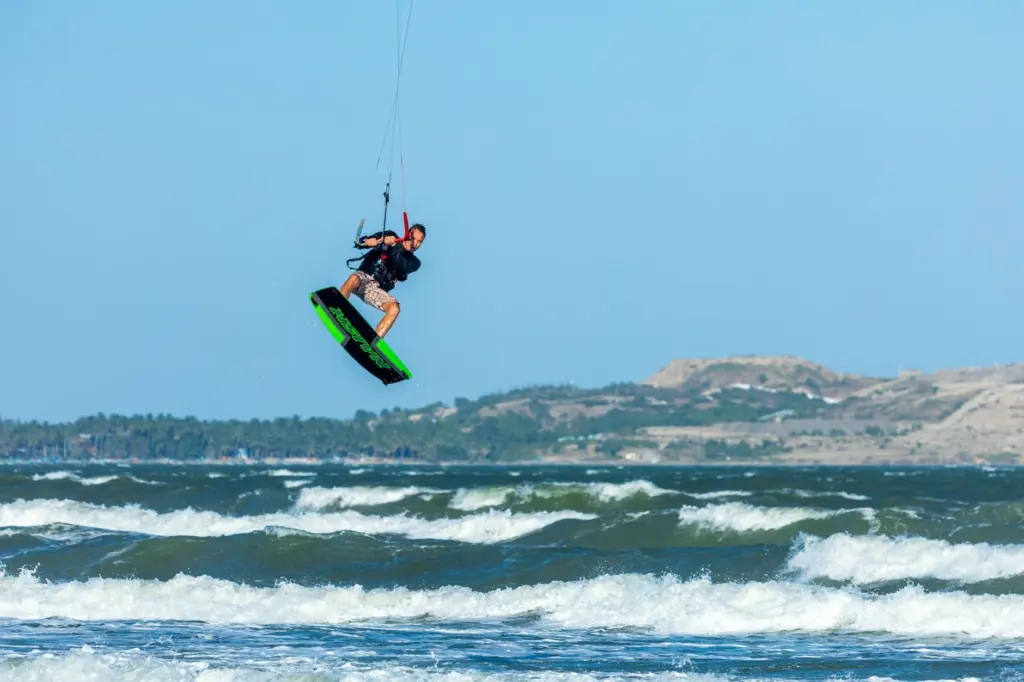
Swell, current and route
Wind alone does not describe the day. Swell, current, tide and local effects change how hard the riding is and how the boat should position itself. The guide to kitesurfing ocean conditions wind and swell covers these factors together, and it is worth reading before you commit to an open-water leg.
Navigation, tracking and communication
The team needs to know where everybody is and be able to talk to the shore. Navigation, tracking and communication are separate tasks, and each needs a backup.
Knowing where riders are
Tracking lets the support crew see positions without having to keep every rider in sight. Teams that want a shared picture of positions should look at live tracking kitesurfing expedition options before departure, and agree who watches the display. Treat tracking as an aid to watching, never a replacement for it.
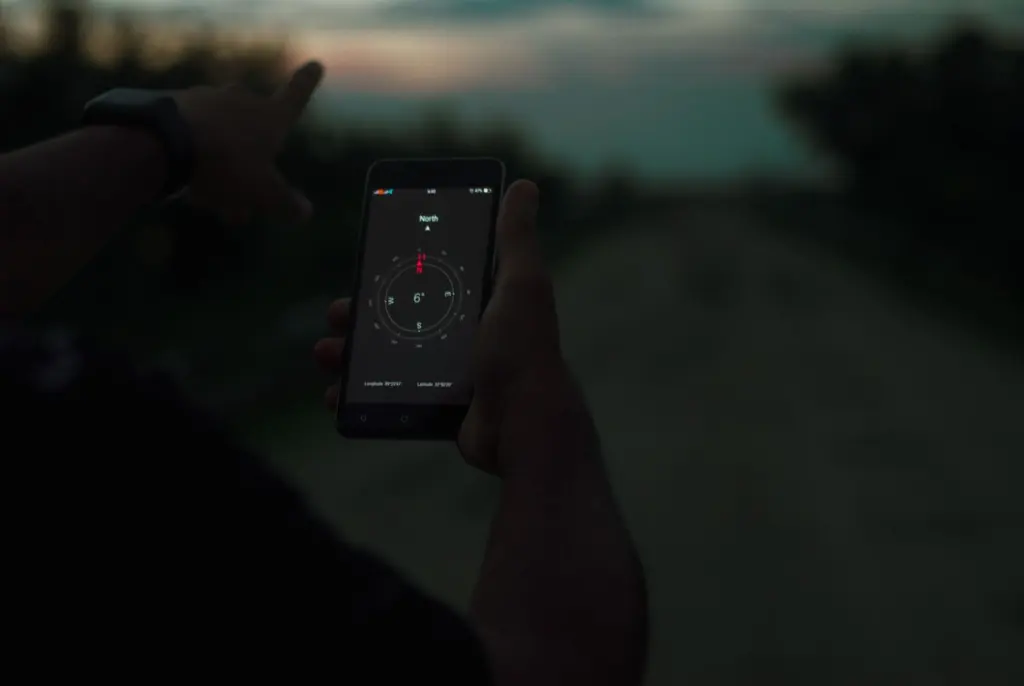
Staying in contact
Decide before departure how the boat, the riders and the shore will communicate, and what happens if the main method fails. The guide to communication on a kitesurfing expedition sets out the options to compare. Agree simple signals for riders too, because voices carry poorly over wind and water. A signal that every rider can see from a distance is more useful than a call that nobody hears.
Gear and preparation ashore
Gear for a team expedition is both personal and shared. Personal kit includes kites sized for the planned range, boards, harnesses and protective equipment. Shared kit includes spare lines, repair supplies, communication equipment and safety gear on the boat. Build one master list and assign each item to a person, so nothing is assumed to be somebody else’s responsibility. The kitesurfing expedition gear list is a sensible starting point for that list.
Pack for failure as well as for success. Spare equipment and repair capacity matter more offshore than on a beach, where a replacement is a short walk away. Check the list again the evening before each leg, not only at the start of the trip, because kit that was fine on day one can be damaged by day three.
Where to start
Choose your first step by your current position rather than by the most exciting expedition on offer. If you cannot yet launch and land reliably in calm conditions, wait. An expedition is not the place to learn the basics, and waiting is the better choice every time.
- New to kitesurfing: invest in lessons in shallow, forgiving water and aim to ride independently before thinking about open-water legs.
- Independent rider, no team experience: join a short downwinder with a chase boat so you learn the routines of rotation, signals and communication.
- Experienced rider planning a trip: begin with the safety plan, roles and weather limits, then choose the vessel to suit them.
- Organiser: write the plan, name the safety lead and rehearse emergencies before you advertise a date.
Frequently asked questions
What happens to the schedule if the wind does not cooperate?
Build spare days into the plan. Kite Provo states that its package rate applies despite wind and weather cancellations, so a lost day can cost part of a booking without changing the price.
Do coaches need a recognised instructor qualification?
It is reasonable to ask. KiteAcademy’s team page describes coach Alattin Doğdu passing an IKO instructor diploma in 2009 and coach Yves Delaunay obtaining an IKO Diploma in 2012.
Is shallow learning water enough to prepare for open water?
No. Shallow, consistent water helps early learning, but it does not reproduce moving open water. Practise the open-water skills listed above in conditions closer to the planned route before you commit to a leg.