
A kitesurfing expedition safety plan is a written document that fixes the hazards, go/no-go limits and emergency procedure before the group leaves shore. Write it first, brief every rider on it, and treat any failed check as a no-go.
Picture a rider drifting downwind of the boat as the breeze builds, with nobody sure who calls the abort. A plan agreed on the quay answers that question in advance. It suits any kitesurfing team expedition that rides beyond easy reach of shore, and the sections below follow the problems a team meets, from deciding what to write down to handling a change in the weather.
What to put in the written plan
The plan works best as a single document that the boat crew and every rider can read in a minute. It holds a hazard list, go/no-go criteria, release-system checks, an emergency procedure and a record of who attended the briefing. Gear shopping lists and the allocation of roles sit outside it.
- Hazard list. Each hazard for the route is written down with the condition that triggers a decision. The next section sets out how to build it.
- Go/no-go criteria. These are fixed before launch so nobody negotiates limits on the water.
- Release-system checks. The IKO directives call the kite leash the primary safety device, so the plan should name each rider’s kite safety release system and who confirms it is in working order. Safety guidance published by the FKSA adds that the chicken loop or depowering quick release should be tested and maintained regularly.
- Emergency procedure. A step-by-step response for a rider who is separated from the boat.
- Briefing record. A line showing that every rider heard the plan and rehearsed the release.
Responsibility for keeping the document current belongs to one person. That question is covered in the kitesurfing expedition safety officer role.
Hazard list and offshore risk assessment
A kitesurf offshore risk assessment turns each hazard into a recorded condition and a decision. Work through it in this order:
- List every hazard along the route, from launch to landing.
- Write the observable condition that makes each hazard a problem, such as wind direction or distance from shore.
- Attach a decision to each condition: proceed, change the plan or stand down.
- Name who checks the condition on the day and when it is rechecked.
The table below turns the supported hazards into plan entries.
| Hazard | What the guidance says | Planning use |
|---|---|---|
| Sudden gusts | Kites can exert very substantial force with little to no warning. | Set conservative wind limits, because a gust will not announce itself. |
| Onshore wind | Much higher injury rate, even among experienced riders. | Record as a condition to avoid, not a challenge to manage. |
| Offshore wind | Avoid in the absence of a chase boat. | The support vessel must be in position before anyone launches. |
| Bystanders | Minimum 300 ft (100 m) buffer zone. | Choose the launch and the first leg of the route away from people. |
| Jumping | At least 50 m clear downwind and 30 m clear upwind. | Check the clear area before any jumping is allowed. |
| Strong wind | Larger safety buffers, up to 10 line lengths (250 m) in extreme conditions. | Widen buffers as wind rises. Treat the figure as an extreme-conditions upper value, not a standard spacing. |
These entries draw on the IKO safety directives and the FKSA safety guidance.
The wind-direction rows matter most for crossings. Onshore wind is hazardous for riders near the beach, while offshore wind pushes them away from help, so the plan should state which direction applies to each leg.
Go and no-go conditions for a crossing
Go/no-go criteria work best as a short list of hard stops. If any item fails, the crossing does not start, whatever the schedule says.
- Go only on an acceptable forecast. The FKSA guidance asks whether the forecast and current weather are free of pending storm clouds and excessive gusty winds. Write that as the go test and add the wind direction limits from the table above.
- No kiting around thunderstorms. Lohe Surf’s guidelines say not to kite before, during or immediately after a thunderstorm.
- Do not rely on a clear sky overhead. Lightning can strike many miles ahead of storm clouds, so a storm in the forecast stays a no-go even when the sky above the boat looks fine.
- Stand down if health or confidence is in question. The FKSA rule is blunt: a rider who is not 100% healthy, or is in doubt, does not fly.
- Never ride alone or beyond swimming distance. Both guides say not to go further offshore than you can swim back from. A crossing can take riders past that distance, so the support vessel becomes the safety net in place of the swim home. If the boat cannot stay with the riders, treat that as a no-go.
Support vessel and emergency procedure
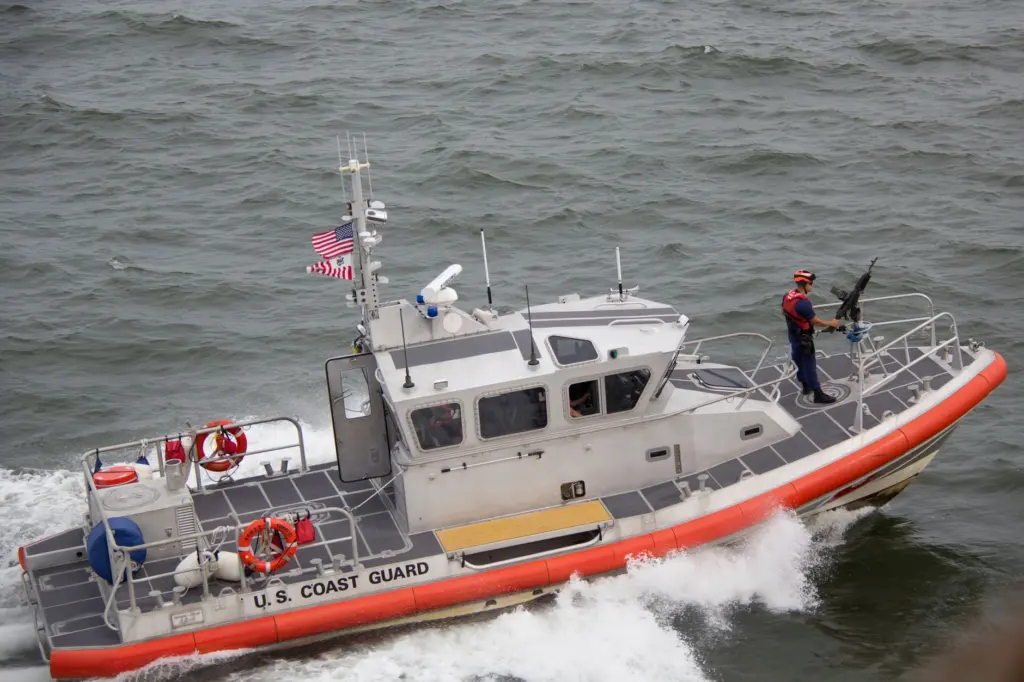
The support vessel is the plan’s answer to distance. Guidance says offshore winds should be avoided without a chase boat, and Lohe Surf adds that riders launching in offshore wind should make sure there are opportunities with the rescue boat. In practice the plan states where the boat sits, which riders it is covering and what it does if it cannot keep pace.
For a rider separated from the boat, write the response as an ordered template that anyone aboard can follow:
- Release the kite. The rider activates the kite safety release system immediately. Guidance warns that relying on manual unhooking alone to release the bar is unreliable, so the plan names the quick release as the action.
- Signal. The rider uses the agreed visual and audible signals so the boat knows a release has happened.
- Move to the rider. The boat goes to the rider’s last known position and keeps the rider in sight.
- Escalate. If the rider cannot be reached, the crew uses the radio channel and emergency contacts written on the plan’s contact card.
The way the boat keeps track of riders between signals is covered under live tracking kitesurfing expedition planning.
Briefing riders on the plan
A plan only works if riders can recall it under stress, so the briefing is a rehearsal and not a reading. Hold it before departure, with the boat crew present, and cover these points:
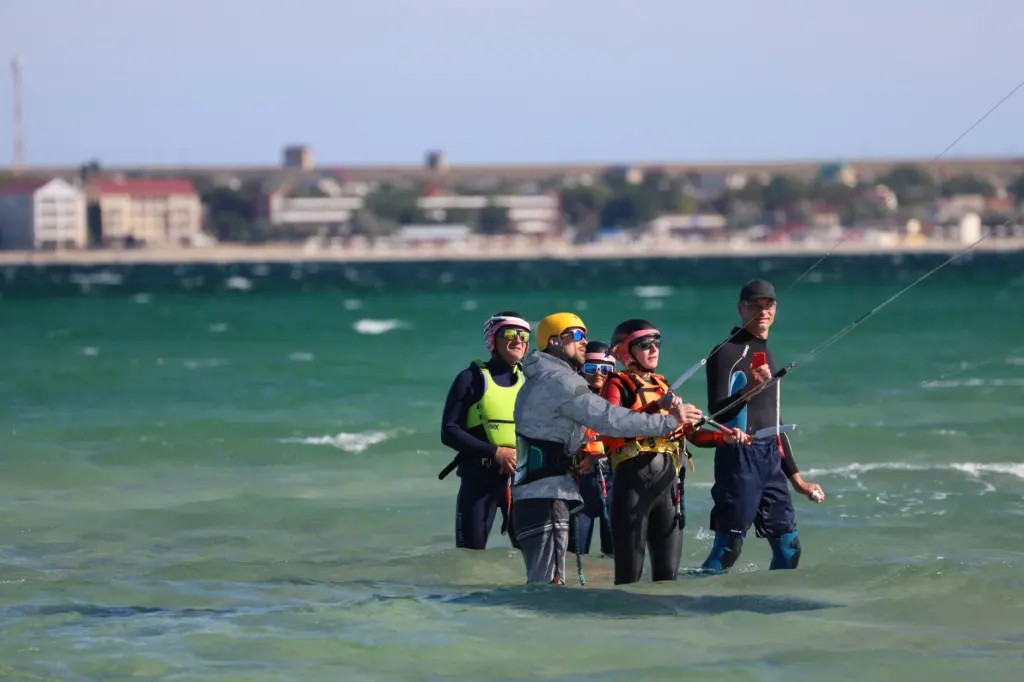
- Release drill. The FKSA guidance recommends that riders frequently rehearse pulling the quick release, both mentally and physically, in an imagined emergency. Have each rider do it with the kit they will use.
- Signals. Agree reliable visual and audible communications for launching and landing, and confirm that the boat crew knows them as well.
- Go/no-go limits. Read the hard stops aloud so nobody can claim they were unclear on the water.
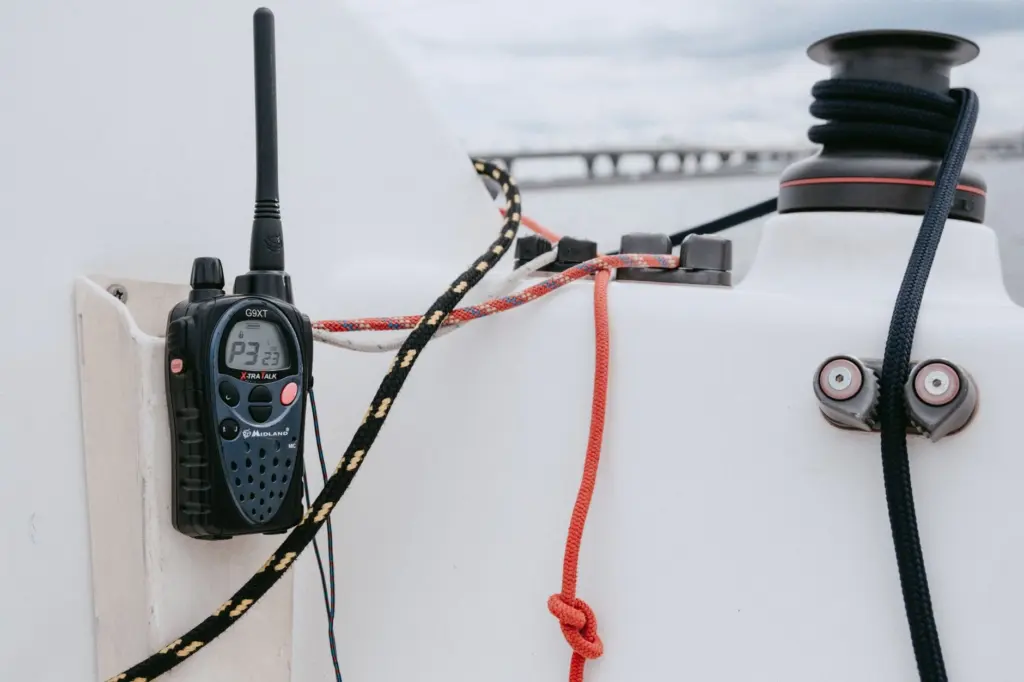
- Radio and contacts. Show the channel, the call routine and the contact card, then check that the crew can find the card without searching.
When conditions change on the day
Weather rarely follows the forecast exactly, so the plan needs a trigger for stopping mid-session. FKSA guidance advises riders to land and thoroughly disable the kite well in advance of any change in wind. Waiting for the change itself leaves too little time.
To make that practical, the same guidance suggests organising an alert air horn and flag signal for the launch. Agree in the briefing that the signal means everyone lands now, and have the boat crew or the person on shore own the horn.
Frequently asked questions
| Question | Answer |
|---|---|
| Who is responsible for safety once riders are on the water? | The FKSA guidance says riders are solely responsible for their own safety and that of affected bystanders. The plan sets shared rules, but each rider still has to follow them. |
| Which injury should the hazard list prioritise? | Head injury. The same FKSA guidance notes that most kiteboarding fatalities involve head injury, so the list should treat head impact as a priority risk. |
| Should riders use a board leash as part of the plan? | No. The IKO directives state that the board leash is for surfing, not kiting. |