| Phase | What to check or do | Planning use |
|---|---|---|
| Before leaving home | Read the forecast for direction (degrees or compass points), average speed and gusts, for your specific spot | Rule out offshore days before you pack the car |
| On the beach | Work out whether the wind blows from land towards the sea. Do not trust calm-looking water near the shore | Confirm the direction yourself, not just from the forecast |
| Deciding to launch | Beginners treat offshore wind as a no-go. Experts ride it only with reliable rescue support such as a chase boat | Choose side-onshore wind or stay ashore if support is missing |
| If blown out | Stay calm, use your leash, pull the release if something goes wrong, and use the kite as a towing aid | Follow this sequence before you consider the alarm |
| Raising the alarm | NSRI lists 112 (labelled National Emergency) and its Emergency Operation Centre on 087 094 9774 | Save the right local number before you go afloat |
Advice in this table follows the South African lifesaving body NSRI’s kiteboarder guidance and the wind direction lesson on Kitesurfing Official.
Offshore wind kitesurfing danger comes down to one fact: wind blowing from land to sea carries a kiter away from the beach, and any mistake drifts you further out. Beginners should treat it as a no-go.
This guide follows the hazard in the order you meet it, from the forecast to the water. For the wider picture of riding the sea, see how to kitesurf in waves.
Why offshore wind is dangerous
Offshore wind is wind blowing from the land towards the sea, as Freeride Tarifa explains. That direction removes the margin that makes kitesurfing forgiving. Kitesurfing Official puts it plainly: it blows from the land out to sea, so any mistake drifts you away from shore.
NSRI goes further and warns that offshore winds can literally blow you out to sea, making it hard to get back to shore. The danger is therefore not the wind strength alone. It is the combination of a wind that pushes you away from help and the difficulty of returning against it.
The practical result is a simple rule from NSRI: never kite in offshore wind unless you are an expert with rescue support. The rest of this guide shows how to spot the condition early enough to make that decision on the sand rather than on the water.
Before you leave home: forecast and spot
Forecasts give wind direction in degrees or compass points, plus an average speed and gusts. Read the direction first, then compare it with the way your beach faces. A wind that is onshore on one coastline can be offshore a short drive away, which is why Kitesurfing Official advises checking the direction for your specific spot, not just the region.
Wind is only one of the conditions to check before launching. Water movement matters as well, and it is covered in the guide to kitesurfing tides.
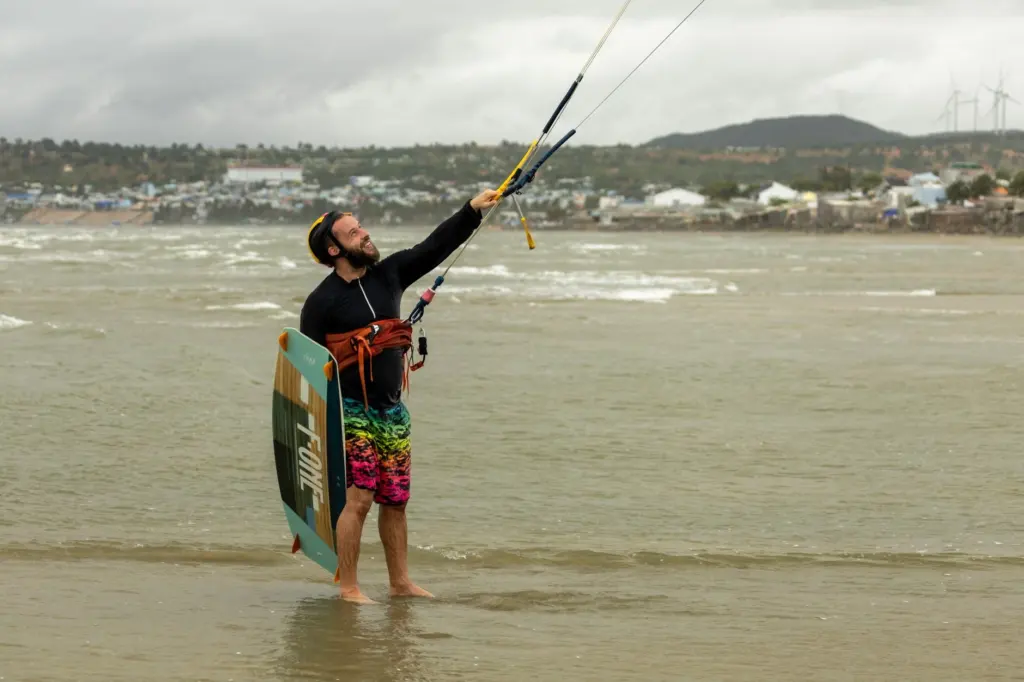
If the forecast shows an offshore direction, you can stop planning the session at this stage. That is the cheapest point at which to cancel.
On the beach: offshore wind signs
Face the sea and feel the wind. If it is on your back, it is blowing from the land towards the sea, which is the definition of offshore. If it hits your face from the water, it is onshore, blowing from the sea to the beach.
The surface of the sea can mislead you. Kitesurfing Official notes that the water near the beach looks deceptively calm because the land blocks the chop. A flat-looking shoreline is therefore not evidence of a gentle wind, and it can hide the very condition you are trying to detect.
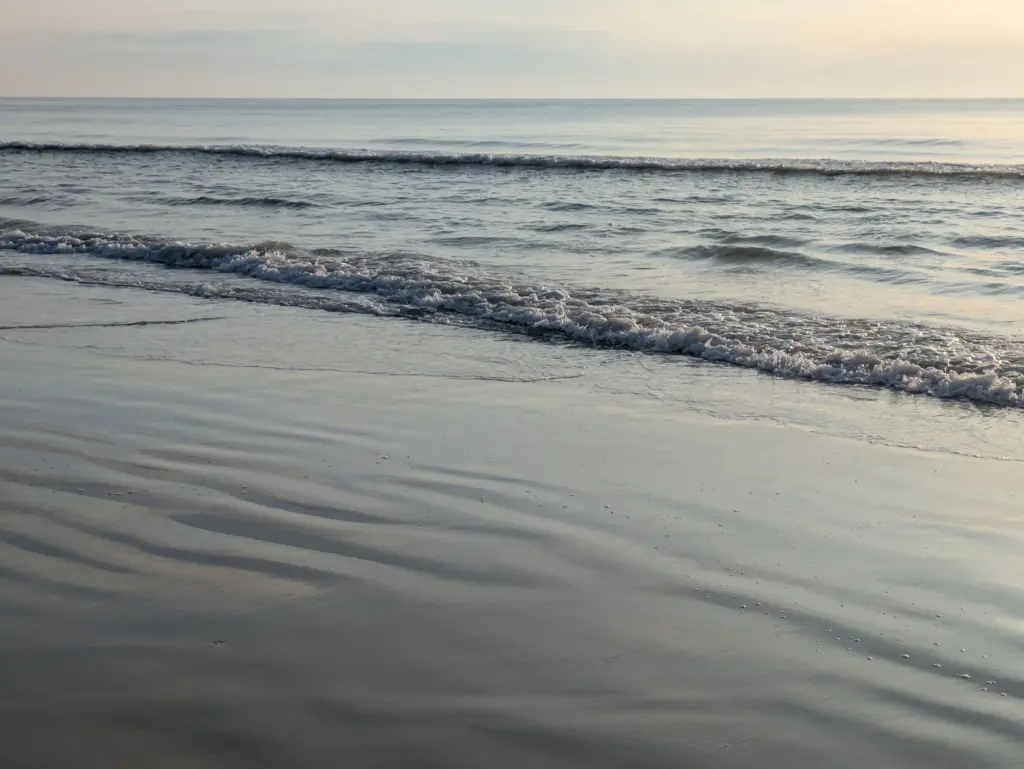
Use the direction test on the sand as your final check, and let it overrule what the water looks like.
Deciding not to launch
The decision depends on your experience and on what rescue is actually in place. These are the conditions that matter.
- Beginners: treat offshore wind as a no-go. Kitesurfing Official gives this as its direct advice for anyone starting out.
- Experienced riders: offshore wind is only ridden with reliable rescue support such as a chase boat. NSRI sets the same condition and adds that you must be an expert.
- Everyone else on an offshore day: choose a different spot or another day. NSRI states that side-onshore winds are much safer, especially for beginners.
- Organised offshore sessions: at Tarifa, Freeride Tarifa tells kiters to make sure a safety boat is nearby that can take them back to the beach.
If a chase boat is only promised rather than confirmed and positioned, the condition is not met. In that case stay ashore.
If you are blown offshore
Being blown out does not have to become an emergency if you act in a sensible order. NSRI’s advice is that staying calm and using your kite as a towing aid can help you reach safety. Work through these actions in sequence.
- Stay calm. Panic wastes the time you have to think. Calm decisions are the first step in NSRI’s guidance.
- Keep the kite attached. NSRI says to always use your kite leash and to double-check that your harness quick-release is functioning. Both matter more when you are far from shore.
- Release if the kite is overpowered or something goes wrong. NSRI’s wording is not to hesitate to pull the release.
- Use the kite as a towing aid. This is NSRI’s self-rescue guidance when you are being pulled out. Follow the exact procedure taught by your instructor and given in your kite manual.
- Raise the alarm if you are not getting back. The next section covers who to call and when.
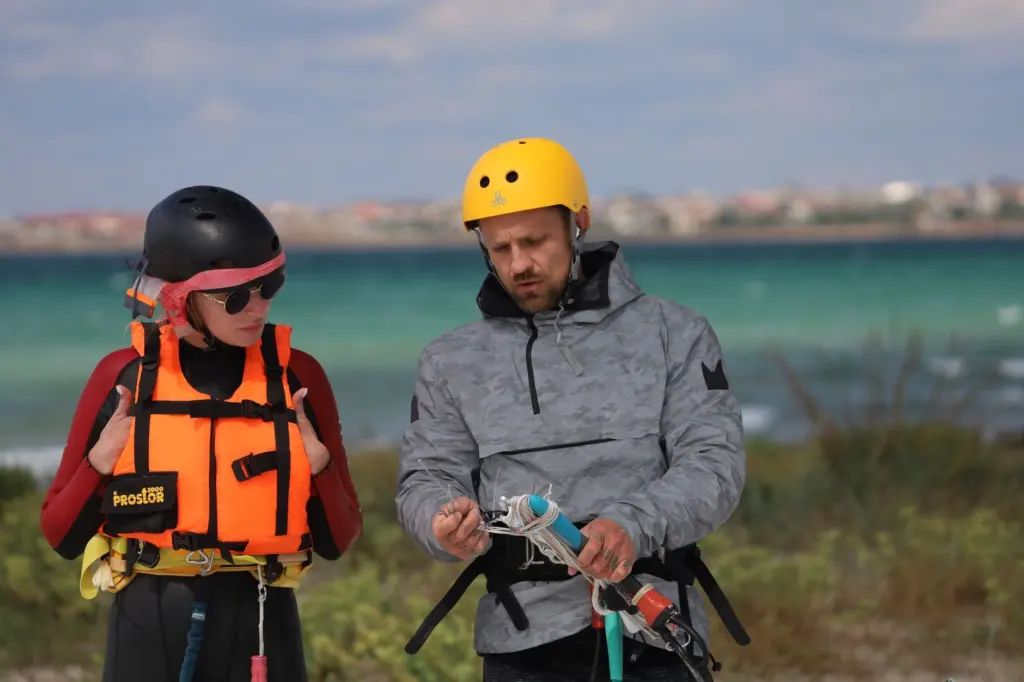
Practise the sequence ashore with your instructor. The aim is that every step is familiar before you ever need it offshore.
Raising the alarm and rescue offshore
Raise the alarm when self-rescue is not bringing you back towards the beach, or when you see another kiter being carried away from shore. A rescue boat can only help if someone knows you need it. If you are riding with a chase boat, make sure its crew can see you.
NSRI lists its emergency number as 112 (labelled National Emergency) and its Emergency Operation Centre as 087 094 9774. Those are South African numbers. Elsewhere, find the local coastguard or emergency number for your beach and save it in your phone before you go out.
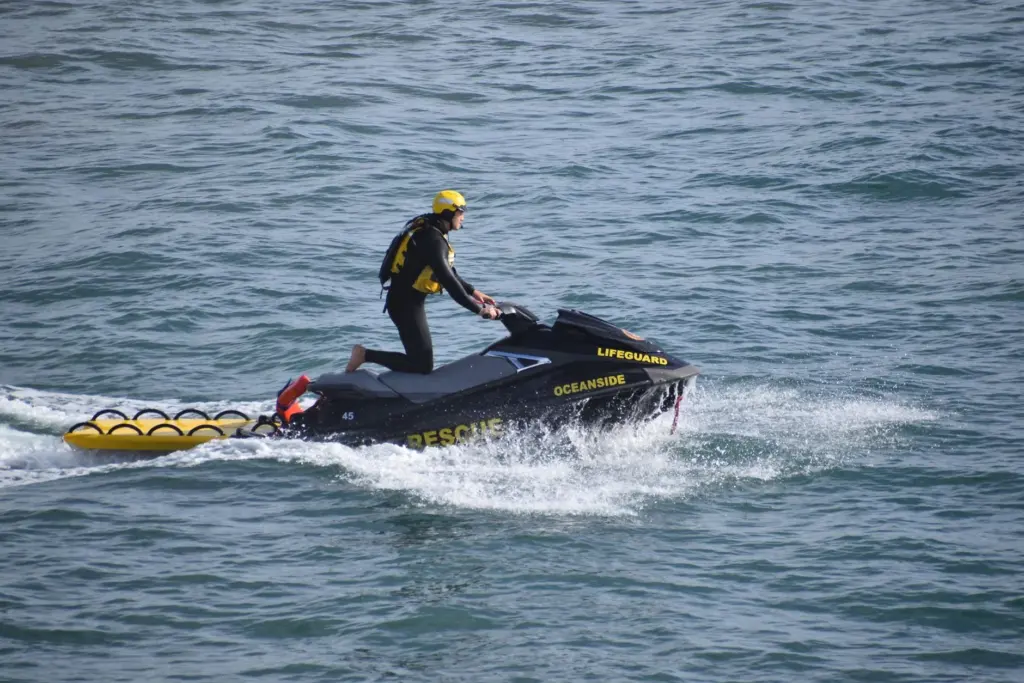
Visibility affects how quickly you are found. NSRI points out that black, blue and white are nearly invisible out at sea, so brighter kit gives rescuers a better chance. Our guide to kitesurfing safety equipment covers the gear side in more detail.
Troubleshooting a changing day
- The wind turns during the session: Kitesurfing Official notes that local thermal winds can shift direction through the afternoon. A day that began safely can become an offshore day, so recheck the direction from the sand each time you go back out.
- The beach feels gusty and patchy: buildings, dunes, trees and cliffs upwind create gusts and wind shadows. In offshore wind the air crosses that land before it reaches you, so erratic gusts on the beach are a reason to stay ashore.
- You are tempted to go because others are: their rescue support may not cover you. Decide on your own experience and your own backup.
Frequently asked questions
Do the NSRI numbers work outside South Africa?
They are the numbers NSRI publishes for its own service, with 112 labelled National Emergency. At other coasts, use the local coastguard or emergency number that applies to the beach you are riding.
What is a rescue card at Tarifa?
Freeride Tarifa describes a rescue card that costs €30 for 2 rescues or €60 for 5 rescues. It is linked to the safety boat that can take you back to the beach.
Does a chase boat make offshore wind fine for any kiter?
No. A chase boat is a condition for experts, not a substitute for experience. Newcomers should regard offshore wind as off-limits.