| Reader situation | What riders advise | Planning use |
|---|---|---|
| Building skills for open water | Body drag and transition confidently; practise self-rescue in shallow water first, then where you cannot quite stand | Treat these as entry requirements before any long leg |
| Setting the length of a leg | Go no further than you can swim; do not go so far that drift could carry you round a headland to the next landfall | Prefer a leg you can recover from over an ambitious line |
| Choosing a day and direction | Pick wind that would take you back toward shore if things go wrong; check tide and current directions | Settle wind and tide before fixing the route |
| Packing flotation and signalling | Impact vest or PFD, CO2-inflated emergency floats, an EPIRB and life jacket for sea outings | Add flotation and a beacon as the water gets more remote |
| Leaving word ashore | Make sure someone, preferably on the beach, knows you are going out | Arrange a contact before launching |
The guidance in this table comes from riders on the Seabreeze kitesurfing forum thread on going out deep into the ocean, which sets out practical limits for riding far from shore.
A kitesurfing ocean crossing is judged by what happens if the kite fails: the distance must stay recoverable, the wind should lead back toward land, and tide, flotation and a shore contact need to be in place first.
Crossings are one part of the wider planning behind a kitesurfing team expedition. This guide groups the decisions by the situation you are in, from building skills to comparing one crossing against another.
If you are building toward your first sea crossing
A rider who cannot yet recover alone should not be planning a crossing of any length. The skills below come before distance, and they are the same whether the crossing is a short channel hop or a long sea passage.
Body dragging and transitions
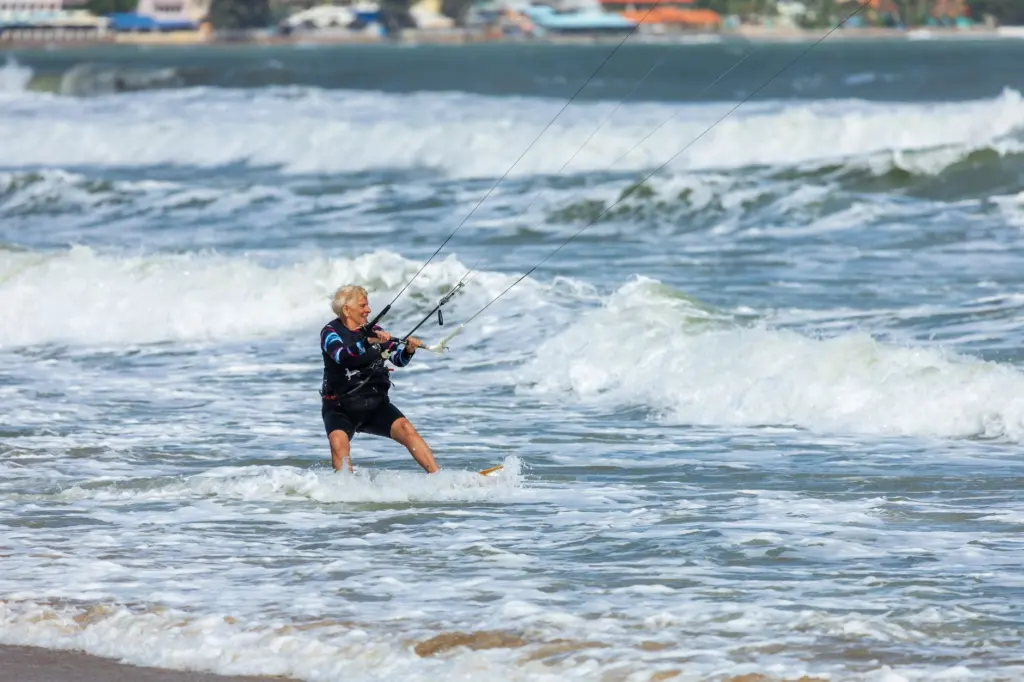
Riders on the Seabreeze forum put it plainly: you need to be able to body drag, and you need to be able to transition confidently. Body dragging is how a rider gets back to the board or toward land with the kite still flying. A confident transition lets you change direction and keep working back toward shore when the wind or tide pushes you the wrong way. This suits riders who already link turns without thinking about them. It does not suit anyone still learning to keep the kite stable.
Self-rescue in progressively deeper water
The same thread recommends learning self-rescue in shallow water to start with, then moving to water where you can no longer quite stand up. The progression matters because the first attempt at self-rescue should never be the real emergency. Repeat the drill whenever you add a new kite size or piece of gear, and only extend the distance once the drill feels routine.
- Start shallow: practise where a failed attempt costs nothing.
- Move deeper in steps: go to water where you cannot touch the bottom only after the shallow drill is dependable.
- Keep the kite: riders advise holding on to the kite unless you have to let it go, because it is part of your recovery.
If you are deciding how long a crossing should be
Crossing length is set by what you can recover from, not by a standard figure. Two limits from rider guidance do most of the work.
The swimming rule
The forum’s golden rule is not to go further than you can swim, whether that is a dog paddle or anything else that moves you along. It sounds conservative for a crossing, and it is. It suits solo riders without escort cover. It also explains why anyone attempting a longer line leans on extra flotation and outside support instead of on confidence alone.
The drift limit
The second limit is about where you would end up if the kite stopped flying. A forum rider advises against going so far that you could round a headland and float 100 km to the next landfall. That figure is a forum example of an unacceptable outcome, not a recommended distance and not a typical crossing length. Use it as a test: on the chosen day, would drift from the middle of the line bring you ashore soon, or carry you into open water? If the answer is open water, shorten the leg or wait for different wind and tide.
If you are choosing a day, wind and tide
Direction matters more than strength when the water is wide. Read it from the shore side first, then check what the water itself is doing. The wider picture of wind and swell is covered in kitesurfing ocean conditions wind and swell.
Wind that leads back to land
Seabreeze riders advise choosing a wind direction that would take you back toward shore if the worst happens. They also note that the ideal conditions for most spots are cross-onshore winds, which means you are travelling offshore on one tack. The consequence is simple. The outbound leg is the easy one, and the return is where the wind decides your fate. Think like a downwind kiteboarding rider and ask where the wind will carry you if the kite comes down. If it carries you away from land, the day does not suit a crossing.
Tide and current
The same riders say to check the tide and current directions, because they can take you where you do not want to go very quickly. For a crossing this means the tide table is part of the route, not an afterthought. Plot the line with the water movement in mind, and treat a day when tide and wind pull in different directions as a day for a shorter leg.
Plotting the line and watching traffic
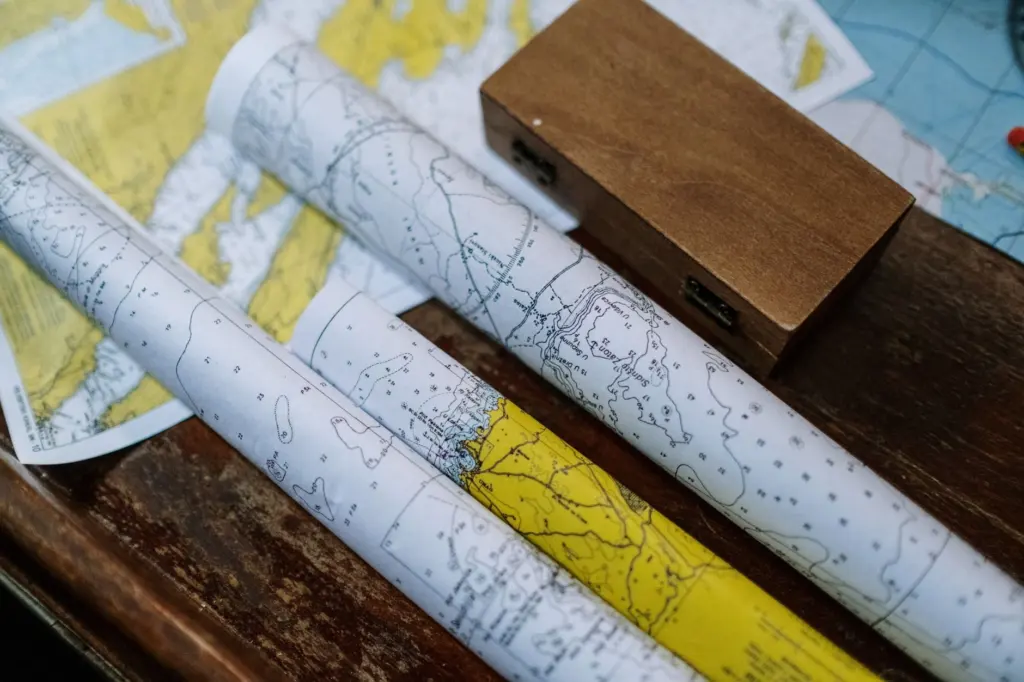
A chart turns the plan into something you can check against the coast, the tide and any vessel traffic before you launch. Draw the intended line, note the landfalls either side of it, and share the plan with the person ashore. Rider guidance on tide and current is the supported basis here. Anything about commercial shipping lanes should come from the local maritime authority’s own charts and notices for the specific waters.
If you are packing flotation and emergency gear
Gear choices scale with distance from shore. The forum thread offers a ladder of options, from basic buoyancy to signalling.
- Impact vest or PFD: an impact vest offers some flotation, or you can wear a PFD. This is the minimum for anyone going beyond easy swimming range, and the PFD gives more buoyancy.
- CO2 emergency floats: riders mention emergency floats with CO2 canisters you can carry. They suit riders who dislike bulk but still want a fallback.
- EPIRB and life jacket: one forum poster plans to add an EPIRB and an actual life jacket for sea outings. A beacon matters most where nobody on shore can see you.
- Improvised options: riders note you can make a sail to help get back, or just a raft. Treat this as a last resort, not a plan.
None of this replaces the earlier limits. Flotation buys time, and time only helps if someone knows to look for you. That is why the forum also advises telling a person, preferably on the beach, that you are going out.
If you want to compare one crossing against another
Instead of ranking crossings by a single number, compare them on the factors that make a crossing harder. Use the same checklist for any route, from a short strait to an ocean passage.
What raises the difficulty
- Drift consequence: a crossing is harder when failure leaves you far from the next landfall. The forum’s headland example shows how quickly a leg can become unrecoverable.
- Wind that does not return you: a line where cross-onshore wind sends you offshore on one tack, with no return-friendly direction, ranks above one where the wind leads back toward land.
- Tide and current: strong water movement can take a rider where they do not want to go very quickly, so routes with stronger flow ask more of the planning.
- Support and signalling: the more remote the line, the more flotation, beacon and escort cover it demands.
What lowers the difficulty
Shorter legs, wind that points to land, a checked tide, practised self-rescue and a shore contact all lower the risk. None removes it. Forum users themselves describe offshore riding as an extreme sport, which is a fair reminder that preparation reduces risk without making a crossing casual.
Where to go next
Organised events show how these factors combine in practice. The Atlantic Kite Challenge is a useful case to read alongside this checklist when you want to see the planning questions applied to a long passage.
Frequently asked questions
| Question | Answer |
|---|---|
| How long are typical kitesurf sea crossings? | Rider guidance gives limits instead of a typical length: stay within swimming distance and avoid any leg where drift could carry you to a landfall far away. A forum example mentions 100 km as an outcome to avoid, not a target. |
| How do crossings deal with shipping lanes and tides? | Riders advise checking tide and current directions before heading out, as they can move you quickly. Shipping lanes are best checked on the local maritime authority’s charts for the exact waters. |
| Is riding far offshore considered risky? | Yes. Forum users describe offshore kitesurfing as an extreme sport, which is why skills, flotation and a contact ashore come before distance. |