The forecast looks huge and the beach looks tempting. For kitesurfing big waves, the limit is whichever is lowest: rider skill, swell energy or the support available on the water and the shore.
- Read period before height. A long swell period means more power in each wave than the height number suggests.
- Stay below your recovery skills. A wave is too big when a mistake on it would leave you unable to recover without outside help.
- Do not go without support. Overhead waves call for protective gear and someone watching from shore.
Technique for smaller surf is covered in the guide on how to kitesurf in waves. This page deals with the point where technique stops being enough.
Why the forecast number rarely matches the wave you see
A forecast gives swell height, not the height of the wave that will break in front of you. That gap is the first reason riders misjudge size, and it is easy to close once the definitions are clear.
How wave height is defined and measured
Swell height is measured by an offshore buoy, from the base of the wave to its top, and reported in feet or meters, according to Disrupt Sports’ guide to surf reports. The same guide notes that this figure does not always equal the height of the wave a rider will surf. Local bottom shape, the position of the break and the way the wave is judged by eye against a rider’s body all change what you meet at the lineup.
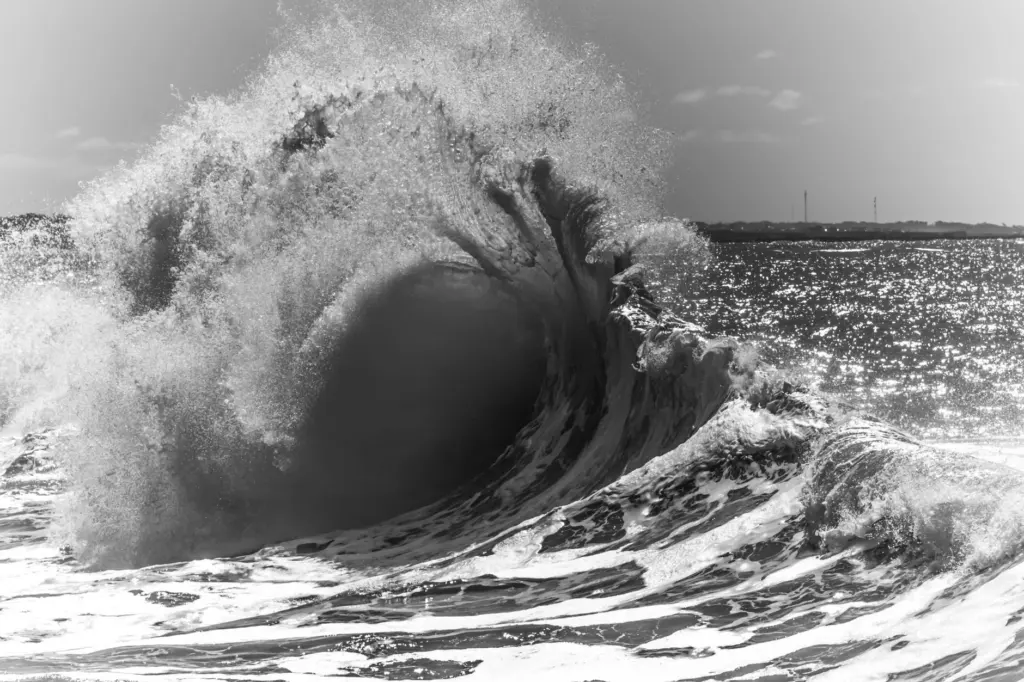
Terms such as overhead and double overhead describe a wave face judged against a standing person. They are not forecast outputs. Treat a forecast figure as an input and the view from the beach as the check on it.
Swell period and wave energy
Swell period is the time between successive peaks or troughs, measured in seconds. Disrupt Sports explains that the longer the period, the more power and the bigger the wave. It also gives a direct comparison: a swell of 2 ft at 16 s carries way more than double the power in each wave of a 2 ft swell at 8 s.
The practical lesson is that equal heights do not mean equal conditions. A modest-looking number with a long period can be a heavier day than a taller number with a short period, so period is the figure to read first when judging big wave kitesurfing conditions.
Turning forecast numbers into a go or no-go call
Waves are too big to kitesurf when the swell’s energy, the break’s shape and your own recovery skills no longer leave a margin for error. No height figure on its own settles that, because the same height behaves differently at different periods.
| Forecast signal | What it describes | Planning use |
|---|---|---|
| Swell height | Base to top of the wave at an offshore buoy, in feet or meters | Use as a starting estimate only; it is not always the height of the wave you will ride. |
| Swell period | Seconds between successive peaks or troughs | A longer period means more power and a bigger wave, so a rising period is a reason to be more cautious. |
| Height and period together | 2 ft at 16 s carries more than double the power of 2 ft at 8 s | Compare days by both numbers, never by height alone. |
These figures follow the definitions in Disrupt Sports’ surf report explainer.
Matching the wave to the rider
The unique limit in this sport is personal. Decide in advance what you can recover from, then compare the day against that, not against what other riders are attempting.
- Skill limit. If you are still working on transitions or on how to jump waves kitesurfing, overhead waves are not the place to learn them.
- Energy limit. If the period is long and rising, assume each wave carries more power than the height suggests and stay with smaller, familiar surf.
- Support limit. If nobody on the shore can see you or help, the conditions you can accept are smaller than the ones you could accept with backup.
When any one of these limits is reached, the answer is to wait for a smaller day. The lowest of the three sets the ceiling.
The main risks of large swell
Large swell raises the cost of every mistake. Because more power sits in each wave, a fall, a missed wave or a misjudged set carries more consequence than in ordinary surf.
Closeouts and breaking walls of whitewater
A closeout is a wave that breaks across a whole bay at once, leaving no open shoulder to ride away on. In big surf the whitewater behind such a wave is the hazard, because a rider caught in front of it has little choice about where to go. Wave shape matters as much as size here, and a kitesurfing point break, where waves peel along a defined line, gives a very different set of options from a bay that closes out.
Energy that builds between sets
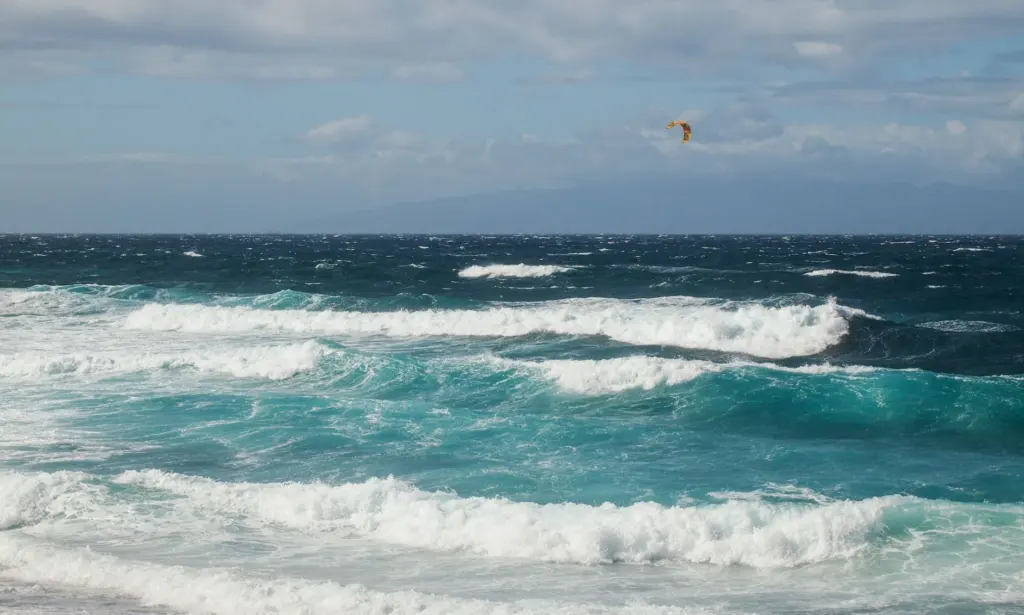
Longer-period swell brings more power, so conditions can feel heavier than the height number implied, as the period explanation above shows. That is why a gradual change in the forecast period deserves as much attention as a change in height. Watching several sets from the beach before launching shows how the break actually behaves, and a session that looked manageable on paper may not be once you see it.
Preparation and support before overhead waves
Preparing for big wave kitesurfing means building a safety margin around the rider, not only improving the rider. Gear and people both belong in that margin.
Protective gear
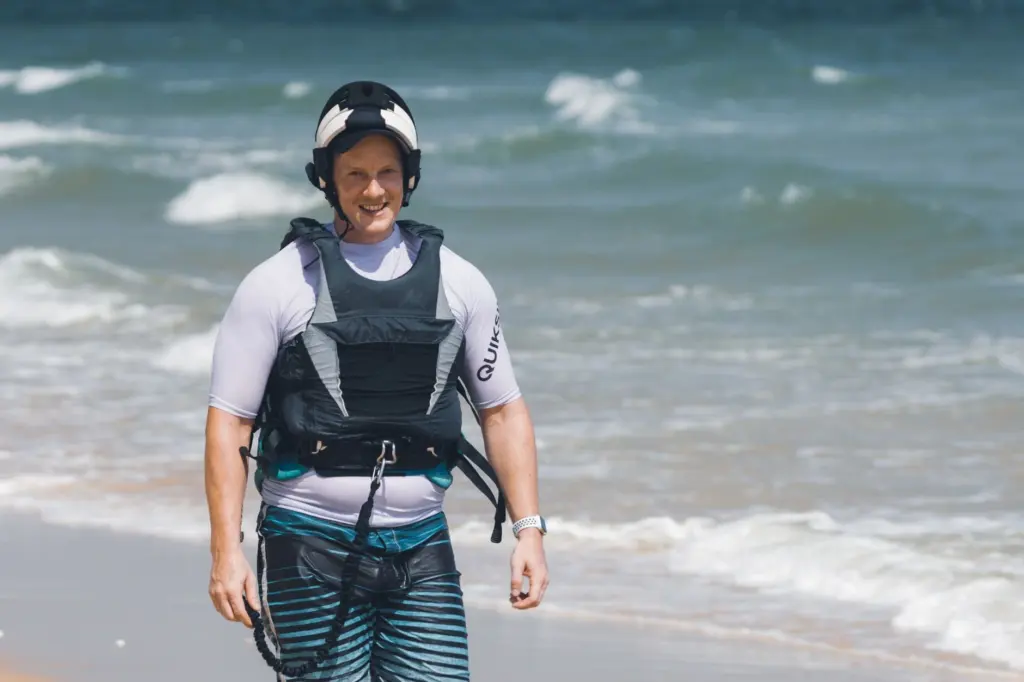
Impact vest, helmet and leash are the protective items used in heavy conditions. Check each before the session, not at the waterline, and treat any worn or doubtful item as a reason to delay.
People on the shore and on the water
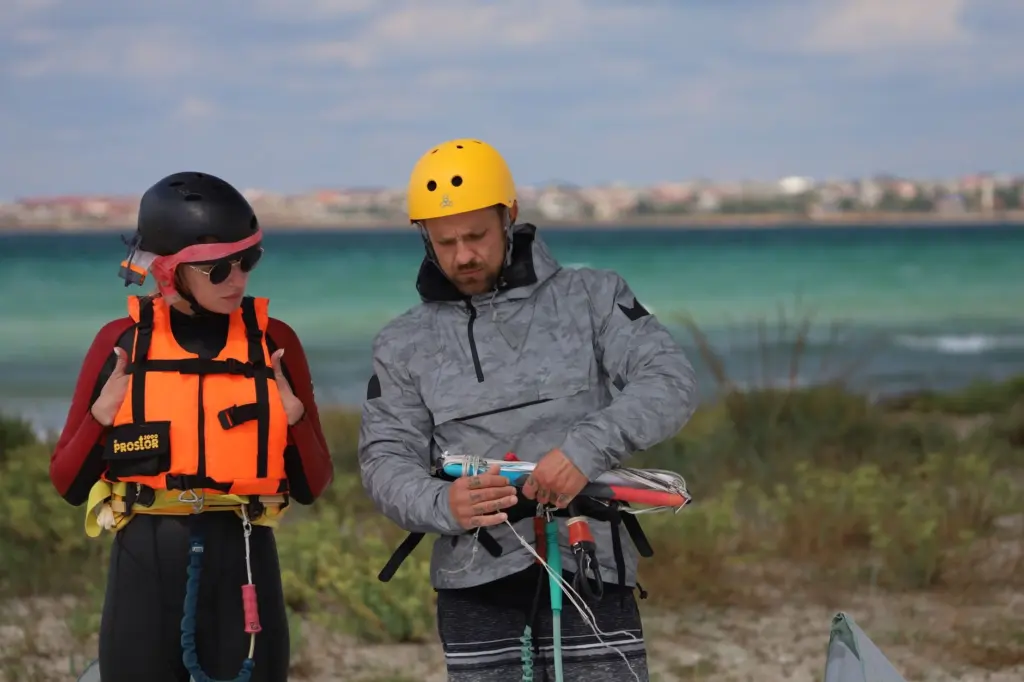
Someone on the beach who knows your plan and can watch the water is part of the kit. Agree beforehand when you will come in, and who will act if you do not. A pre-session check with a second person also catches the small errors that are easy to miss alone.
Where the records sit
The largest waves kitesurfed show the outer edge of the sport, not a target for most riders. Patri McLaughlin’s wave at Jaws on January 22, 2023 measured 72 feet 4 inches, and Guinness confirmed it in January 2024 as the biggest wave ever kite surfed, according to The Inertia’s report. The previous mark was a 62-foot wave kitesurfed by Nunu Figueiredo at Nazaré in 2017, reported by the same outlet.
These are results from elite riders at famous breaks. For anyone else, they show how far above overhead the sport extends, not how far to follow it.
Troubleshooting a day that feels wrong
- The height looks small but the waves look heavy. Check the period. A long period carries more power, so trust what the water is doing and step down.
- The forecast and the beach disagree. Swell height is measured at an offshore buoy, so local conditions can differ. Go with the more cautious reading.
- Nobody is available to watch. Choose a smaller day or a different session instead of accepting the risk.
- You are tempted by what others are riding. Their limits are not yours. Return to the skill, energy and support check.
Frequently asked questions
| Question | Answer |
|---|---|
| What does swell height measure? | It is measured by an offshore buoy from the base of the wave to its top, in feet or meters. It does not always equal the height of the wave a rider will surf. |
| Does a longer swell period mean bigger waves? | Yes. A longer period means more power and a bigger wave, so period matters alongside height. |
| What is the biggest wave ever kitesurfed? | A wave of 72 feet 4 inches at Jaws, kitesurfed by Patri McLaughlin on January 22, 2023 and confirmed by Guinness. |
| Who held the record before that? | Nunu Figueiredo, who kitesurfed a 62-foot wave at Nazaré in 2017. |