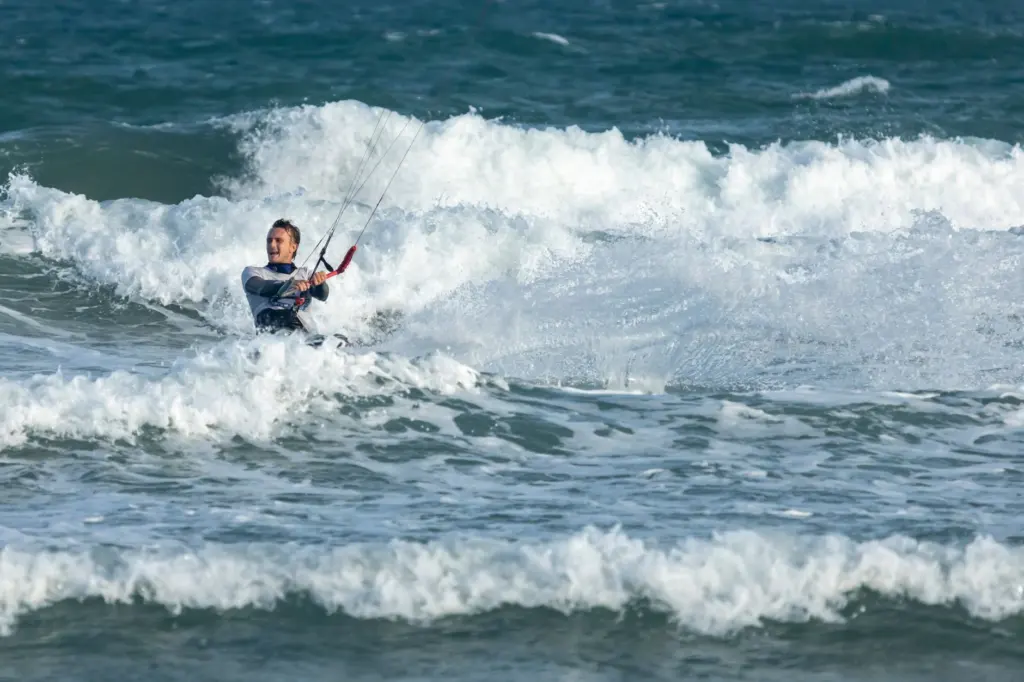
A rider drops in, the wave steepens, and the kite starts pulling the wrong way. A clean kitesurfing bottom turn fixes that, because it sets up everything that follows on the wave.
Quick answer: Check kite trim before riding, pick a wave that is not closing out, carve the bottom turn at the base of the face, then trim along the wall. Cut back toward the breaking part once the board feels settled and the kite is steady.
This guide builds the two core wave maneuvers step by step. For the wider context of wave sessions, see how to kitesurf in waves.
Start with the simplest fix: trim and kite check
Trim is the first thing to fix when turns feel inconsistent. A kite that is out of balance pulls unevenly and makes every turn harder to predict. Fix this on the beach before blaming technique.
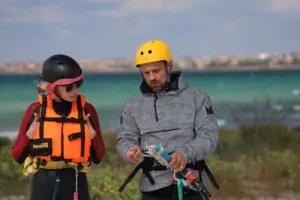
A pro rider tutorial published by IKSurfMag covers how to do a proper trim and symmetry check, and how to adjust the lines quickly before riding. That check is the cheapest intervention in this guide. It costs a few minutes and removes a variable.
- Check symmetry. Confirm the kite sits evenly on both sides before launching.
- Adjust the lines if needed. Correct any imbalance on the beach, not in the water.
- Ride a short test run. Make sure the bar feels neutral and the kite flies steadily before you commit to a wave.
If the kite flies evenly and the turns are still messy, move on to wave selection.
Picking a wave worth turning on
Knowing how to pick a wave in kitesurfing is half of a good bottom turn. A wave that peels gradually along the face gives time to turn and trim. A wave that breaks all at once leaves no clean wall to ride.
The ideal practice wave breaks progressively along a point or sandbar, so there is an open section ahead. Look for the pocket, the steepest part of the wave next to the breaking section, and for a face that stays open in front of you.
Choose by what you see, not by what you hope for:
- Wave that peels: suits practice, because the wall stays open ahead of the board.
- Wave that closes out: better skipped, as there is no clean section to turn into.
- Crowded line-up: wait for a clear wave rather than forcing the drop-in.
Getting to the line-up in the first place is its own skill, covered in how to get out past breaking waves kitesurfing.
The bottom turn, step by step
A bottom turn is the carve at the base of the wave face that redirects the board from the drop toward the open wall. It sets the speed and the angle for the next move.
- Drop in with the kite steady. Keep the kite from moving around while the board points down the face. Sudden bar inputs at this moment add pull exactly when balance is already changing.
- Look where you want to go. Turn the head and shoulders toward the open wall before the board finishes the turn. The board tends to follow where the upper body points.
- Bend the knees and commit to the rail. Lower the body and press the board onto its edge to carve a smooth arc at the base of the wave.
- Come out of the turn along the wall. Let the arc finish with the board pointing along the face, not up into the lip.
Coaching resources from windsurfing treat the bottom turn and the following top turn as one linked sequence. The Windsurf video on bottom turn, top turn and cutback frames it as how to get a better bottom turn and top turn, which fits the idea that a good bottom turn is judged by what it sets up.
Kite position during the turn
Kite position when riding waves matters most in the turn. Keep the kite steady and avoid chasing it with the bar. A kite parked in a stable spot lets the rider concentrate on the board and the wave. Your own equipment and wind will decide the exact position, so settle on a spot where the kite flies without needing constant input, and keep it there through the turn.
Kitesurfing wave riding trim along the face
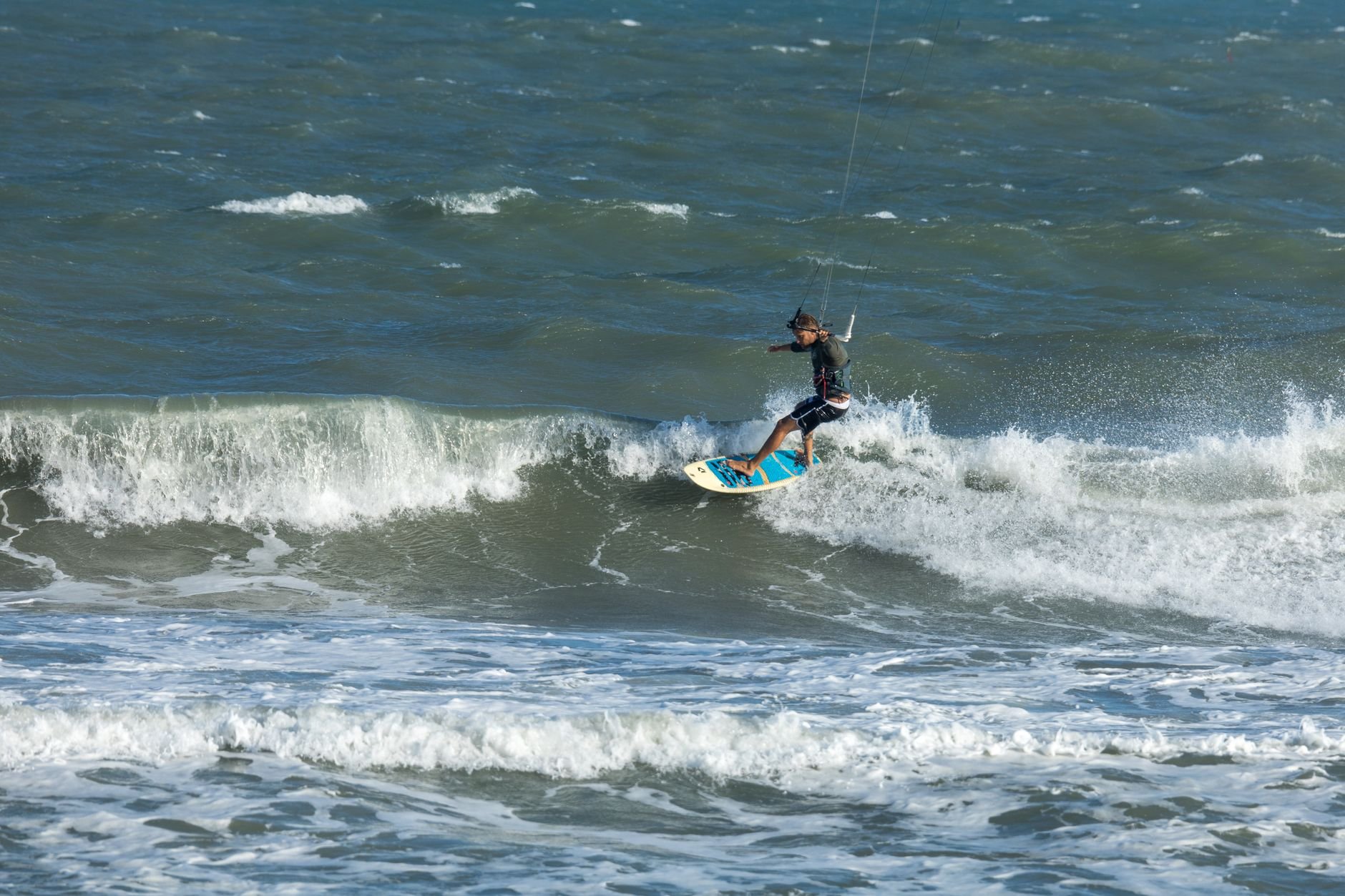
Trim is the speed and line you hold on the wall after the bottom turn. Good trim keeps the board in the working part of the wave, near the pocket, instead of racing ahead onto the flat or falling behind into the whitewater.
Use these checks while riding the wall:
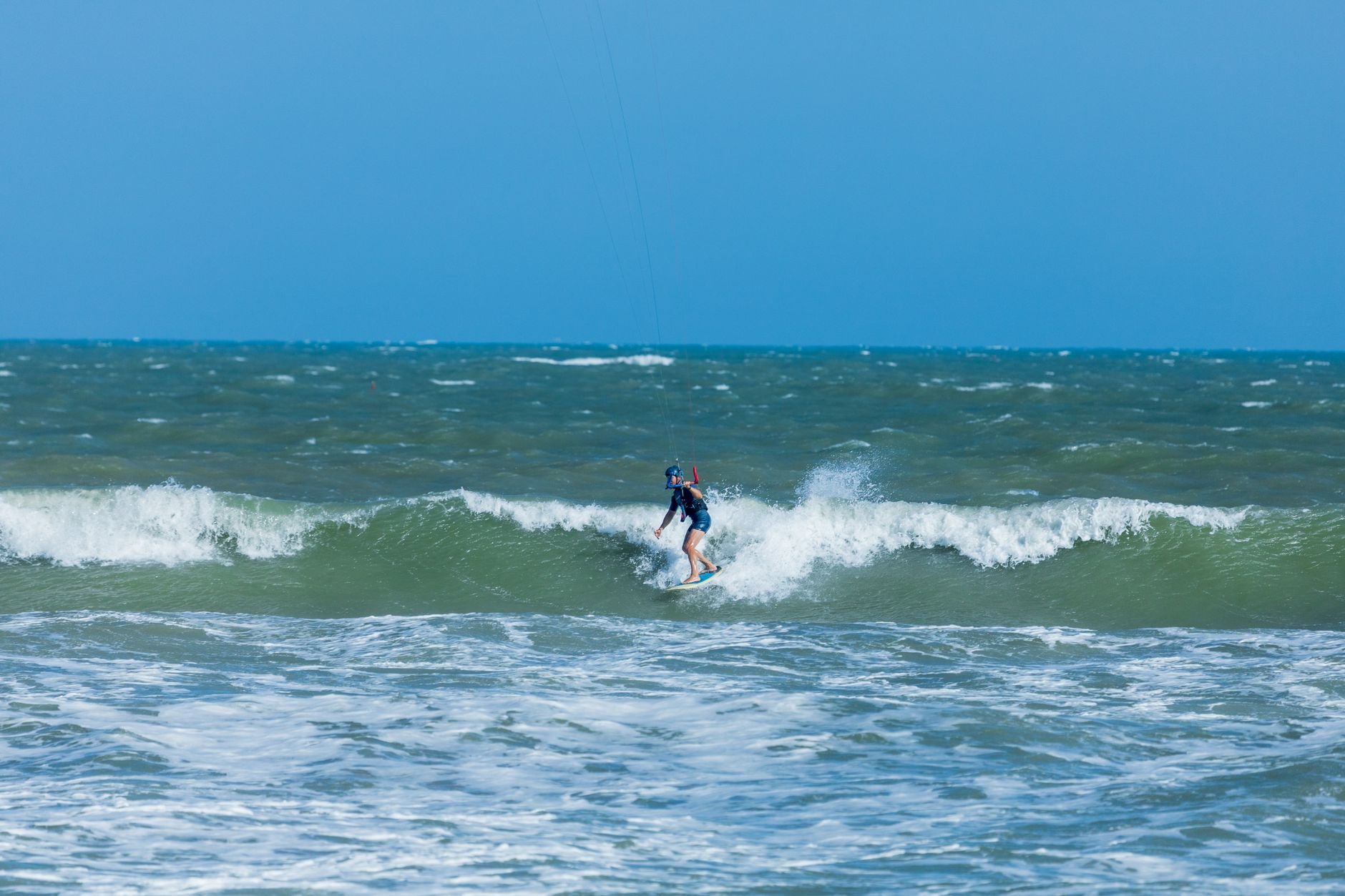
- Stay near the pocket. If the board drifts far ahead of the breaking section, the wave runs out of power. If it falls behind, the whitewater catches up.
- Keep the kite quiet. Small, smooth bar movements are easier to manage than large corrections.
- Keep the knees soft. A flexed stance absorbs chop and keeps the board responsive for the next turn.
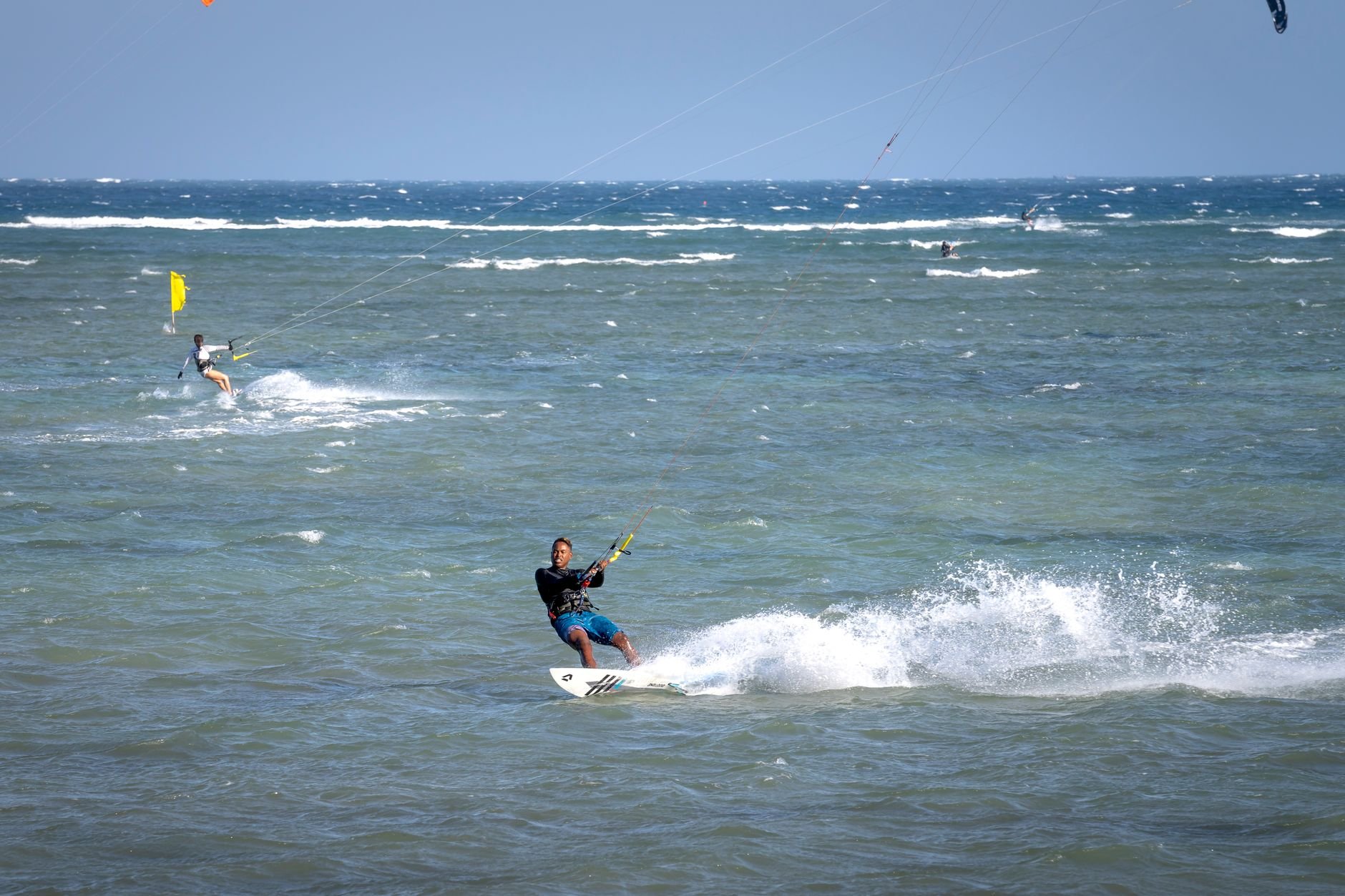
If trim keeps going wrong, go back to the beach check above. Persistent pull on one side is a kite problem, not a technique problem.
The cutback
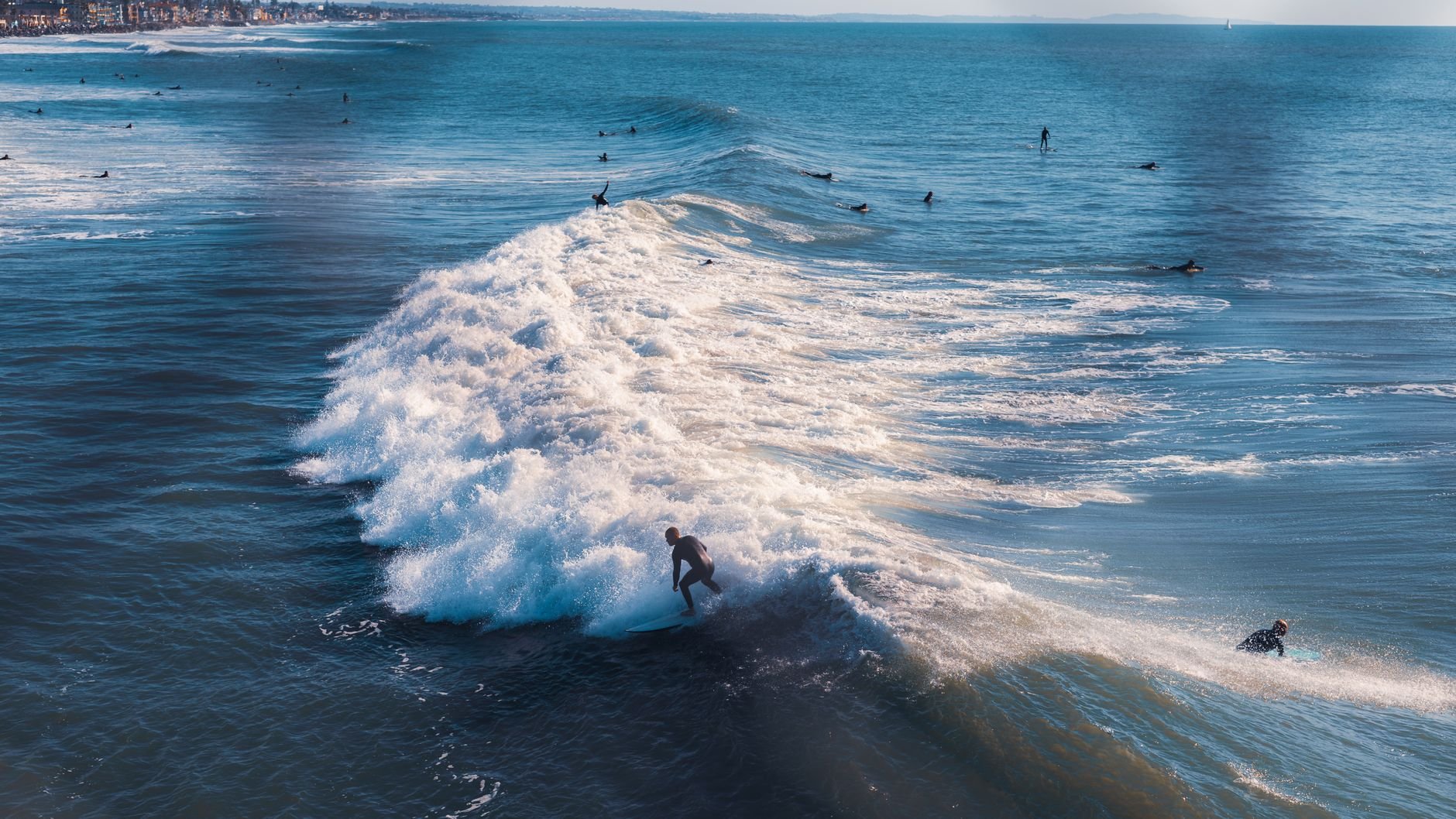
A cutback is the turn that brings the rider back toward the breaking part of the wave after travelling out along the face. It is the next step up from the bottom turn, so attempt it only when the bottom turn and trim feel reliable.
The Windsurf coaching video, made with Marcilio Browne and professional windsurf coach Colin Dixon, names the cues for cutbacks as hand position, knee position and body position. Windsurfing equipment differs from a kiteboard, so treat those as a checklist for what to watch, not as a kitesurfing recipe. Hand, knee and body position are all worth checking whichever sport you ride.
- Finish the bottom turn and trim along the wall. Do not start the cutback from a stalled or off-balance position.
- Turn the head and shoulders back toward the breaking part. Look at the section you want to return to.
- Bend the knees and press the rail. Carve the board back up the face in a smooth arc.
- Hold the kite steady through the turn. Avoid large bar movements while the board changes direction.
- Exit and reset. Settle the board and trim again before the next move.
When to stop escalating
Move up the ladder only when the previous step feels dependable. If a step keeps failing, go back down rather than forcing the next one.
- Kite behaves unevenly: return to the trim and symmetry check on the beach.
- No open wall to ride: wait for a better wave instead of turning on a closing section.
- Bottom turns end up in the whitewater: practise only the bottom turn and trim until the exit along the wall is consistent.
- Cutbacks stall the board: check hand, knee and body position, and keep the kite steady.
Once these basics hold, a trip to a new break is a natural next step. See the best wave kitesurfing spots in the world for ideas on where to practise.
Frequently asked questions
What is a bottom turn in kitesurfing?
At the foot of the wave face, the rider carves a bottom turn that sends the board back up from the drop toward the open wall, positioning it for the following manoeuvre.
What is a cutback?
A cutback turns the rider back toward the breaking part of the wave after travelling along the face. Coaching resources point to hand, knee and body position as the cues to check.
Why check trim before riding waves?
A proper trim and symmetry check, followed by quick line adjustments, helps the kite fly evenly so that turns are easier to control.
Which wave is best for practising turns?
A wave that peels gradually along a point or sandbar offers an open wall to turn into. A wave that closes out gives no clean section.