Not sure what to wear for today’s water? This kitesurfing wetsuit guide matches suit style to water temperature: a shorty in warm water, thicker full suits as it cools, and a drysuit for the coldest conditions.
Start with the temperature lookup below, then adjust for wind, fit and your own cold tolerance. The suit is one part of a wider kit list, covered in kitesurfing gear for beginners.
Water temperature lookup for suit thickness
Neoprene thickness determines how much insulation a wetsuit provides, so thickness is the first number to match to the water. The table turns a water temperature into a starting suit, and the last column says how to use each row.
| Water temperature | Suit type | Planning use |
|---|---|---|
| 75°F+ (24°C+) | 0.5-1.5mm rashguard, top or shortie | Warm-water setup; a thin layer is enough and a full suit is unnecessary. |
| 65-72°F (18-22°C) | 3/2mm full suit | Typical mild-water full suit for spring, summer and fall. |
| 60-68°F (15-20°C) | 4/3mm full suit | Cooler spring, fall and mild-winter sessions. |
| 52-60°F (11-15°C) | 5/4mm or 5/4/3mm full suit | Serious warmth needed; add a hood, booties and gloves. |
| 45-52°F (7-11°C) | 6/5mm or 6/5/4mm full suit | Winter-grade suit for very cold water. |
| Below 45°F (7°C) | 7mm+ full suit or drysuit | Drysuit highly recommended for safety and comfort. |
These figures come from a wetsuit thickness chart on the Banggood blog, written for water sports in general rather than for kitesurfing alone.
Where two rows apply, the thinner suit fits riders who stay warm and the thicker suit fits riders who feel the cold. Brands also rate their suits differently. One retailer rates its 4/3 suit for 48-55°F (9-13°C) water, which is colder than the chart row above. Check the maker’s own range before buying.
Reading the thickness numbers
On a label, the numbers give thickness in millimetres, according to a Dubai kitesurfing school’s wetsuit guide. The torso keeps the vital organs warm, and the thinner limbs leave the arms and legs free to move.
Regions and seasons
The chart pairs each row with places and seasons. The 3/2mm full suit suits spring, summer and fall in Central California and Southern Europe. The 4/3mm suit covers spring, fall and mild winter. The 6/5mm row is listed for winter in Canada. The thinnest rashguard, top or shortie row matches summer in the Caribbean, Southeast Asia and the Red Sea. Treat these as comparison points for your own spot, then use a local water reading for the actual choice.
Shorty or full wetsuit for kitesurfing
A full wetsuit is the safer default for most kitesurfing seasons, and a shorty only makes sense in warm water. The chart places the shortie style in the warmest band, at 75°F+ (24°C+), alongside thin rashguards and tops.
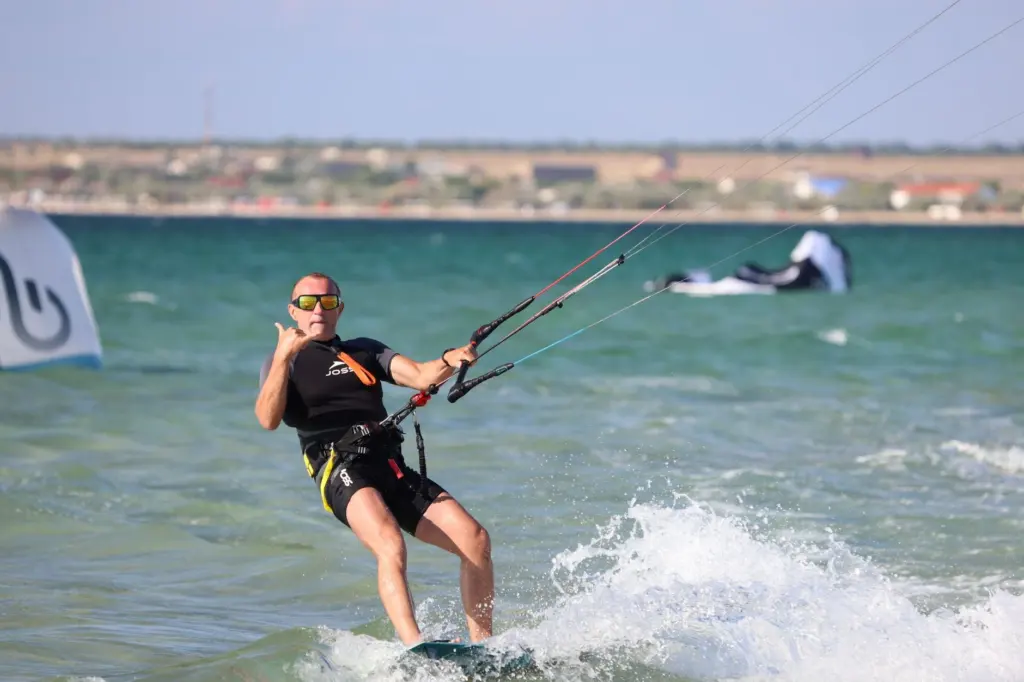
The Hyères kitesurf school calls the full wetsuit the most popular winter kitesurfing suit, regardless of the region. A retailer’s guide says a 4/3 suit stays comfortable until all you need is a shorty. In practice, a full suit covers the cool shoulder seasons, and the shorty takes over once the water is reliably warm.
- Choose a shorty if your sessions are in summer water at the warm end of the chart and you want freedom of movement in the legs and arms.
- Wait before buying a thick suit if you only ride in warm months; a thinner full suit costs less and covers the same conditions.
Wind chill and exposure on the water
Water temperature alone does not decide the suit. The Dubai school’s guide says the thickness you need depends on a few factors, including air temperature, wind strength and your personal cold tolerance. A windy, cool day can call for a thicker suit than the same water on a still, warm day.
A hood is the clearest adjustment for exposed conditions. The Hyères school says a hood reduces heat loss by 30% in cold water, from 6 to 12 degrees, and describes the hooded suit as the choice for the cold areas of northern France where winds can be icy. Riders in similarly exposed places can treat a hooded suit, or a hood worn with a full suit, as the first upgrade before moving to a much thicker suit. A hood is separate from protective headgear, which is covered in the guide to a kitesurfing helmet.
When a drysuit is worth buying
A drysuit is worth buying when you regularly ride in water below the chart’s coldest wetsuit band, which is 45°F (7°C). The Banggood chart lists a 7mm+ full suit or a drysuit for that range and says a drysuit is highly recommended for safety and comfort.
Wetsuit and drysuit materials
Wetsuits are made of neoprene, and a thicker layer insulates more. That is why the chart climbs from thin tops through 3/2mm and 4/3mm suits up to 6/5mm suits as the water cools, according to the Banggood thickness guide. Once the chart reaches the 45-52°F (7-11°C) row, the suit is a 6/5mm or 6/5/4mm full suit, and the next step down in temperature moves to a drysuit or the thickest wetsuit.
Very cold water also raises the stakes of a kite session going wrong, because getting back to shore takes longer than the suit’s insulation can cover. Read kitesurfing safety systems explained alongside this guide before riding in the coldest bands.
Fit and putting the suit on
A kitesurfing wetsuit should be snug, but not too tight and not too loose, according to the Dubai school. A suit that is too big lets cold water pour in, so a thick suit that fits badly gives away the insulation it was bought for.
Put the suit on slowly and work the material up into the crotch and shoulders before closing the zip. Then check that you can move your arms and bend at the hips without the suit pulling. Treat the thickness row as a ceiling on comfort, and fit as the other half of the decision. A well-fitted thinner suit can outperform a loose thicker one.
Troubleshooting a cold or wet session
If a suit that matches the chart still leaves you cold, work through the cause before buying a thicker one.
- Cold despite a suit rated for the water: look at fit first. Gaps at the neck, wrists or ankles let water circulate, and a loose body is the usual reason a correct-thickness suit feels thin.
- Cold mostly on breezy days: add a hood or move to a hooded suit. Air temperature and wind strength change the insulation you need, and the hood addresses the exposed head directly.
- Water entering at the back: kitesurfers report that friction between the harness and a back zip lets water into the suit. Try the suit on with your own harness before committing.
Frequently asked questions
| Question | Answer |
|---|---|
| Does freshwater feel colder than the sea? | It can. The Banggood guide says freshwater often feels colder at the same temperature, so lake riders may want to lean toward the thicker option in an overlap. |
| What do seam types change? | Flatlock seams suit warmer-water suits of 2mm or less but are not watertight. Glued and blind-stitched seams are described as ideal for cooler water, in suits of 3mm and thicker, per the same guide. |
| Is a more expensive suit easier to wear? | Often. The Banggood guide says higher-end neoprenes offer significantly more flexibility, which makes a suit easier to get on and off. |