| Symptom | First action | Planning use |
|---|---|---|
| Kite is down and will not relaunch | Release the bar and the chicken loop, which leaves the kite on its depower line. | Rehearse the release until it is a reflex, before you need it. |
| Kite is secured but the bar has drifted away | Retrieve the bar hand over hand along the safety line. | Keep the safety line clear so the bar can be reached. |
| Lines are tangled around the kite or bar | Grab the front centre lines to control and secure the kite. | Sort the kite first and the lines second. |
| Kite is settled and you are ready to pack down | Secure the trim lines first, then the main flying lines, and wind everything onto the bar. | Work in a fixed order so no line is left loose. |
| No pickup is imminent and you cannot get home | Leave the kite fully inflated and keep one hand raised. | Decide early that visibility matters more than a tidy pack-down. |
Steps follow the SurferToday self-rescue guide and the Kitesurfing Handbook rescue chapter.
Kitesurfing self rescue means releasing the kite, controlling the lines and packing the kite down so you can float or return alone. It only works if you stay calm and the kite can no longer be flown.
If you are planning a longer trip, the wider picture is in our guide to a kitesurfing team expedition. This page covers the single moment when you are alone in the water and the kite has stopped working for you.
Releasing the kite safely
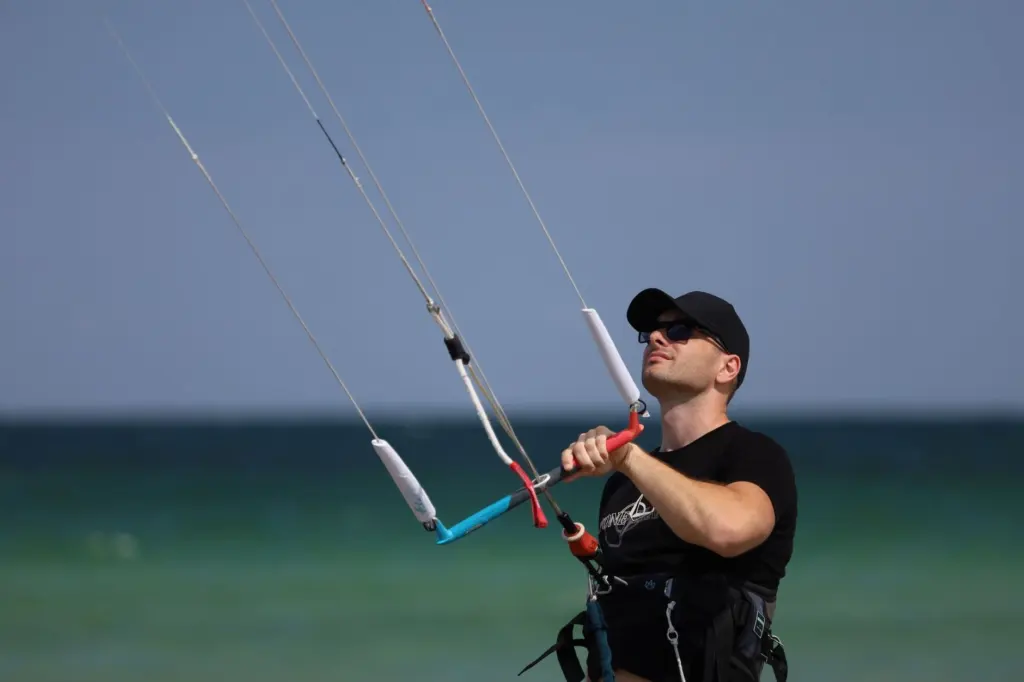
Self-rescue starts by letting go. SurferToday puts it plainly: release the bar and the chicken loop. The kite safety release system, which sits at the chicken loop, unhooks you from the kite so it is no longer pulling you through the water, as Best Kiteboarding describes.
First release: bar away, kite still attached
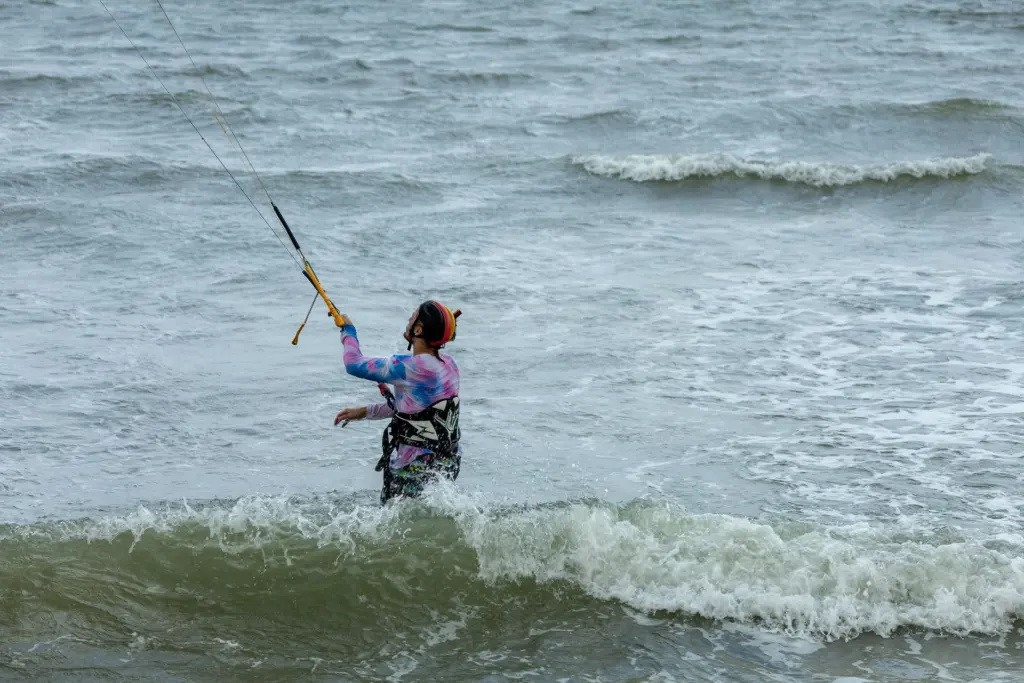
Letting go of the bar depowers the kite to its maximum, according to Pro Kite Mexico. Depower is the point of the manoeuvre, so do not hesitate to open your hand. The Kitesurfing Handbook explains that the first safety release, at or near the chicken loop, frees the kite from the rider while the kite stays connected to you by its depower line.
Do not pull the control bar back in once you have released. Pulling on the bar, or holding the rear lines, can power up and possibly relaunch the kite, which is the opposite of what you want while you sort things out.
Second release: only with a clear downwind
The second safety release detaches the kite fully. The handbook limits it to cases where the detached kite will not cause danger for others downwind. Treat it as a last resort. A free kite drifting downwind is a hazard to everyone else, so look downwind before you use it.
Choosing your route home
The wind decides how you get back. A body drag rescue is only viable in onshore, side-onshore and sideshore conditions, says Pro Kite Mexico. If the wind is offshore, do not plan on dragging yourself home behind the kite.
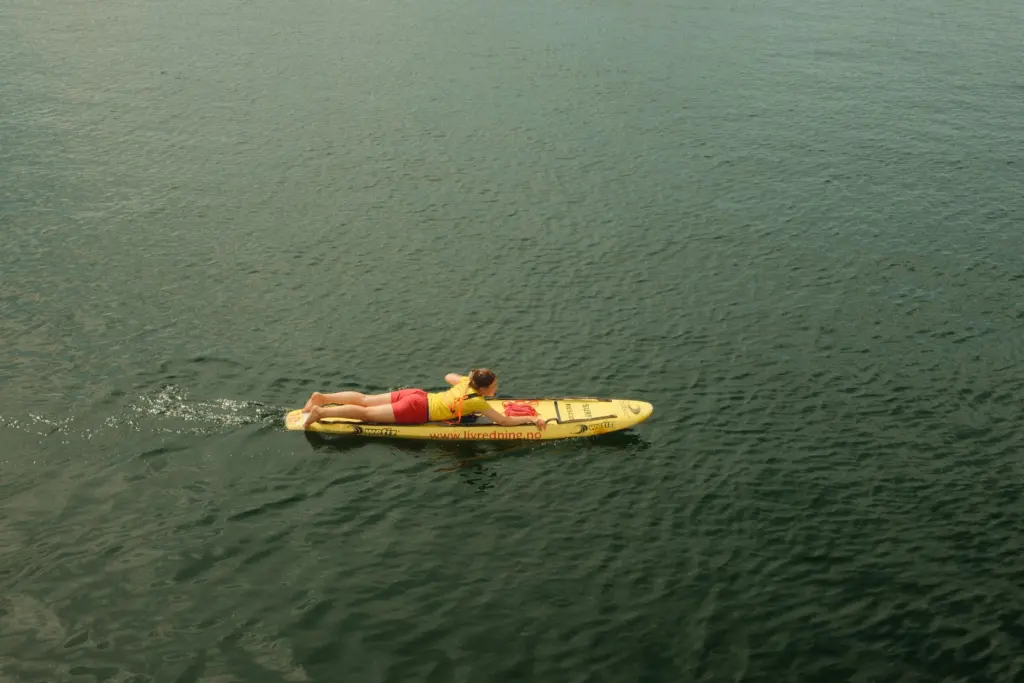
When there is no wind toward shore, the kite can only act as a float, as Best Kiteboarding notes. In that case, the question stops being how to get ashore quickly and becomes how to stay with the kite and be seen, which the signalling section below covers.
- Keep the kite attached after the first release when you intend to pack down and swim or paddle in, because the depowered kite stays within reach on its line.
- Detach fully only when downwind is clear, and only when staying connected is worse than losing the kite.
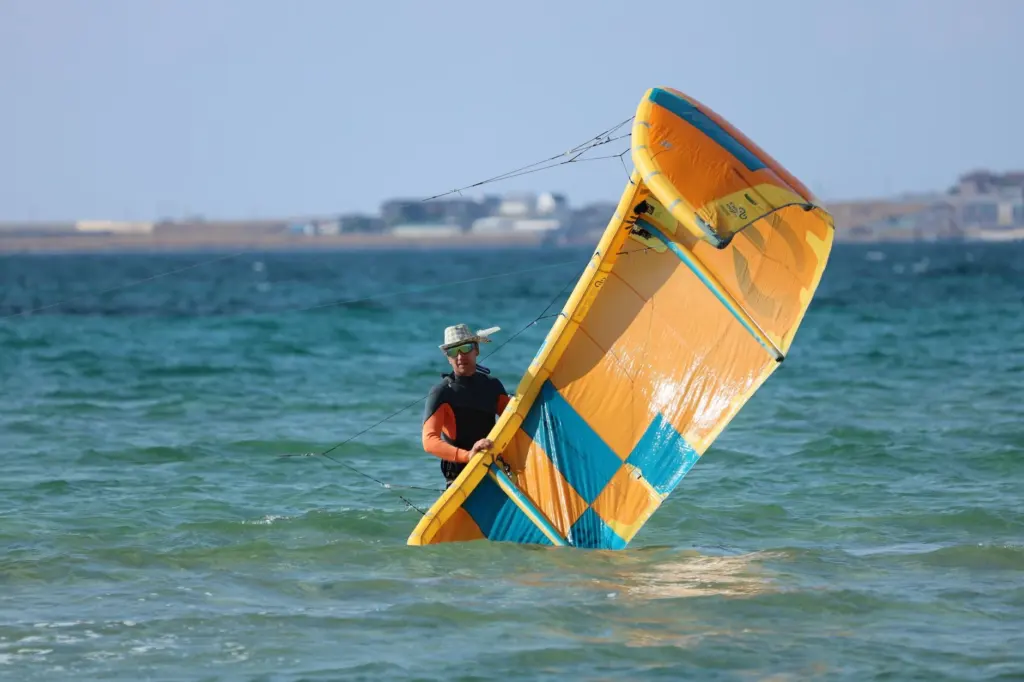
- Right the kite if you can. Best Kiteboarding describes returning it to a self-righting position by levering the leading edge, starting with one hand on the back of a rib.
Controlling tangled lines
Tangles are where a calm rider gains time. After release, the symptom is usually lines wrapped around each other, the kite, or the bar. The fix begins with the kite, not the knot.
The Kitesurfing Handbook says it is usually safe to grab the centre front lines to control and secure the kite. Once the kite is under control, retrieve the bar hand over hand along the safety line, as SurferToday advises, then work on the lines.
Wrap carefully rather than quickly. Best Kiteboarding recommends bundling the lines in a figure-of-8 around the bar. If a tangle cannot be cleared, a line knife (hook knife) is the best implement for cutting kite lines, according to the handbook, so it belongs on your kitesurfing expedition gear list.
Packing the kite down in the water
Pack-down turns a flying hazard into a bundle you can manage. Start by plugging in the dump valve as soon as you reach it, as SurferToday sets out. Secure the kite with your harness or kite leash so it cannot unroll, then wrap the lines.
- Secure the kite to your harness or leash.
- Secure the trim lines first, before the main flying lines.
- Wind all lines onto the bar until the leading edge is reached, as the Kitesurfing Handbook describes.
- Add half hitches on the safety line so the kite stays flagged, per Pro Kite Mexico.
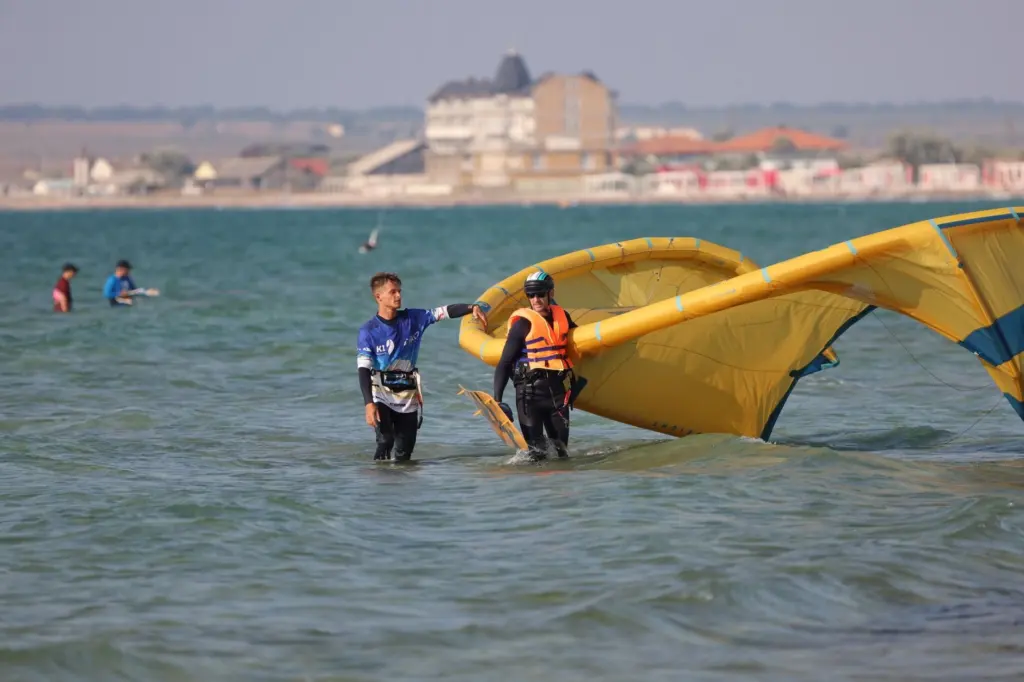
Pack-down is not always the right call. If no boat pickup is imminent, the handbook says it is better to leave the kite fully inflated, because it is easier for searchers to spot.
Signalling for help and staying visible
Self-rescue is for riders who are able to use it. Signal for help when the wind will not carry you home, when you cannot untangle or control the kite, or when you are tired or unwell. The handbook notes that a kite lying on the water for a considerable period most likely cannot be relaunched, so the rider is either doing a self-rescue or needs assistance.
A rider with one hand up for an extended period, or waving, needs assistance. Hold the signal rather than dropping it to fiddle with gear. A kite left inflated also works as buoyancy that attracts nearby riders, as Best Kiteboarding observes.
That same source is blunt that you should never sail alone, and that losing your calm makes matters worse. Riding with others is the first safeguard, and group logistics are part of how to plan a how to plan a kitesurfing expedition exercise for any team.
Why self-rescues start
Many self-rescues begin with a failure rather than a mistake in the air. Pro Kite Mexico lists a line snapping because equipment was not looked after properly as one common cause. The practical fix is care and inspection before you launch, not a better rescue technique afterwards.
Frequently asked questions
| Question | Answer |
|---|---|
| Why must I not enter the shore break with the kite inflated? | Pro Kite Mexico advises never entering a shore break with your kite fully inflated, so pack down before you reach the waves. |
| How do I keep my board with me? | Connect your safety leash, or a cord carried for the purpose, to a footstrap or handle on the board, as the Kitesurfing Handbook describes. |
| How should a boat approach a rider in the water? | The handbook says to approach from cross wind, or from downwind at an angle. |
| Can I right the kite from the water? | Best Kiteboarding describes levering the leading edge, starting with a hand on the back side of a rib, to return the kite to a self-righting position. |