
A shop lists bow, delta, hybrid and C kites, and the names sound interchangeable. The main kitesurfing kite types differ in bridles, trailing-edge shape and how much power the rider can shed by sheeting out.
This explainer defines each shape and how it flies without ranking kites for purchase. Riders assembling a full kit can start with kitesurfing gear for beginners, and sizing is a separate question covered in the kitesurfing kite size chart.
Foil and inflatable kites, and where the shapes fit
Kites split into two design categories, foil and leading edge inflatable, according to Kiteboarding Tarifa’s kite shapes guide. Bow, delta, hybrid and C kites all belong to the inflatable group, so the differences between them come from outline, bridles and how the canopy holds its shape in the air.
The bridle is the part that causes most confusion. It is a line that connects to the front edge of the kite and stays under constant tension in flight. A supported leading edge (SLE) kite is any kite with bridles attached to its leading edge. That makes bow and hybrid kites SLE kites. A C-kite is not an SLE kite, because it has no bridles.
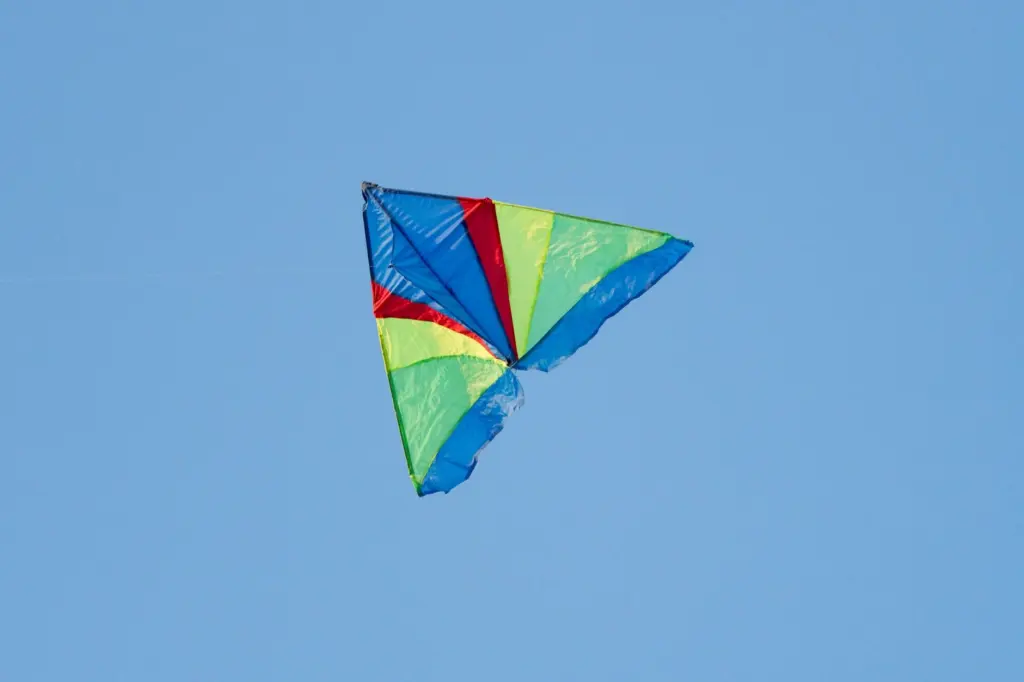
| Type | Defining features | Power and wind range | Planning use |
|---|---|---|---|
| C-kite | Square corners, deep C-shaped arc in flight, lines at the four corners, no bridles, much higher aspect than a hybrid | Narrow, specified wind range; depower range of around 30% | The original design. Expect less forgiveness when power needs to be shed. |
| Hybrid kite | Leading edge bridles, convex trailing edge, lower aspect canopy | At least 40% more wind range than most other types | Keeps a C-kite feel while adding some bridle benefits. |
| Bow kite | Concave trailing edge, flatter in flight, bridles hold the flat shape | Near 100% depower and a large wind range | The type to look at when depower is the priority. |
| Delta kite | Wingtip shape that makes it simple to roll the kite onto a wingtip | Power goes from 50% to 0% quickly when fully sheeted out | Described as suiting beginner and intermediate riders. |
The shape and behaviour descriptions above come from Kiteboarding Tarifa and the S2AS kite buyers guide.
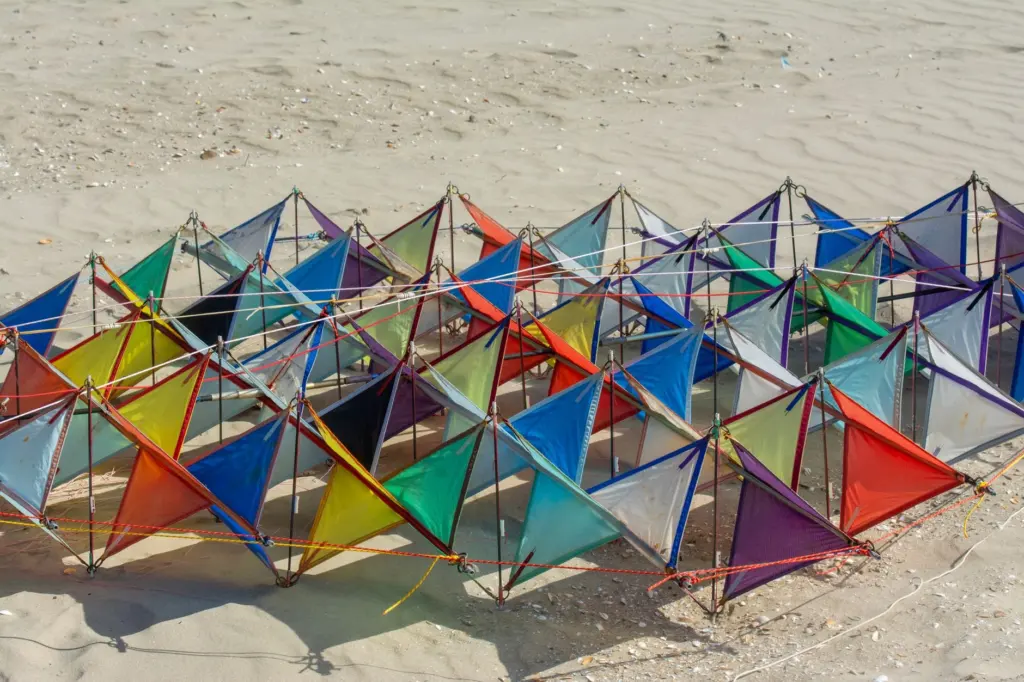
Bow kites
A bow kite is an inflatable kite whose defining characteristic is a concave trailing edge. In flight it looks much flatter than a C-kite, which is the quickest visual clue when kites are lined up or overhead.
A common misunderstanding is that a bow kite is simply a C-kite cut flatter. In practice the bridles do the work. According to Kiteboarding Tarifa, they are necessary to hold the kite in its flat shape, which is why the bow sits in the supported leading edge group while the C-kite does not.
Delta kites
A delta kite is defined mainly by its wingtips. The S2AS buyers guide points to a wingtip shape that makes it simple to roll the kite onto a wingtip, which is the move used for relaunching.
Delta kites are also the type that Kiteboarding Tarifa recommends for beginner and intermediate riders. That wording matters: it places the delta across two skill stages rather than limiting it to learners.
C-kites and hybrid kites
The C-kite is the original kiteboarding kite. It gets its characteristic shape from lines attached at the four corners, and it forms a deep C-shaped arc when flying. A fifth line is often discussed with this type, and the 5th line does not carry any tension while the kite is in flight.
The hybrid was developed to merge the benefits of C and bow kites. It has leading edge bridles, and its trailing edge is convex where a bow’s is concave. Kiteboarding Tarifa describes this style of hybrid as trying to maintain the feel and performance of a C-kite while taking on some of the bridle’s benefits. The hybrid is therefore a different shape with its own trailing edge, not a midpoint on a straight line between the other two.
Bridles and aspect ratio
Bridles separate the types that look similar from a distance. A C-kite has none, a bow relies on them to hold a flat profile, and a hybrid carries them on the leading edge while keeping a rounder, convex trailing edge. When two kites seem to fly alike, the bridle layout is usually the design feature to compare.
Aspect ratio describes the proportion of the canopy outline. A higher aspect canopy is longer and narrower, and a lower aspect canopy is shorter and broader. The S2AS buyers guide notes that C kites are much higher aspect than hybrid kites, and it links the hybrid’s behaviour to its lower aspect canopy and bridle. Aspect ratio says nothing about size, so it works as a shape descriptor and not as a replacement for a size decision.
Depower and relaunch compared
Depower is how much of a kite’s pull the rider can shed, and the types differ more here than in appearance. Relaunch, meaning getting the kite back into the air from the water, also varies by design.
- Bow kites. Kiteboarding Tarifa describes near 100% depower and a large wind range, and says a bow can be de-powered completely just by sheeting out.
- C-kites. The same guide says C kites have limited sheeting ability and cannot de-power as much as bow kites. The S2AS guide puts the C-kite depower range at only around 30%. For relaunch, C-kites need to be flipped onto their back and piloted to the edge of the wind window.
- Hybrids. According to S2AS, relaunch is a lot easier than on a C-kite, and a rider can normally expect at least 40% more wind range than most other types.
- Delta kites. S2AS says that when fully sheeted out, power goes from 50% to 0% really quickly. Relaunch is helped by the wingtip shape.
These figures are retailer and school descriptions, so read them as a ranking of how the types behave. They are not guaranteed performance numbers for every kite built in a given shape.
How the types feel, and which suit beginners
In feel terms, the C-kite flies well only in its narrowly specified wind range, and the hybrid tries to keep that C-kite character. The bow looks flatter in the air and is described with a large wind range and near full depower. The delta stands out for how quickly power drops once the kite is sheeted out.
For beginners, the clearest supported point is a caution. Kiteboarding Tarifa states that less ability to de-power can make C kites unsafe for beginners. Delta kites are recommended for beginner and intermediate riders, and the bow’s near full depower is the feature a learner would look for in a description. Board choice is a separate matter, and it is covered in how to choose a kiteboard.
Several misunderstandings are worth dropping:
- “Any inflatable kite is fine to learn on.” Depower differs by type, and C kites are the one flagged as unsafe for beginners because of it.
- “A hybrid is just a bow kite.” Both have leading edge bridles, but the hybrid’s trailing edge is convex, and it is built to keep the feel of a C-kite.
- “Delta means beginner only.” The recommendation covers beginner and intermediate riders.
- “Bridles make a kite a different brand of C-kite.” A C-kite has no bridles, and that absence is why it is not an SLE kite.
Frequently asked questions
| Question | Answer |
|---|---|
| Is a C-kite a supported leading edge kite? | No. A supported leading edge kite has bridles attached to its leading edge, and a C-kite has no bridles. |
| Does the 5th line on a C-kite carry tension in flight? | No. It does not carry any tension while the kite is in flight. |
| Are foil kites the same as inflatable kites? | No. Kites fall into two design categories, foil and leading edge inflatable, and bow, delta, hybrid and C kites are all inflatables. |