A team boarding a support boat needs one kitesurfing expedition gear list that separates personal kit, shared kit and spares. Pack flotation, impact protection and communication first, then exposure clothing, kites, boards and repairs.
The list below supports planning a kitesurfing team expedition. It is ordered by what matters most offshore, so the sections you cannot compromise on come first.
Flotation and impact protection
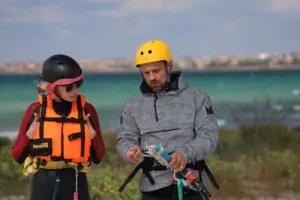
Personal protection is the first block of the packing list, and it should be carried by each rider rather than pooled. It suits every team member, whatever their experience, because offshore rescue can take longer than it does near a beach.
For flotation, boating safety guidance describes Type I offshore life jackets as giving the most buoyancy and being best for open water where rescue may be delayed. That is the reference point for an offshore crossing, and it leans toward more flotation than a typical beach session needs. Bulky flotation can restrict movement while riding, so each rider should decide how it combines with an impact vest and harness. The same guidance notes that inflatable PFDs need regular maintenance, including checking the inflation mechanism and replacing expired CO2 cartridges, so inflatable models add a spares task to the list.
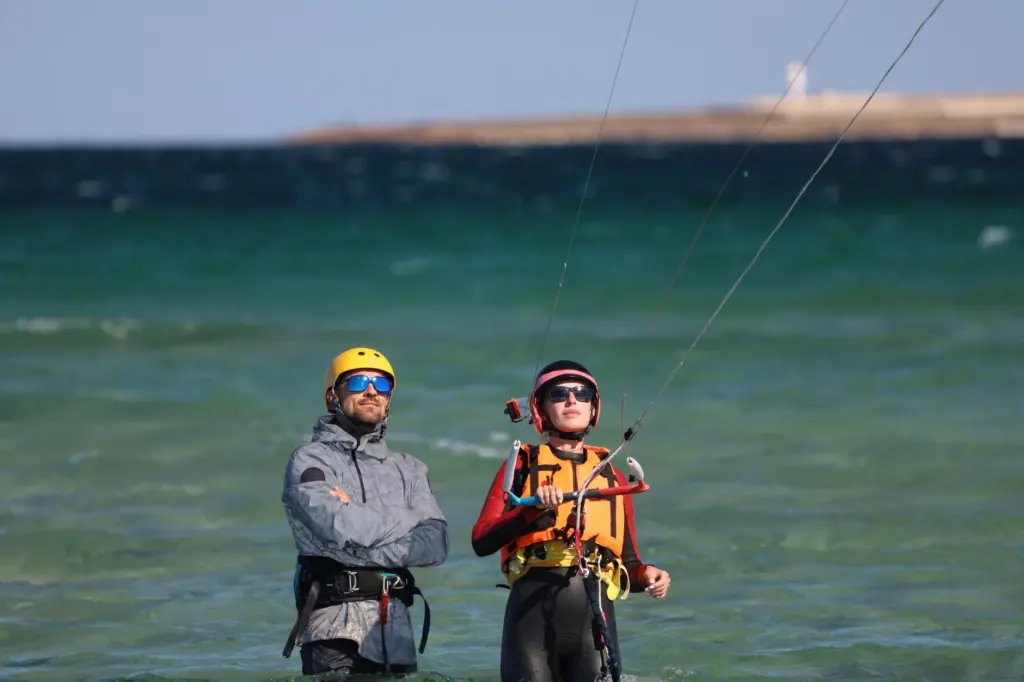
- Helmet and impact vest: carry one set per rider, worn over or alongside the harness, and check fit before leaving shore.
- Harness: bring each rider’s own, set up for their bar and lines, so nobody borrows a harness mid-trip.
- Flotation: choose the buoyancy level to match how far from help the team will ride.
What a rider does after a failure at sea is a separate skill from owning the equipment, and it is covered in kitesurfing self rescue.
Communication and signalling
Shared kit begins with the ability to call for help and be seen. A waterproof handheld VHF radio and flares belong in the team’s grab area on the boat, not in individual riders’ bags.
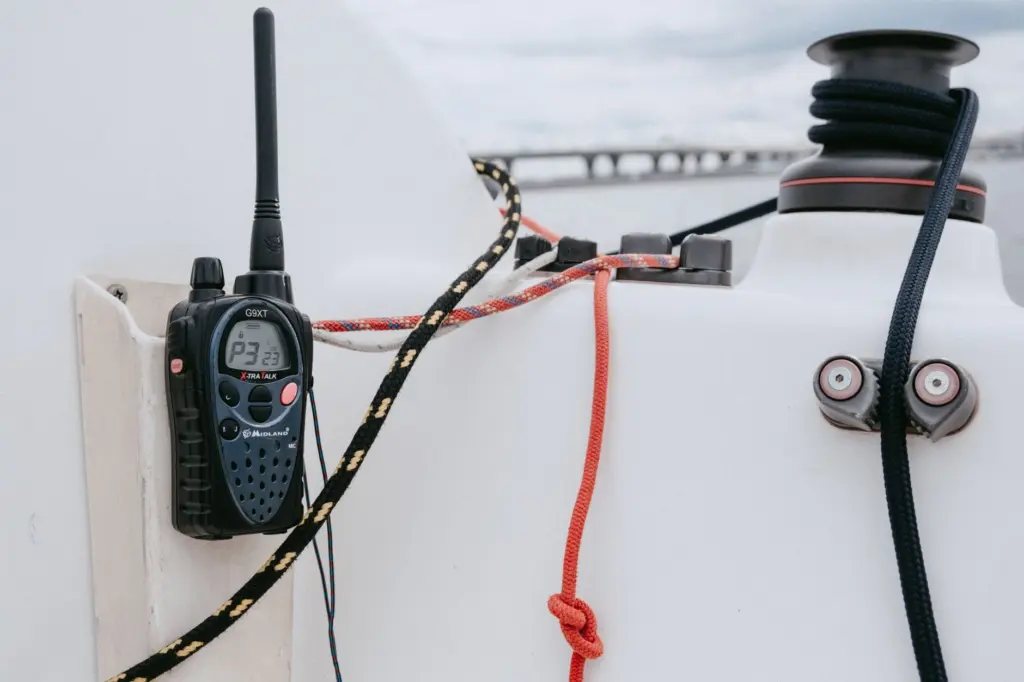
Keep them where anyone aboard can reach them quickly, and make sure every team member knows where they are stowed. Treat these as safety items, not comfort items: nothing else on the list replaces them if a rider drifts or a kite is lost.
Wetsuit and sun protection
Exposure clothing is mostly a comfort item, though it protects against the cold and the sun across long days on the water. The wetsuit is the central choice, and its thickness should follow the manufacturer’s guidance for the water temperature the team expects.
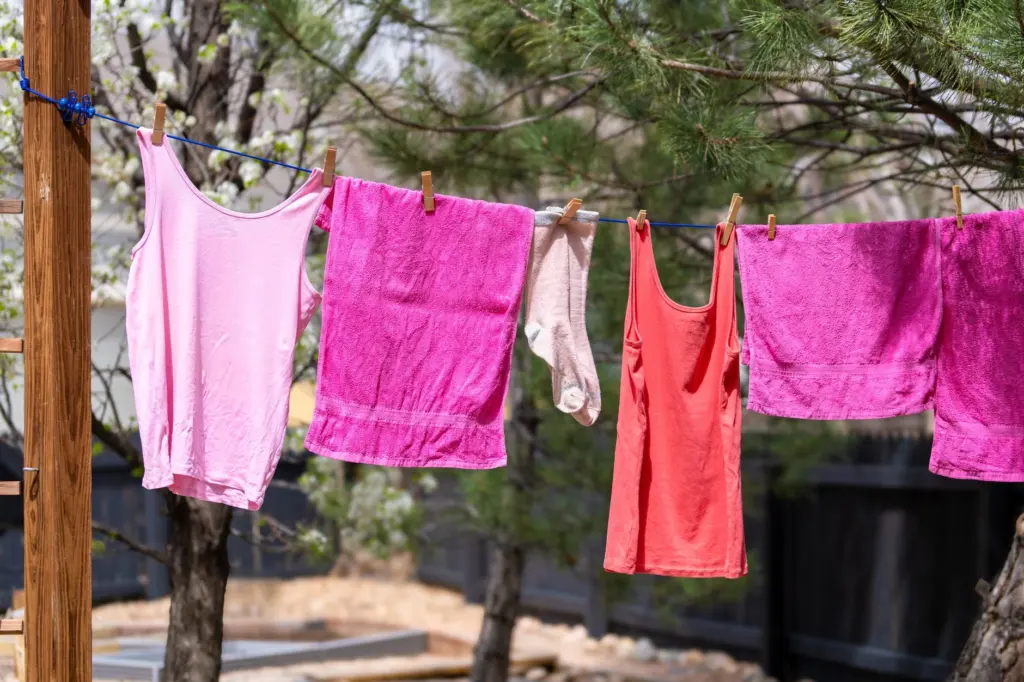
A rash guard handles sun, not cold. One kitesurf apparel guide describes a rash guard with a UPF 50+ rating and a breathable, lightweight, quick-drying fabric, but also says it may not suit colder water. In warm water it can be enough on its own, and in cooler conditions it works as a layer under or beside a wetsuit.
- Wetsuit: bring one per rider, matched to the coldest water on the route rather than the average.
- Rash guard or sun top: pack a spare so a wet one is never the only option for the next session.
- Drying space: quick-drying fabric helps only if there is a rail or line to hang it on.
Kites and boards for the team
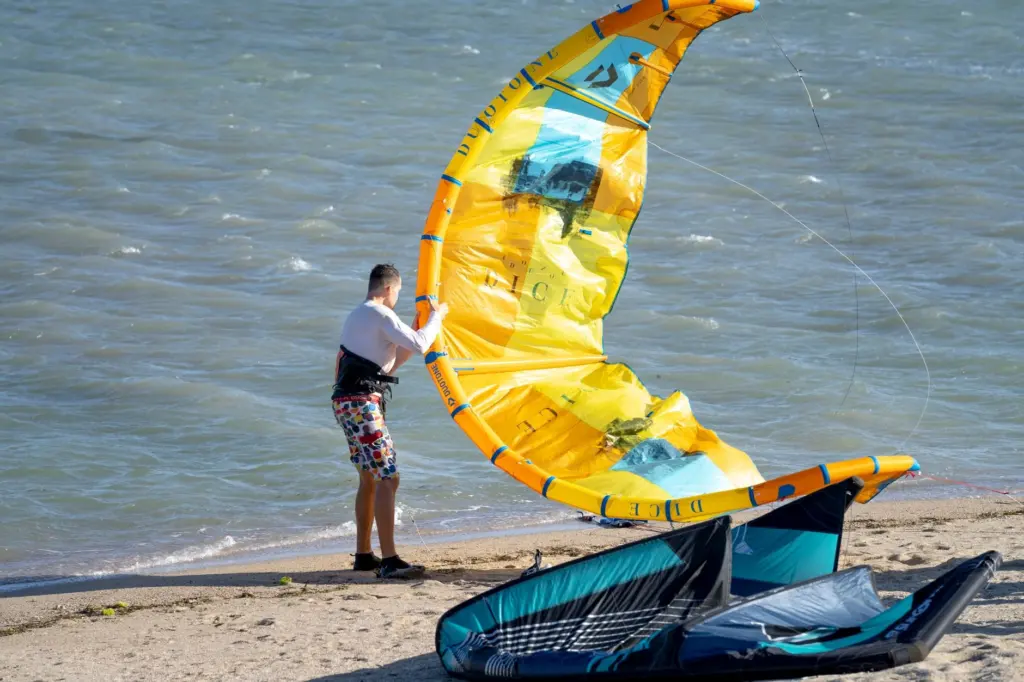
A team should bring a spread of kite sizes rather than a matching set per rider, because kite size affects the amount of power. The same apparel guide says kite size is an important consideration for exactly that reason, which makes range more useful than duplicates of one size.
Boards are the other half of the question. The guide notes that boards come in a variety of shapes and sizes, each designed for a specific type of riding. A team that rides one style can share designs. A mixed team needs a board suited to each riding type, plus at least one spare of whatever would end the day if it broke. These are judgement calls, not manufacturer rules, so check each manufacturer’s specification sheet for the kite sizes and board dimensions that suit each rider’s weight and the expected wind.
Spares and repair kit
Spares matter more offshore because there is no shop within reach. Pack them together, labelled by owner or by function, so the boat crew can find them fast.
Fins are a good example of why specifications matter. A fin listed in the kitesurf guide has a 76 mm distance between its two screw holes, so a spare fin only helps if it matches the board’s spacing. Check this before departure, not on the water. Carry spare lines, a repair kit and spare cartridges for any inflatable flotation, in a waterproof bag.
Personal, shared and spare kit at a glance
| Group | What goes in it | Planning use |
|---|---|---|
| Personal | Helmet, impact vest, harness, flotation, wetsuit, rash guard (UPF 50+) | Each rider packs and fits their own before departure. |
| Shared | Handheld VHF radio, flares, fire extinguisher, spare kites and boards | Stow where anyone aboard can reach them. |
| Spares | Fins matching the board (for example 76 mm screw-hole spacing), lines, repair kit, replacement CO2 cartridges | Keep in one waterproof bag with a clear owner. |
Figures come from the kitesurf apparel guide and boating safety guidance.
Packing and protecting gear on the boat
Packing for a boat is about protection and access. Bags should keep kite and board gear together, while safety equipment stays clear of the pile.
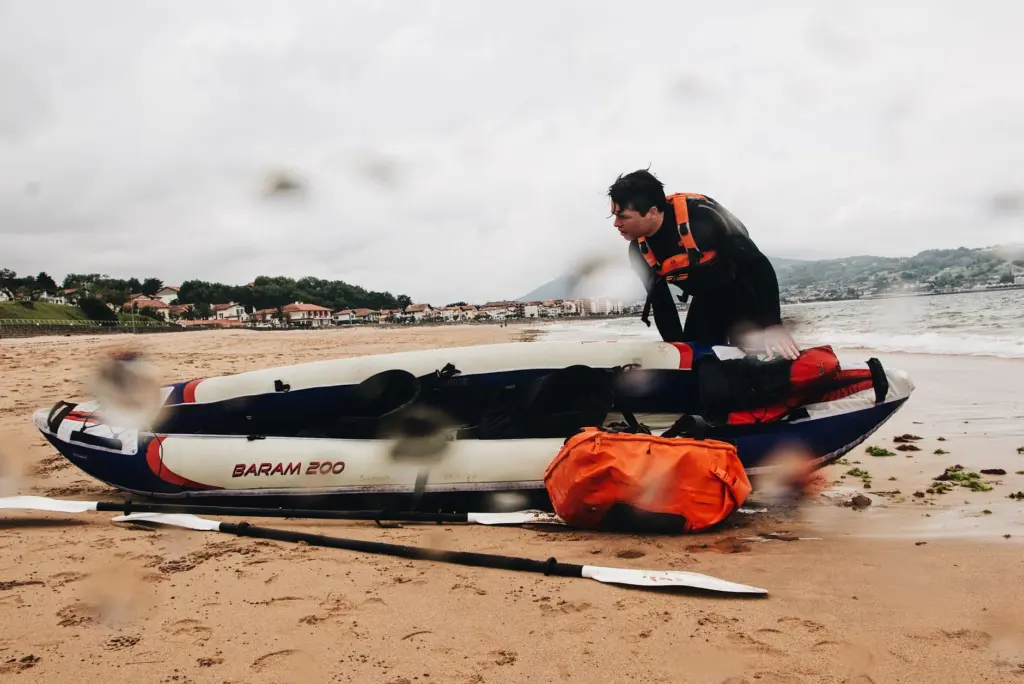
A large duffle suits the personal kit. The Ride Engine bag described in the apparel guide has a 102-liter capacity and is said to hold all of one rider’s kitesurfing gear, which shows how much space a single rider’s set can take. Multiply that by the team before deciding how many bags the boat can stow.
- Extinguishers: boating guidance says to mount them in readily accessible, clearly visible locations, not obstructed by gear, so never stack bags in front of them.
- Flotation: the same guidance says to store PFDs in a cool, dry place away from direct sunlight and harsh chemicals, so keep them away from fuel and cleaning products.
- Shared handoffs: when riders change over, kit moves too, which is why the order of packing should follow the plan in kitesurfing relay rider rotation.
Packing order for the team
- Fit and test every rider’s helmet, impact vest, harness and flotation.
- Stow the radio, flares and extinguisher where nothing blocks them.
- Check wetsuits against the coldest expected water and add spare sun tops.
- Select kites across a range of sizes and boards for each riding style.
- Seal spares, lines, fins and repair items in a waterproof bag.
- Load duffles last, leaving access to safety gear.
Frequently asked questions
What gear is essential for a kitesurfing expedition?
Flotation, a helmet, an impact vest, a harness, a handheld radio and flares come first. Exposure clothing, kites, boards and spares follow.
Which items are for safety and which for comfort?
Flotation, impact protection, the radio, flares and the extinguisher are safety items. Rash guards and sun tops add comfort and sun protection, and the wetsuit does both when the water is cold.
How many kites and boards should a team bring?
Bring enough kite sizes to cover the range of power the team might need, since size affects power. Add boards that match each riding style, plus a spare of any item whose failure would stop the day.
Is a rash guard enough in cold water?
No. A rash guard gives UPF 50+ sun protection and dries quickly, but may not be suitable for colder water, so use a wetsuit chosen from the manufacturer’s guidance.
What spares matter most offshore?
Fins that match the board’s screw-hole spacing, spare lines, a repair kit and replacement CO2 cartridges for inflatable flotation matter most, because they cannot be bought once the boat is at sea.