Quick answer: Communication on a kitesurfing expedition works best in layers: a radio link between riders and the support boat, agreed hand signals when voices fail, and a separate call-for-help device. Agree all three before anyone leaves the beach.
This guide covers voice and signal communication only. For the wider planning picture, see the kitesurfing team expedition overview. Position tracking is a separate subject, handled in live tracking kitesurfing expedition.
Choosing your communication layers
Most expedition problems start with one question: who needs to reach whom, and what happens when that link fails? Answer it for each of the three gaps below, then pick a primary method and a backup for each.
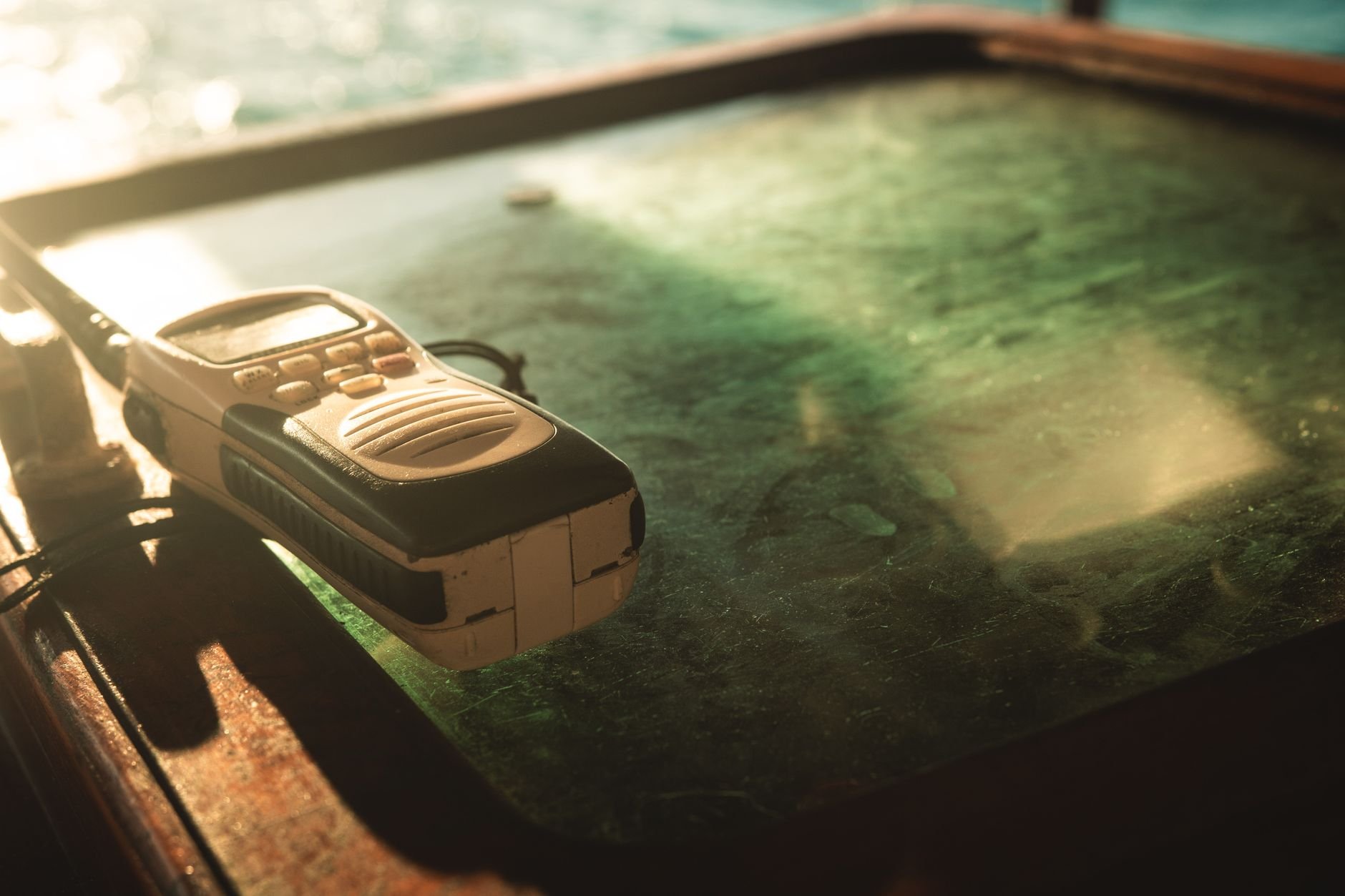
- Rider to support boat: the link used most often, for routine checks, wind and course changes and problems. It needs a method that works while the rider is on the water and cannot easily speak over wind noise.
- Boat to shore: the link that brings outside help. It should not depend on the same device the riders use.
- Rider to rider: the link that matters when radios are off, flooded or out of range. This is where hand signals earn their place.
The table compares the main options on what each does, where it falls short and how to use it in planning.
| Option | Main role | Condition to respect | Planning use |
|---|---|---|---|
| Waterproof handheld radio on the rider | Direct voice contact with the boat | Must be secured on the harness and kept charged | Give one to every rider and one to the boat crew, and test before launch |
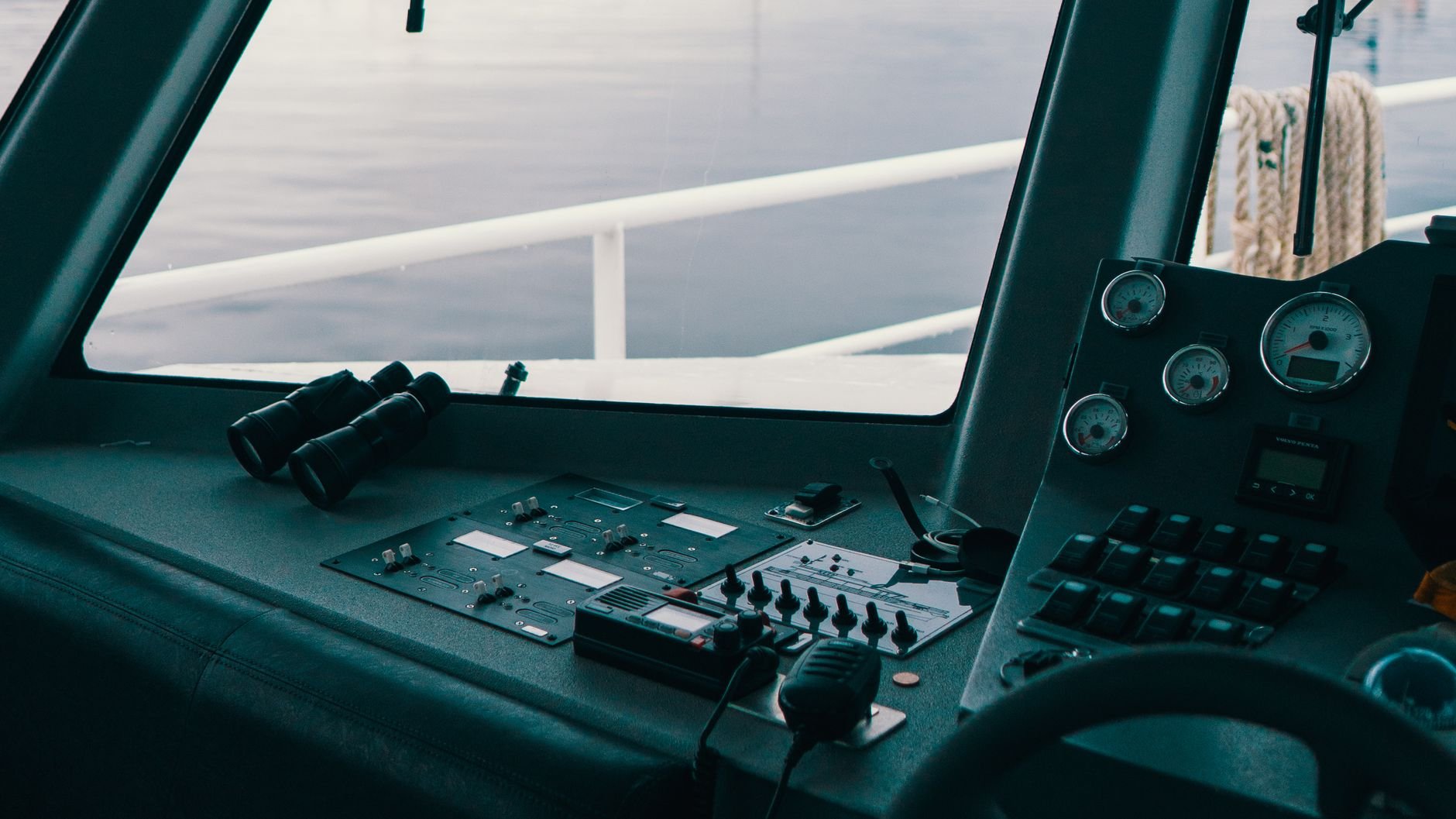
| Fixed marine VHF on the support vessel | Main radio station for the whole team | Depends on a sound antenna installation and a crew member listening | Assign one person to monitor it at all times while riders are out |
| Satellite phone | Long-range call for outside help | Intended as a backup, not as a rider-to-boat link | Keep it in a waterproof case with the boat crew, not on the water |
| Mobile phone | Call-for-help device named in safety guidance | Only useful where there is network coverage | Carry it as an extra, never as the only plan |
| Hand signals | Silent communication in sight of the boat or partner | Everyone must know the same set | Print a card and brief it on the beach |
These judgements follow the kitegeneration safety rules, which advise carrying a device to call for help and using appropriate signals for take-off and landing.
Handheld radios for riders
A waterproof handheld radio worn on the harness is the most direct answer to how riders communicate with the support boat at sea. It lets a rider report a problem without having to reach shore or wave for attention.
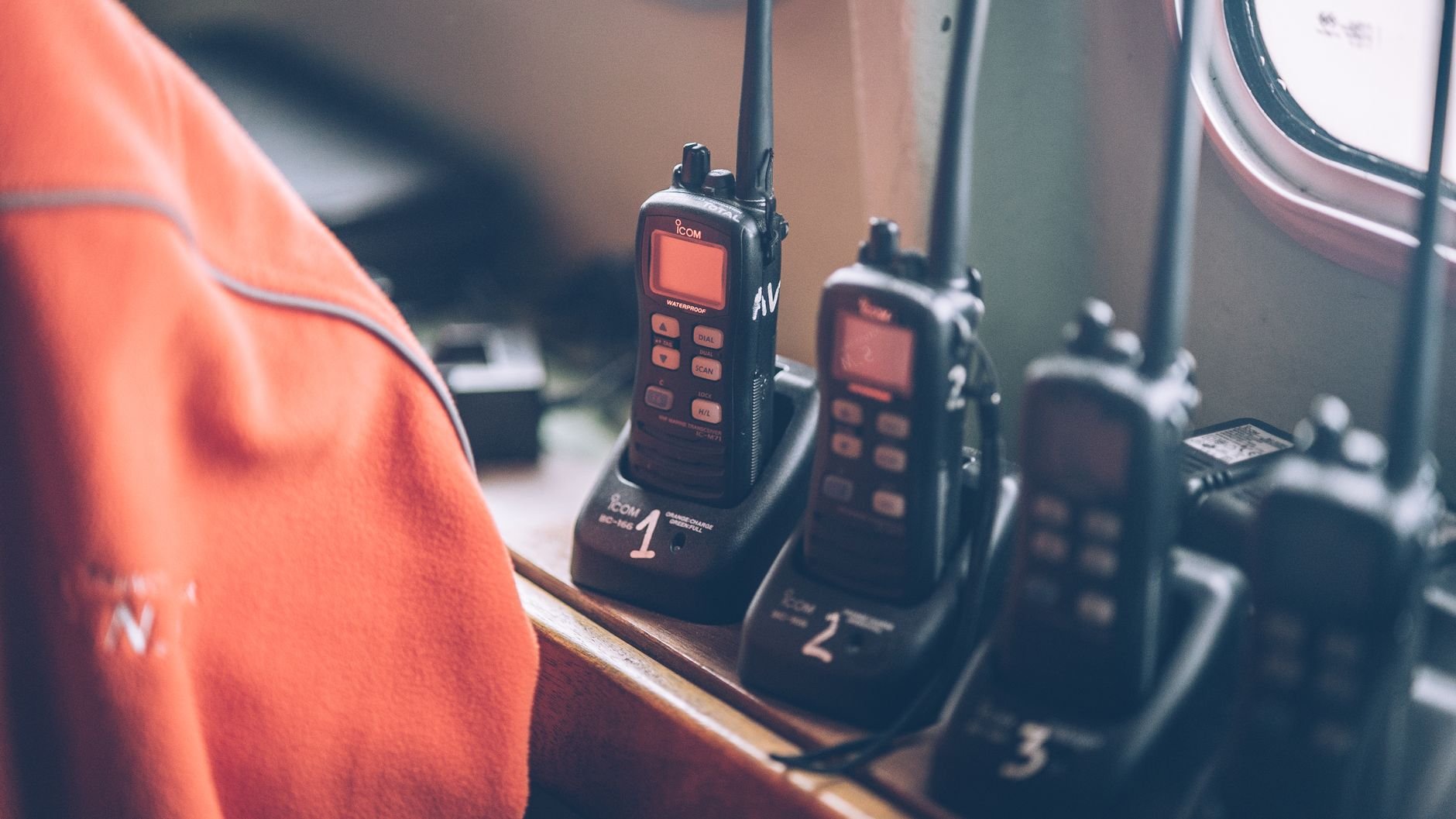
Treat the radios as numbered team equipment. Give each rider and each crew member a specific unit, charge them together and check them before every session. A radio that is flat or left in the car is no use to anyone.
Keep radio talk short and structured. Name who you are calling, then who you are, state the message, and have the receiver repeat anything that affects safety. Agree on a working channel and a fallback channel before the trip, and check the national radio regulator’s licensing and channel rules for the area you will be riding in, because requirements differ between countries.
The fixed radio on the support vessel
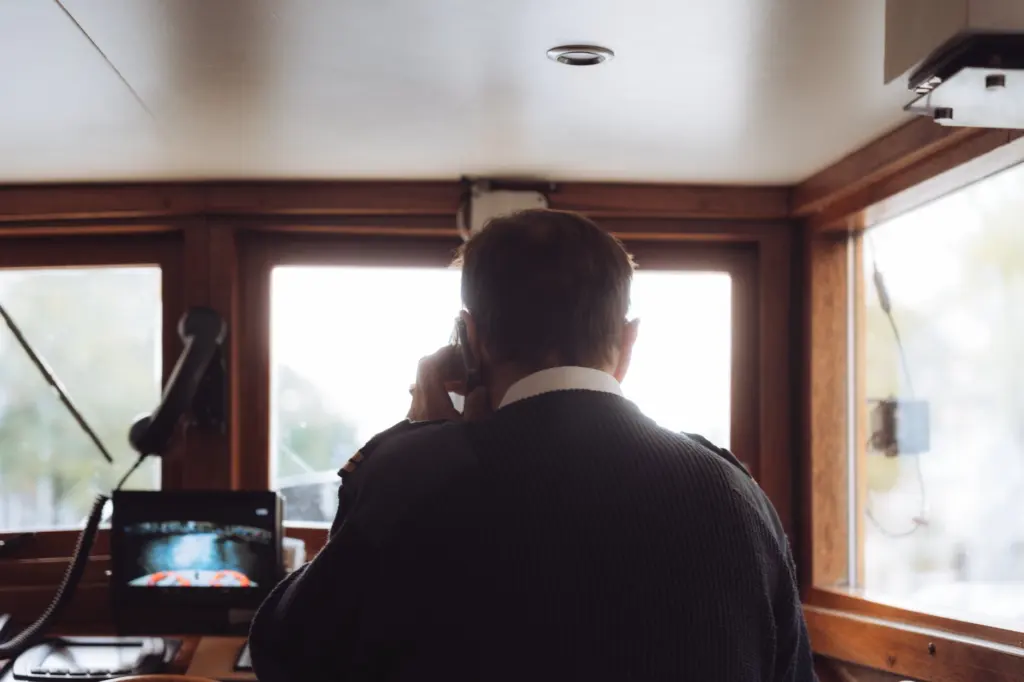
The support vessel’s fixed marine VHF is the team’s base station. It usually offers more power and a better antenna position than a handheld, which makes it the natural place to monitor riders and to make calls to coastal authorities if needed.
The decision that matters is staffing. A fixed radio nobody is listening to is the same as no radio. Name a radio operator for each session, make that person’s only job watching the riders and the radio, and have them log any call that concerns a rider’s safety.
Position the radio where the person driving can reach the microphone easily. If the skipper and the radio operator are different people, make sure both can hear the speaker over engine and wind noise.
Antenna installation and range
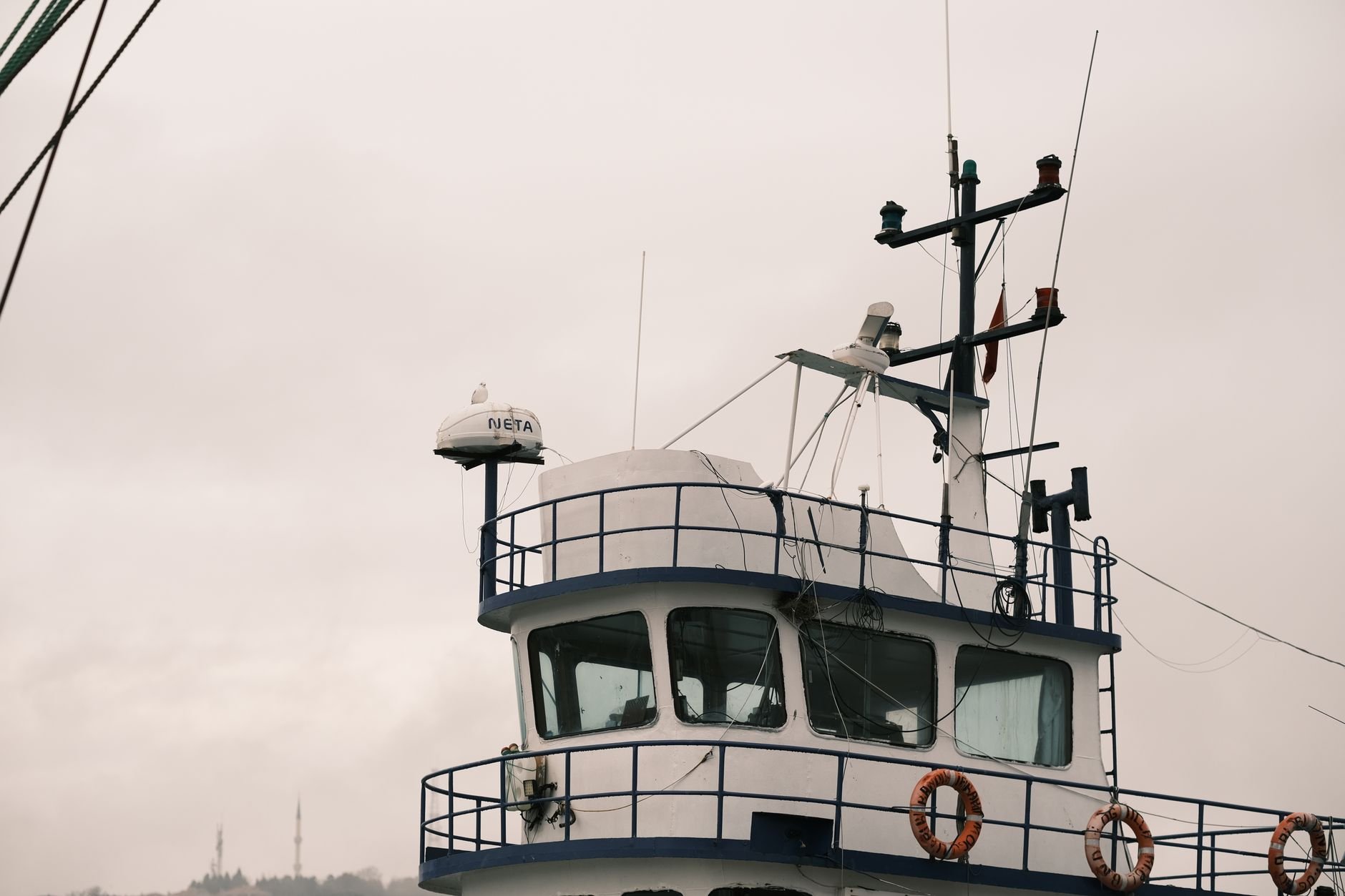
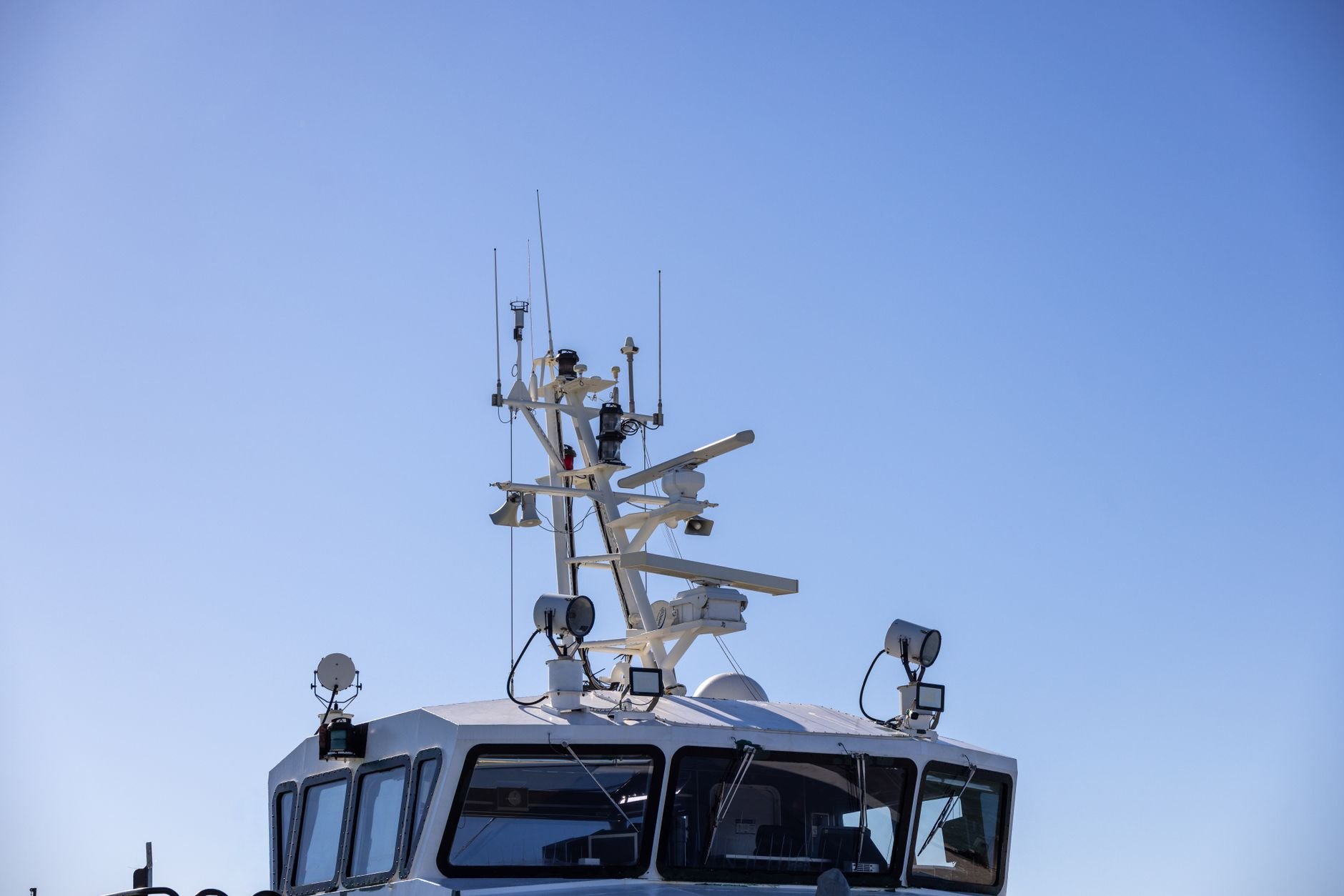
A radio is only as good as its antenna. Before departure, confirm that the mast is firmly mounted, the cable is intact and the antenna is not shadowed by other gear on the wheelhouse roof.
Do not rely on a quoted range from a brochure. Test the link in practice: have a rider with a handheld move to the farthest point of the planned session area and confirm a clear exchange both ways. If the exchange is weak, shorten the session area or move the boat rather than hoping it improves at sea.
Hand signals when talking is impossible
Riders can use hand signals whenever they are within sight of the boat or a partner and cannot talk, for example when wind noise drowns out voices or a radio has failed. The safety guidance on kitegeneration asks riders to use appropriate signals for kite take-off and landing, which means the signals must be agreed and understood by everyone involved.
No single universal set covers every group, so the team should fix its own and write it down. Build the card around these meanings:
- Fix the core messages. Cover at least: I am fine, I need help, I am coming in, and I have released the kite.
- Add launch and landing signals. Assign a clear gesture for a helper to confirm the kite is ready to launch or to catch it on landing.
- Make each gesture large and distinct. Choose movements that can be seen at a distance and that cannot be confused with a casual wave.
- Brief and rehearse. Walk through the card on the beach so that boat crew and riders answer the same way.
The release signal deserves special attention. Riders should check that the kite quick release and leash release work before going out, and the crew should know what a rider signals after using them, so that a released kite is read as a controlled action rather than an emergency, or the reverse.
Keep a laminated copy of the signal card and the agreed radio channels on the boat. A printed card removes any argument about what a gesture means when conditions are already stressful.
Staying in contact range of the support vessel
Communication is easiest when the team stays where the boat can see and hear them. The same safety guidance advises riders to calculate a distance from the beach that allows an easy return, and to check the accessibility of a downwind point in case of leeway. On a downwind run, this means the support vessel should be able to reach the exit point as well as the riders.
The guidance also tells riders to avoid offshore wind unless a launch and recovery service is available. A support vessel can fill that role, but only if the radio link is working, so confirm communication before riders move away from shore. Riders should keep a safe distance from boats of all kinds, including their own support vessel, so agree in advance how the boat approaches a rider who needs help. Wind and swell affect these choices too, as covered in kitesurfing ocean conditions wind and swell.
Satellite phone and call-for-help backup
A satellite phone is the backup for the boat-to-shore gap on an offshore kite trip, where mobile coverage may be absent. It should live with the boat crew in a waterproof case, ready to use and not buried in a bag. It supplements the VHF rather than replacing it, because the VHF is what the team uses to talk to each other.
The safety rules cited above also say riders should bring a device to call for help, giving a mobile phone as the example, and should never kitesurf alone. On an expedition, the support boat and a riding partner fulfil the second point, but the device is still worth carrying on the boat. Decide before departure who makes the call, what information they give and who takes over if that person is on the water.
Troubleshooting communication problems
- Radio check fails: change to the agreed fallback channel, then check the battery and antenna connection. If the problem remains, do not launch riders on that unit.
- Messages are garbled: shorten them and repeat key words. Move the boat closer to the riders if wind noise is the cause.
- Rider is out of sight and not answering: the radio operator alerts the skipper, then the boat heads for the rider’s last known downwind direction. Keep the call-for-help device ready.
- Signal not understood: stop the session and review the card. Unclear gestures are a briefing failure, so fix them on the beach, not on the water.
- Handheld lost or flooded: the rider switches to hand signals and returns to the boat or shore. Do not continue the session on the strength of one remaining radio.
Frequently asked questions
How far downwind should helpers stay during a kite launch?
The safety rules on kitegeneration advise a safe distance downwind of at least twice the length of the lines, if possible. Brief helpers and boat crew on this before launch.
Can a rider go out without a support boat if they carry a radio?
Not safely by that measure alone. The same guidance says never to kitesurf alone and to avoid offshore wind unless a launch and recovery service is available, so a radio does not replace a partner or a boat.
What should be checked before riders start using signals or radios?
Check that the kite quick release and the leash release work, and that the required safety devices, such as a leash, life jacket and helmet, are in place. A rider with failed safety gear should not launch, whatever the communication plan.