| Decision | What to settle | Planning use |
|---|---|---|
| Riding style | Waves, wake, free ride or freestyle | Narrows the kite category before size or brand comes into it. |
| Local wind | The average wind speed at the spot where you ride, read in knots on most forecasts | Sets the range of sizes the kite must handle and how many kites you need. |
| Rider weight | Your body weight, used together with wind speed | Moves the size up or down for the same wind. |
| Board size | The third factor behind kite size | Check it when moving between a small and a large board. |
| Wind range coverage | One kite that covers about 70% of the wind ranges at your spot | A practical target for a first purchase. |
These decision points come from the buying guidance of Mac Kiteboarding and the size advice of Rebel Tarifa kite school.
How to choose a kitesurfing kite starts with riding style and local wind. Rider weight and board size then set the size. Beginners should favour stability and a wide wind range over fast turning.
If you are still building the full kit list, the guide to kitesurfing gear for beginners covers the other pieces. This page deals only with the kite.
Phase one: settle your riding style and local wind
Riding style and local wind are the two inputs that every other kite decision depends on. Settle both before looking at a single product page.
- Name your style. Mac Kiteboarding frames the choice around whether you want waves, wake, free ride or freestyle. A beginner who has not yet found a style should treat free ride as the default.
- Find your typical wind. Rebel Tarifa points riders to forecast sites such as Windguru and Windy for detailed wind forecasts. Note the speeds you see most often at your own spot, not the ones you hope for.
- Write down your weight. Weight is the second half of the sizing question, so keep the figure to hand when talking to a shop.
Why wind comes before the brand
Mac Kiteboarding calls wind speed critical when advising a dealer. Its advice is to tell the dealer where you ride and how much you weigh. A kite that suits a steady, strong coastal wind can be the wrong tool at a spot where the wind is often light, so local conditions rule out more options than brand preference does.
Phase two: match the kite type to how you ride
Kite makers and shops group kites by intended use. One retailer, Kitemana, lists these categories: allround/freeride, big air, beginner friendly, freestyle, wave, lightwind and powerkites. Treat the list as a map of choices, then narrow it with your answers from the first phase.
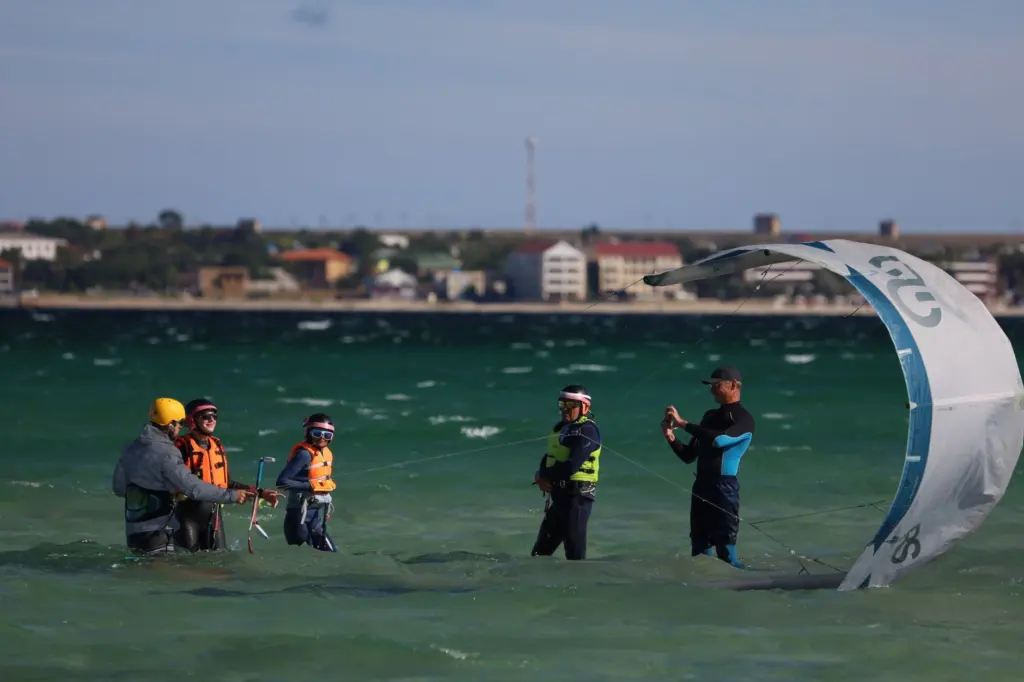
- Allround/freeride. The natural starting category for cruising and general riding on a twin-tip board.
- Beginner friendly. The category to browse first if you are still learning to control a kite.
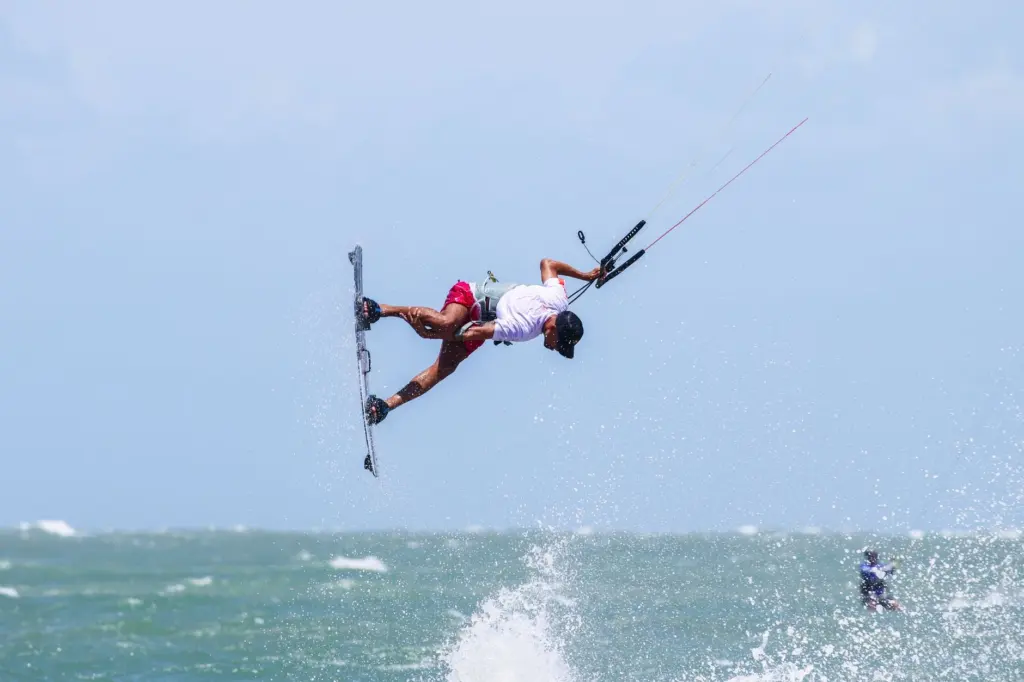
- Big air and freestyle. Choose these only once you know you want to jump or perform tricks. They are specialist choices, not starter kites.
- Wave. Suits riders whose main aim is riding waves, so it is a poor first buy for flat-water learning.
- Lightwind. Worth a look if your local forecast is usually modest and you want a kite built for those days.
- Powerkites. A separate category on the same list, so confirm it is a kitesurfing kite you want before buying one.
What a beginner kite should do
Mac Kiteboarding asks beginners to look for good stability, moderate turning speed, excellent upwind drive and as large a wind range as possible. It also warns against starting with a fast-turning kite that will boost you to the moon. In practice, a calm, forgiving all-round kite is the better first purchase than a high-performance one, because a wide wind range lets you ride on more days while your skills are still developing.
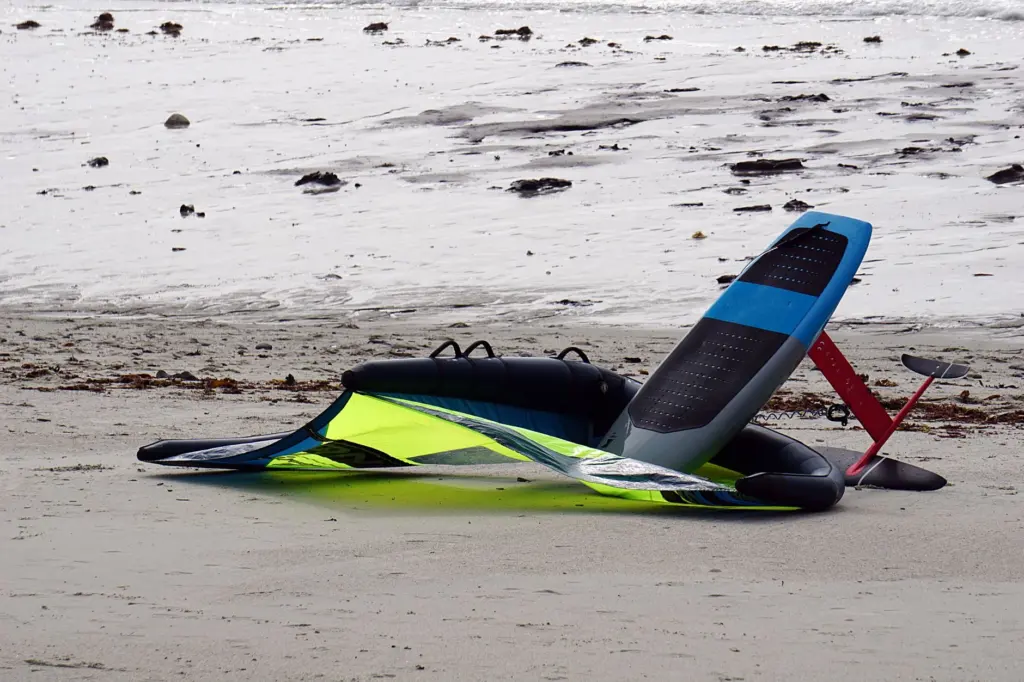
Foiling riders should not assume that a freeride kite is automatically the right match. Give the dealer your wind and weight, as described later, and ask which kite in their range fits that use.
Phase three: size the kite in square metres
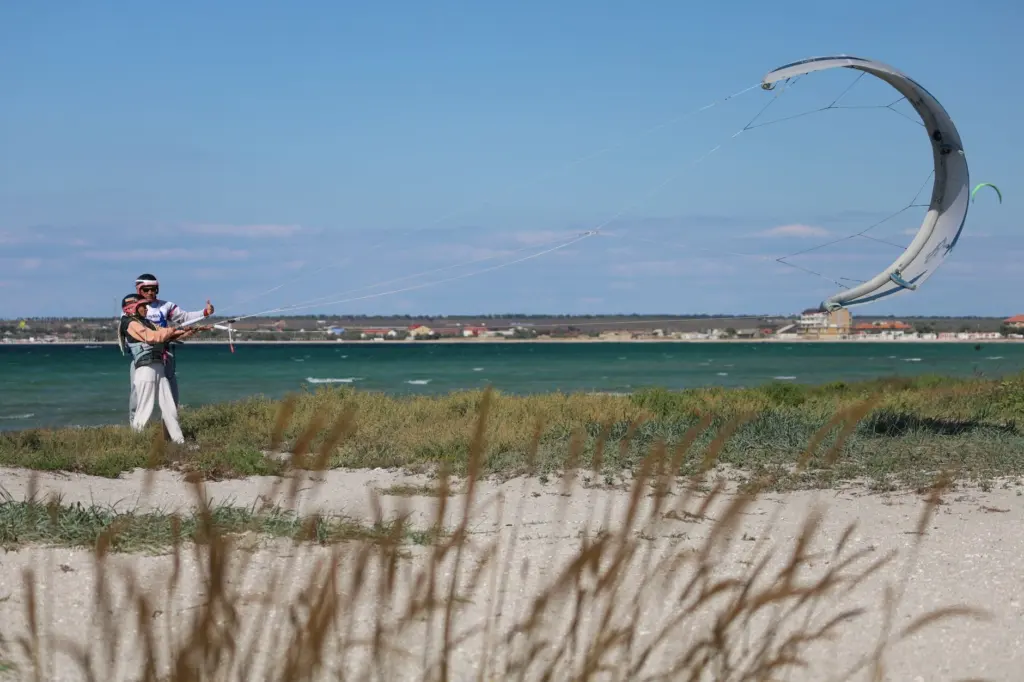
Kite size in square metres depends on rider weight and wind speed, according to Rebel Tarifa. Mac Kiteboarding adds board size as a third factor. A heavier rider or lighter wind points to a bigger kite, and a stronger wind points to a smaller one.
Rebel Tarifa gives one worked example. A rider weighing around 70 kg in a 14-knot wind could be well served by a 12-metre kite. If the wind reaches 20 knots, the same rider may want a smaller kite, around 8 metres. That school also notes that the kite sizes in its reference table are approximate, so use any chart as a starting point rather than an exact answer.
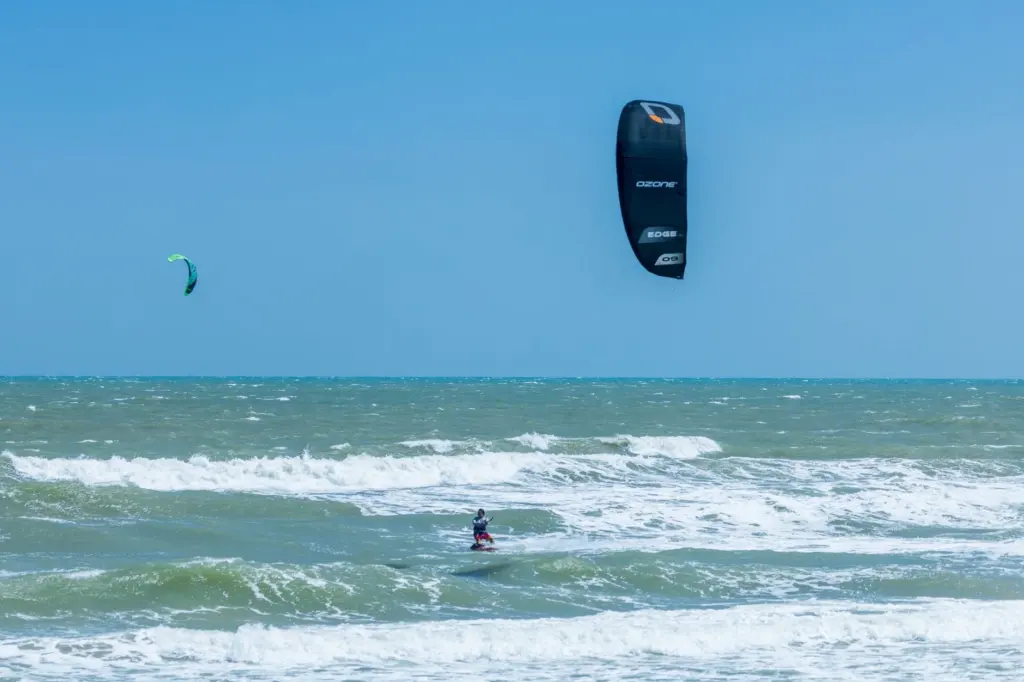
For a full grid of weights and wind speeds, use the kitesurfing kite size chart. This page deliberately stops at the logic, so the decision is clear before you open a table.
Reading wind in knots
Forecast sites such as Windguru and Windy present wind in knots, and the school’s examples are given in the same unit. Some retailer guides quote miles per hour instead, so check the unit before comparing a recommendation with your forecast.
Phase four: decide between one kite and a quiver
For most first-time buyers, one well-chosen kite is the right answer. Mac Kiteboarding recommends a kite that will cover about 70% of the wind ranges at your local spot, rather than trying to cover every day with a single purchase.
The same retailer describes a quiver of two kites and two boards that gives an experienced rider a wind range of 12-35 mph. That is an example of a mature setup, not a beginner target. A second kite makes sense when your first one regularly leaves you on the beach on days you would otherwise ride, and you are confident enough to handle the stronger or lighter end.
Mac Kiteboarding also says that unless you ride more than 100 days a year, you will not outgrow any kiteboarding kite. A wide-range, forgiving first kite is therefore a sound long-term purchase for most riders. Spend extra money on a second size only after your first kite has shown you where its range ends.
Phase five: checks before you pay
A short checklist prevents most expensive mistakes. Work through it in order.
- Practise on a trainer kite first. Mac Kiteboarding advises getting a trainer kite and practising before spending the big money.
- Give the dealer your wind and weight. Mac Kiteboarding tells buyers to say where they ride and how much they weigh, because wind speed is critical.
- Confirm the category. Make sure the kite sits in the beginner-friendly or allround/freeride group unless you have a specific reason to look elsewhere.
- Check the size against your own conditions. Compare the quoted size with the example logic above and with a size chart, remembering that school tables are approximate.
- Look the kite over. On a used kite, inspect the leading edge, struts and canopy for visible damage before agreeing a price.
If you plan to travel with the kite, think about transport once the kite is chosen. The guide to the best kitesurf travel bag picks up from there.
Troubleshooting a poor fit
- The kite feels too fast or twitchy. Mac Kiteboarding warns against starting with a fast-turning kite. Move toward a kite with moderate turning speed and strong stability.
- The kite is too big on windy days. A larger kite suits lighter wind. Rebel Tarifa’s example drops from about 12 metres to about 8 metres as the wind rises, so expect to leave the large kite at home when the forecast climbs.
- The wind at your spot keeps falling outside the kite’s range. Check whether the kite covers about 70% of local wind ranges. If it does not, a second size or a different category is the next purchase, not a more expensive version of the same kite.
- A shop’s size does not match a chart. Tables are approximate. Go back to the three factors, which are rider weight, average wind speed and board size, and ask the dealer which one explains the difference.
Frequently asked questions
Do I need a trainer kite before buying a kite?
It is a sensible first step. Mac Kiteboarding recommends practising on a trainer kite before spending the big money on a full kitesurfing kite.
Will a first kite be outgrown quickly?
Unlikely for most riders. Mac Kiteboarding notes that a kite is rarely outgrown unless you ride on more than 100 days a year.
Are kite size recommendations exact?
No. Rebel Tarifa describes the sizes in its reference table as approximate, so use them to shortlist a kite and confirm the final choice with a dealer who knows your wind and weight.