A kitesurfing expedition daily schedule is built around the wind, not the clock: riders go out when the breeze fills in, rest when their arms tire, and the yacht keeps a watch rotation running through the night.
Roles, route choice and logistics sit in the wider guide to a kitesurfing team expedition. This page narrows to what a single day looks like and where the hours go.
Picture the problem. The yacht is under way, the wind has not filled in, and the riders are asking whether to wait, ride light or keep sailing. The answer is to ride when the wind is up, rest when it is not, and keep the watch rota independent of the riding rota so that nobody’s night depends on who rode last.
Riding hours: the wind sets the start, fatigue sets the finish
Riders on an expedition spend as long on the water as the wind and their arms allow. The Lodge, a kitesurf camp, says its session starts when the wind picks up, usually late morning. That is a useful model for the start of a riding day: it is wind-led, so there is nothing to gain from forcing a launch against a fixed timetable.
No universal number of daily hours applies to every expedition. The total depends on how much usable wind the day delivers and how quickly each rider tires. The same camp tells guests that if their arms have had enough, the afternoon is theirs for rest on the beach or other activities. A rider can stop when the arms say so, and that is the principle a crossing team should adopt.
Why relay teams ride longer than one rider can
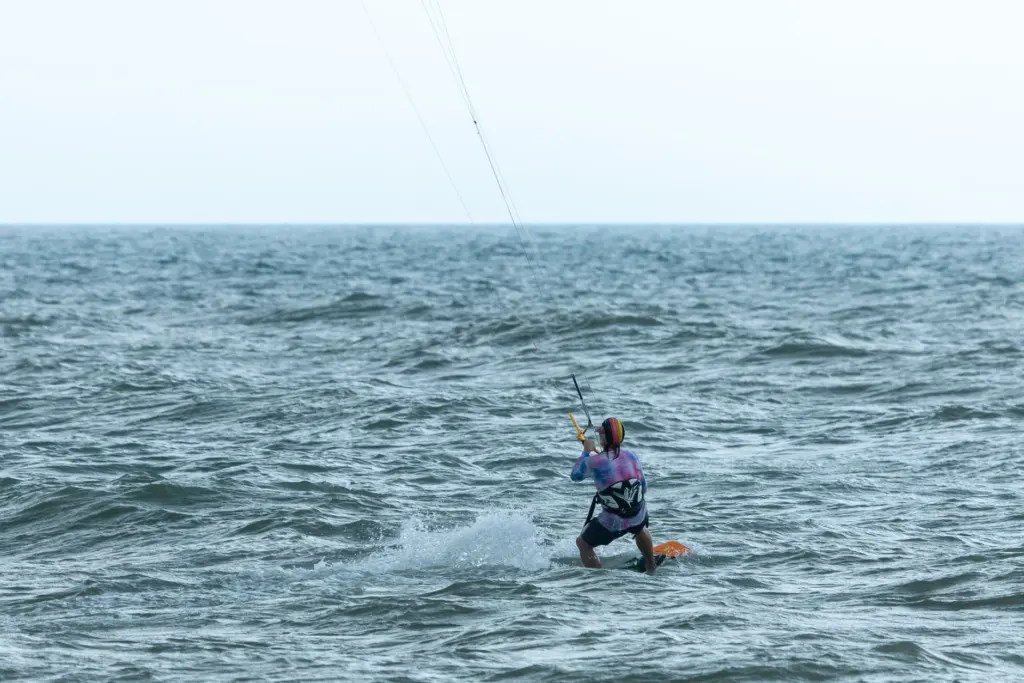
On a relay crossing, the useful unit is the block each rider takes, not the total hours of any individual. A fresh rider takes the kite while the previous rider recovers aboard, so the team keeps moving under kite power for longer than any single person could. The gain depends entirely on discipline at the handover.
- Agree block length in the briefing. Decide before departure how a rider’s block ends, whether by the rider’s call, the skipper’s call or a change in conditions, and apply the same rule to everyone.
- Keep the next rider ready. Harness on, bar checked and kite prepared before the outgoing rider comes in, so the handover is a short, practised movement rather than a pause.
- Let the outgoing rider stand down fully. Food, shade and sleep are part of the schedule, not leftovers from it.
Rehearse the failure case too. Before departure, the team should have worked through kitesurfing self rescue, because a rotation that assumes every block ends tidily has no answer when one does not.
A day-by-day template for a crossing
The Lodge describes a normal camp day as breakfast, a late-morning session, lunch, afternoon free time and an evening group dinner, followed by sleep before the next session. A crossing keeps that skeleton and adds a watch rota underneath it. Clock times are deliberately left out below: the wind moves the middle of the day, so only meals, briefings and watch handovers deserve a fixed slot.
- Breakfast and weather check. Review the wind outlook against the plan and name who rides first and who stands the next watch.
- Waiting for the wind. The yacht keeps sailing while riders rest, eat and prepare gear. No one launches until the breeze can carry the kite.
- Riding blocks. Riders rotate in the order agreed at breakfast, each handover logged so the next rider knows how long the last one was out.
- Midday meal and recovery. Everyone eats, riders off the water rest in shade and the skipper reviews position.
- Afternoon. Ride on if wind and arms allow. If not, the afternoon becomes recovery, as it does at camp.
- Evening meal and briefing. The team eats together, reviews the day and sets the night rota.
- Night. Watchkeepers carry the boat while resting riders sleep, so they are ready when the wind returns.

This template answers the question of how a day divides between riding, resting and sailing at night. Riding is the flexible block, rest protects it, and the night belongs to the watch rota. What follows covers what happens when the wind refuses to follow the plan.
When the wind drops or rises
A change in wind is the most common reason a day departs from its template, and the response is to re-sequence rather than to cancel. At The Lodge’s lagoon, thermal wind is usually strongest in the afternoon, which is why the camp puts its main session after the late-morning start and leaves the later hours open. A team can borrow that logic: expect the better riding later in the day, and keep the freshest riders for it.
| Situation | What it means | Schedule response |
|---|---|---|
| Wind has not filled in by morning | The camp’s sessions start only when wind picks up, usually late morning | Keep sailing, eat and rest. Hold riders ready but do not force a launch. |
| Wind builds later in the day | Thermal wind at the camp lagoon is usually strongest in the afternoon | Send the most rested rider out first as the breeze strengthens. |
| Wind drops during a block | The kite stops doing useful work for the rider | Recover the rider, move to rest or watch duty and resume when the wind returns. |
| A rider’s arms are spent | The camp leaves the afternoon free if arms have had enough | Stand that rider down and move to the next in the rotation. |
| Crew tired after dark | Night sailing often means longer shifts and crew fatigue | Shorten night shifts and keep a lookout posted. |
The conditions in the table come from The Lodge’s camp day guide and Boatasy’s night sailing guidance, and the schedule responses are planning suggestions built on them.
Decisions that follow from a changing wind
- Wait, do not chase. A launch into marginal wind uses up the rider’s arms before the good wind arrives, so a patient start costs less than a failed one.
- Re-order before you cancel. If the wind comes late, move the rest block earlier and the riding block later instead of dropping a rider’s turn.
- Shorten blocks when the wind is strong. A rising wind is the moment to hand over to the most rested rider, not to extend the current rider’s block.
Night hours on a long crossing
Teams handle night hours by moving the work from riders to watchkeepers. Boatasy notes that night sailing often means longer shifts and fatigue for the crew, and it recommends planning shorter night shifts to combat that fatigue. For a kitesurfing crossing, the practical reading is to avoid giving the same people both the longest riding blocks and the longest night watches.
Lookout and navigation at night
The same guidance says to assign a crew member to constant watch, and to use GPS and radar consistently while maintaining a lookout at all times. Electronics support the lookout; they do not replace the person. A rota in which the lookout is named and handed over aloud, rather than assumed, is the simplest way to honour that advice.
Where riders fit in the night
Camp guests sleep through the night before the next day’s session, in The Lodge’s phrase sleeping hard and doing it again. For a crossing, that pattern suggests keeping riders out of night watches whenever the crew allows, so they start the next riding window rested. If the team is small enough that riders must stand watch, schedule their watches away from the blocks that precede and follow their riding turns.
Tracking the day against the route
A day’s schedule only works if the team knows where the boat is against the plan. A GPS tracker gives the watch a running position, and the paper chart gives the skipper a second view to cross-check it at the midday and evening briefings. Teams that compare the two at each briefing can adjust the next day’s riding blocks while there is still time to act on the difference.
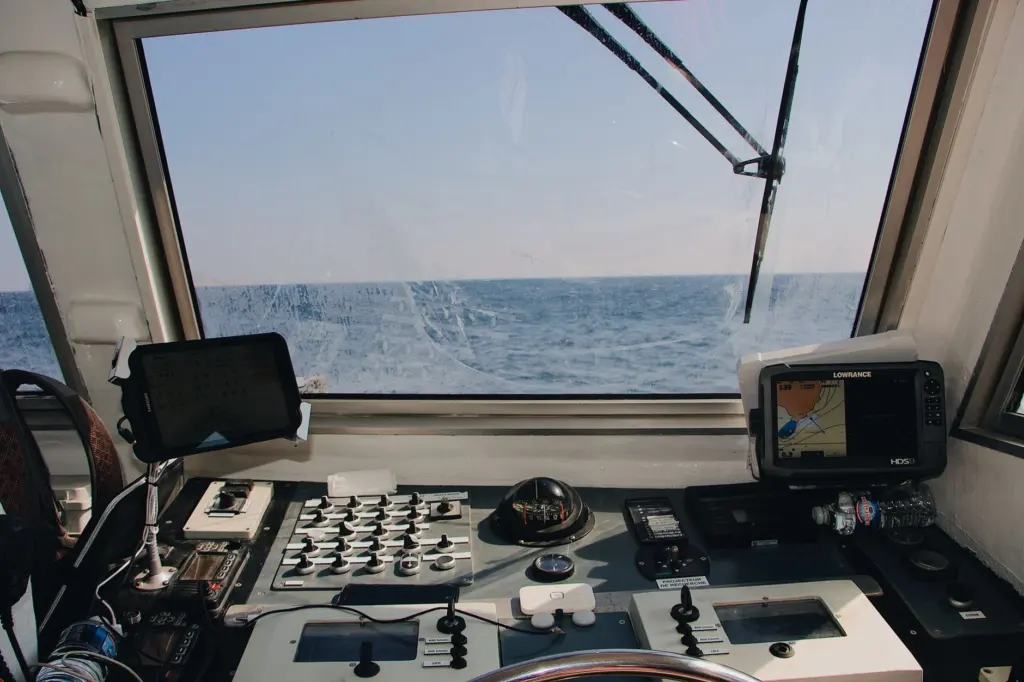
Route position also decides how aggressive tomorrow’s template can be. A day that ended behind plan may justify putting rested riders out earlier in the next window, while a day ahead of plan allows more recovery. The choices made before departure, including the start point and where the crossing ends, are covered in the guide to kitesurfing crossing departure port selection, and they set the daily distance the schedule is asked to deliver.
Frequently asked questions
| Question | Answer |
|---|---|
| When is thermal wind reliable at the camp lagoon used as a model here? | The Lodge says the Obidos Lagoon gets reliable thermal wind from April through October. That is a lagoon pattern, so treat it as a model for wind-led timing rather than a forecast for an offshore route. |
| Does a harness mean arms never tire? | No. The harness transfers the kite’s power to the hips rather than the arms, which reduces the load, but the camp still leaves the afternoon free for riders whose arms have had enough. Plan rest blocks even for experienced riders. |
| Is a camp day a fair model for a crossing? | Only for the rhythm. The camp’s learning spot has large sections that are waist-deep, a very different setting from open water. Use its sequence of wind-led session, rest and sleep, and add the watch rota that an offshore crossing requires. |