| Reader situation | Role | What the role covers | Planning use |
|---|---|---|---|
| Someone must command the boat | Skipper or team captain | Runs the support vessel, which carries spare equipment and gives the team a place to regroup | Name this person before the vessel is settled, because the vessel is the biggest planning decision after the route |
| The route has to be followed | Navigator | Holds the route and tracks progress against it | Agree early and supply a device that can actually handle route navigation |
| Riders and boat need to stay in touch | Boat contact | Acts as the link between the people in the water and the vessel | Agree early and keep separate from the person steering where the team allows |
| A rider gets into trouble | Medic and rider safety | First aid, plus knowledge of self rescue and the safety release options | Rehearse each person’s task on the beach before departure |
| Kit fails or needs changing | Gear lead and kite handler | Spare equipment, kite preparation and line handling | Give one named person ownership of the kit store |
| The trip must be documented | Photographer | Shoots from the vessel and records the trip | Brief on the rescue plan like every other crew member |
Role names and the early-agreement point follow the expedition planning guidance, while the rider safety points follow Global Rescue’s kiteboarding travel advice.
Kitesurfing expedition team roles split into command, navigation, rider safety, gear and media, and each needs a named person before departure. Small teams can combine roles, but nobody should be left guessing who acts when a rider is in trouble.
These roles sit inside the wider planning of a kitesurfing team expedition, where the route and the support vessel are settled first. The sections below are grouped by the situation a team is trying to solve.
Running the boat and the route
Command, navigation and communication decide whether a supported trip stays organised. Planning guidance recommends agreeing roles such as navigator and boat contact early, ahead of departure, rather than sorting them out on the water.
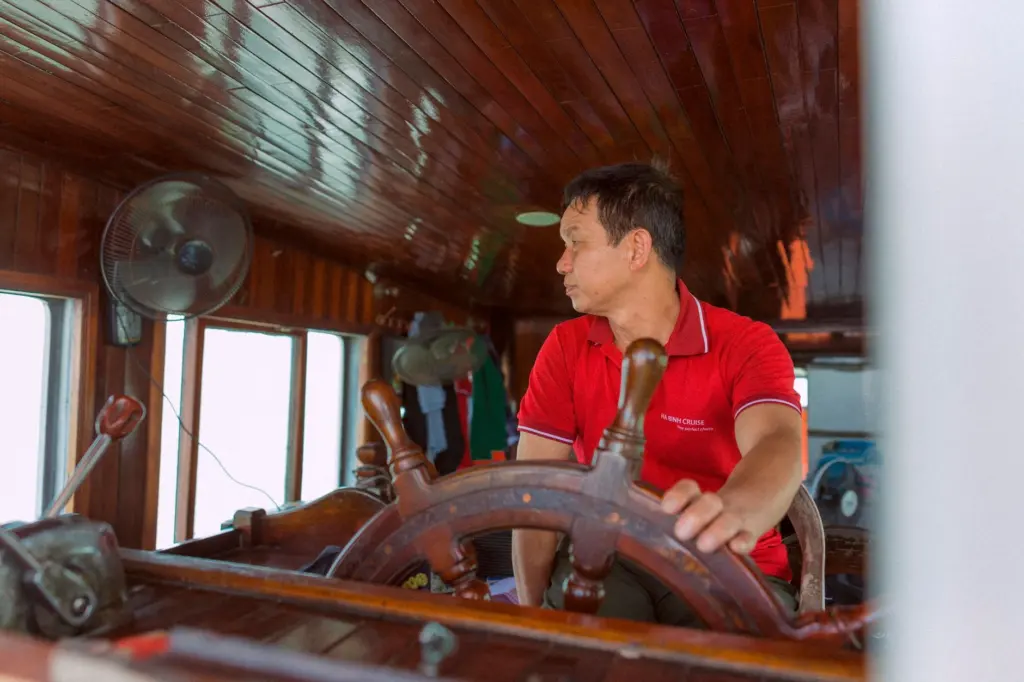
Skipper or team captain
The skipper is the person in charge of the support vessel. That matters because a supported trip uses the vessel to carry spare equipment and to give riders a place to regroup. The vessel is also described as the biggest single planning decision after the route, so the skipper should be chosen alongside the boat rather than after it.
This role suits someone with boat-handling authority rather than the strongest rider. Riding ability and seamanship are separate skills, and a team captain who is also riding cannot give the boat full attention. Check that the skipper holds whatever qualification the vessel and its waters call for, and treat that paperwork as a selection point rather than a formality.
Navigator
The navigator keeps the team on the agreed route and is one of the roles the planning guidance says to settle early. The choice of equipment matters here. Route navigation on a GPS device is limited to high-end models such as the premium-priced Garmin Quatix, so a navigator relying on a cheaper unit should confirm it can follow a planned route before the trip.
Wind direction also shapes the navigator’s job. According to Global Rescue, direct onshore winds risk tossing a rider onto land, while offshore winds carry the risk of a rider being blown away from shore. A navigator who reads the coast against the forecast can warn the skipper before a leg puts riders in either situation.
Radio and boat contact
Navigation and radio communication are best split. The navigator watches the route, while the boat contact keeps the link between riders and the vessel. On a small team, the boat contact is the natural holder of the radio, because that person already sits between the water and the deck.
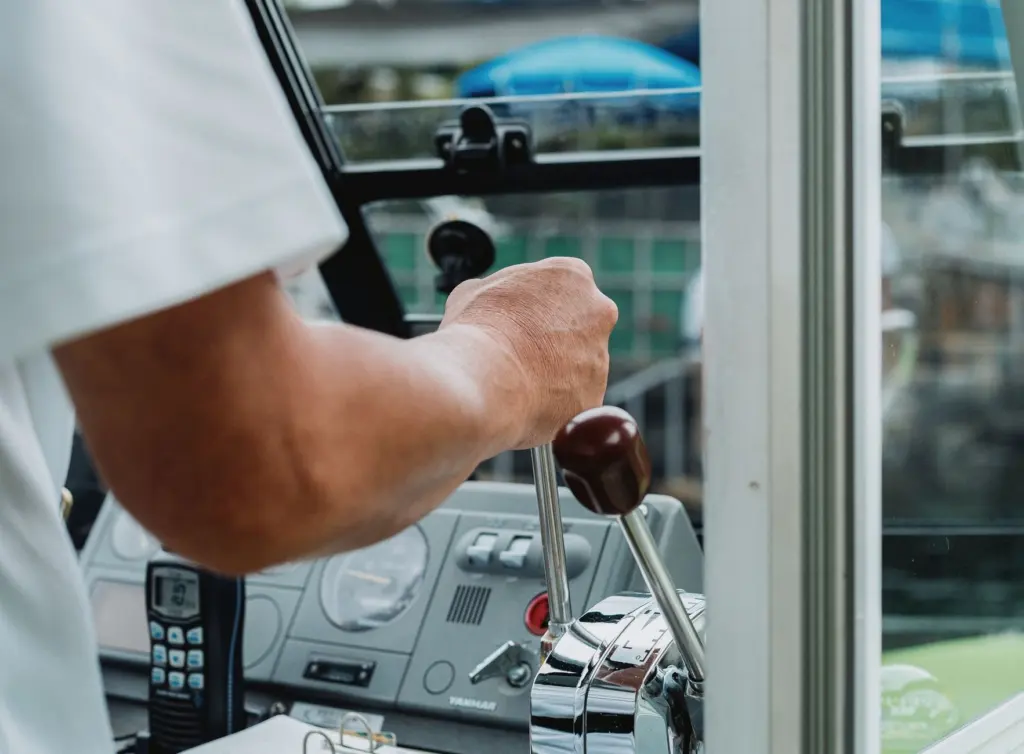
Whoever operates a marine radio should hold the operator certificate that the local radio authority requires. Do not assume a rider’s sailing or kite experience covers it.
Keeping riders safe in the water
Safety roles come into play when something goes wrong, so they are the ones to rehearse. The planning guidance suggests walking through, on the beach, what each person does if a rider is in trouble.
Riders and self rescue
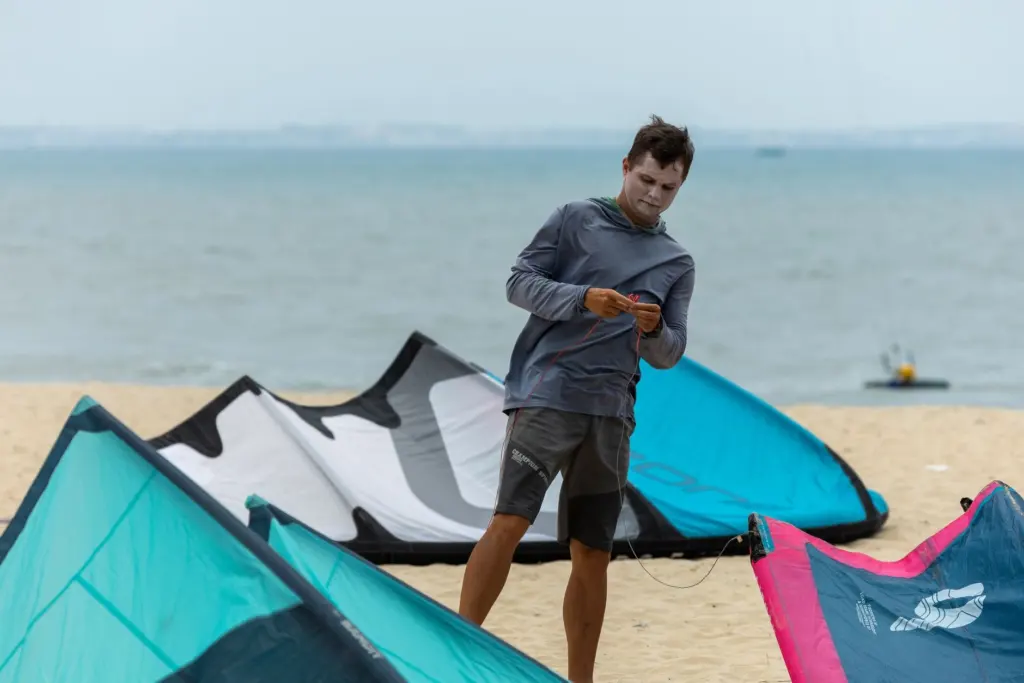
Every rider is part of the safety system. The planning guidance says to make sure every rider knows kitesurfing self rescue before leaving shore, which means a rider who cannot do it should not set out on a leg that depends on the boat arriving quickly.
Global Rescue lists three options for getting out of trouble: release the control bar, eject the chicken loop, or discharge the leash. The kite’s pull travels through a harness at the hips or waist while the hands steer with the bar, so each option is a way of breaking that connection. The crew on the boat should know these options too, because they tell the crew what a rider in difficulty is likely to be doing.
Medic or team doctor
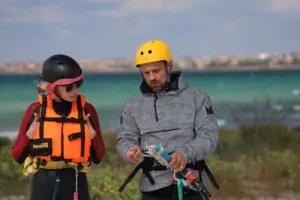
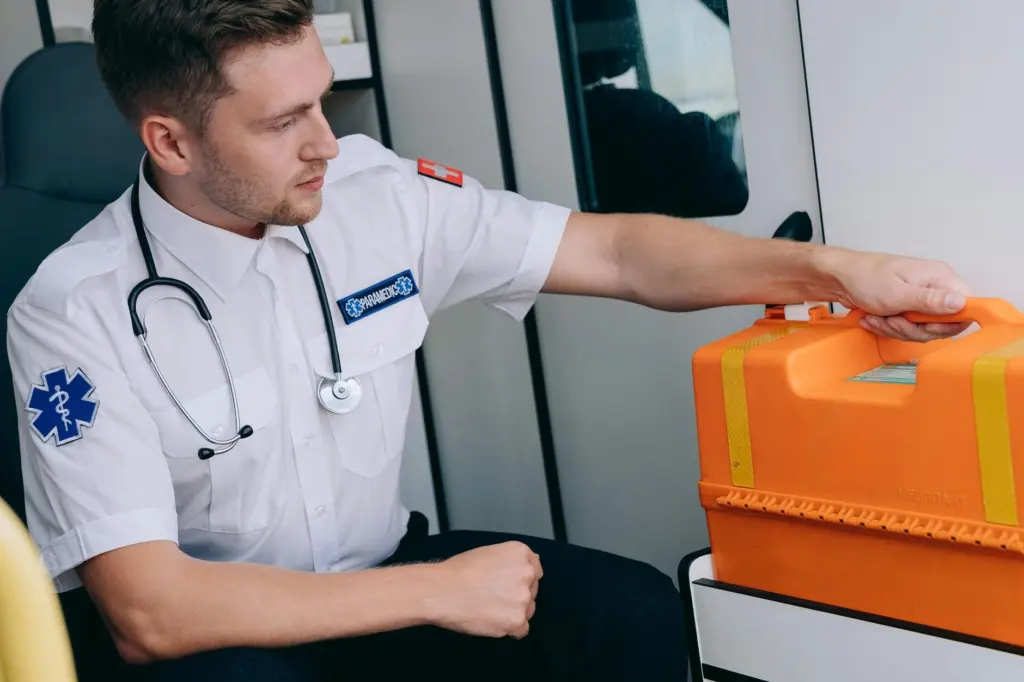
A kite team doctor or medic holds the first aid kit and takes charge of anyone who is hurt. Entry equipment already includes a floatation vest and helmet, so the medic’s work starts after those layers have done their job, and the medic should be told what each rider wears.
For qualifications, look for current first aid training from a recognised provider as the minimum, and a clinical background such as a doctor or paramedic where the team can manage it. The medic should be someone who can stay calm on a moving deck. Keeping the role separate from riding means the team’s first aider is never also the person who needs help.
Looking after kit and the story
Gear and media roles are less urgent than safety roles but affect how smoothly a trip runs. Both benefit from a single named owner.
Gear lead and kite handler
The gear lead is another role the planning guidance says to agree early. The job covers the spare equipment carried on the vessel and keeping kites and lines ready, so that a damaged kite does not end a rider’s day. The kite handler prepares the kite and lines for the rider and checks the control bar and release before launch.
This role suits a methodical person who is comfortable around lines, and it can sit with a rider who is resting on a rotation. A team using a rider order can pair the handler with whoever is next to launch, which connects to kitesurfing relay rider rotation.
Expedition photographer
An expedition photographer in kiteboarding records the trip from the vessel and, on some teams, from the water. The role is optional for the sailing side of the trip but valuable for the team’s own record. The photographer should still take part in the beach briefing, because a person filming from a boat is also a crew member who may be needed if a rider is in trouble.
Decide early whether the photographer is a dedicated crew member or a rider doubling up, since shooting and riding cannot both get full attention.
Matching roles to the trip
Roles scale with the team. The planning sequence runs from concept to team, route, vessel, budget, gear and readiness, so roles are best fixed after the route and vessel are known and before gear is finalised.
- Small team, short trip: combine navigator and boat contact only if the route is simple, and keep the skipper and medic as separate people.
- Longer coastal runs: a kitesurfing downwinder keeps the vessel moving along a coast, which makes a dedicated navigator and a clear radio link worth more than extra riders.
- Team with media goals: add a photographer only when someone can be spared from riding or boat duties.
- Team new to expeditions: rehearse each role on the beach, since walking through rider-in-trouble responsibilities is the quickest way to find a gap.
Frequently asked questions
| Question | Answer |
|---|---|
| What roles does a kitesurfing expedition team need? | At minimum, a skipper for the vessel, a navigator, a boat contact, someone responsible for first aid and a gear lead. A photographer is an optional addition. |
| Who handles navigation and radio communication? | The navigator holds the route, and the boat contact usually keeps the link to the riders. Combining them is possible only when the route is simple. |
| When should roles be agreed? | Early in planning, after the route and vessel are known and before gear and safety preparation, so each person can prepare for their own part. |
| Do all riders need self rescue skills? | Yes. The planning guidance says every rider should know kitesurfing self rescue before leaving shore. |