Here is how to get out past breaking waves kitesurfing: plan the route before you launch, keep the kite powered through every wave, and cross the whitewater at an angle rather than straight on. If the waves are too big, stay in the whitewater.
This outbound route is one part of how to kitesurf in waves. It starts once the kite is safely in the air after launching a kite on a surf beach. The turns you make once outside are covered in the guide to the kitesurfing bottom turn.
What to have in place before you head out
The outbound trip suits riders who can already keep the kite powered while changing direction, because that skill matters more than anything else on the way out. The advice below draws on kiters’ experience in a Seabreeze forum thread on flying the kite in waves, so treat it as practical rider guidance rather than an official standard.
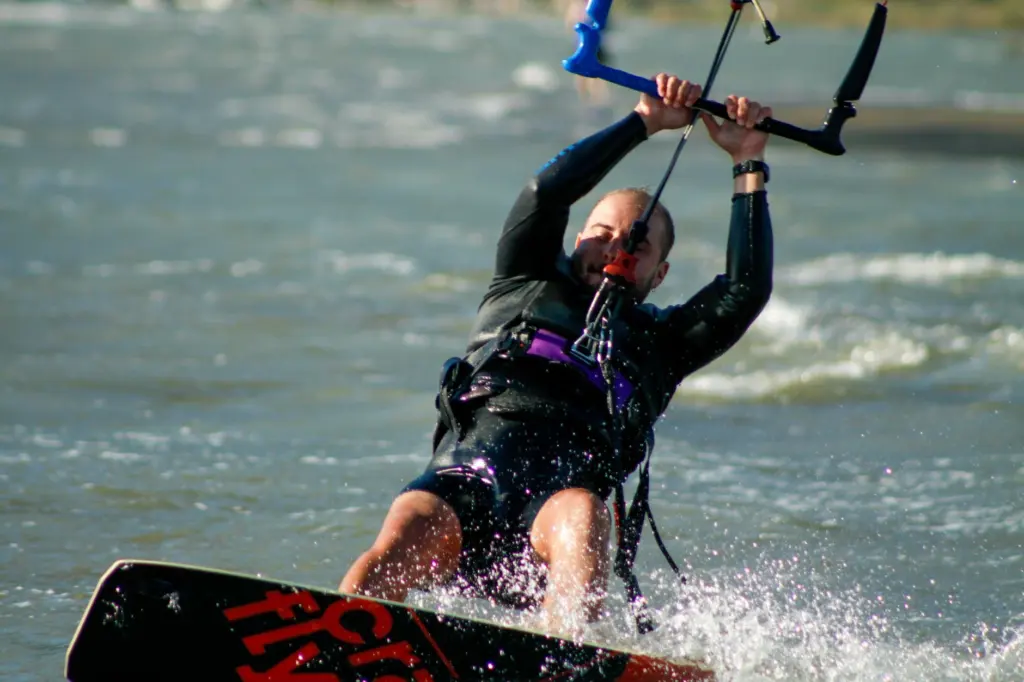
- Power control through turns. Forum contributors advise making sure you can stay powered when you change direction. A kite that drops out of the sky as you turn leaves you without the pull needed to climb through a wave.
- A kite that is already flying cleanly. Sort out the launch first and do not rush it. Surf makes a messy launch worse, and the outbound trip is easier when the lines and the kite are in order before the first wave arrives.
- A realistic view of the wave size. If the waves are too big for your level, kiters on the same forum note that you can still go out but should stay in the whitewater. That is a legitimate session in its own right.
- A wind direction you understand. Technique changes with the wind angle, so decide which situation you are in before you commit to a route.
Step-by-step route past the breaking waves
The route out is a sequence of decisions: read the lineup, pick a line, set the kite, ride over each wave, then reassess. Work through the steps in order and treat each one as a checkpoint before moving on.
Step 1: Read the lineup and the wind angle
Spend time on the beach watching where the waves start to break and where the whitewater runs. The stretch where waves break and collapse is the impact zone, and your route has to cross it. Watch for gaps and for lulls between sets, and pick your moment to leave the shore when the pattern looks manageable.
Wind angle matters as much as wave size. One forum contributor states plainly that technique changes depending on the wind angle. Another rates cross-shore wind as the best condition and onshore as the worst, and a third calls cross-shore the easiest and safest to learn in.
Step 2: Choose a crossing line that allows for downwind drift
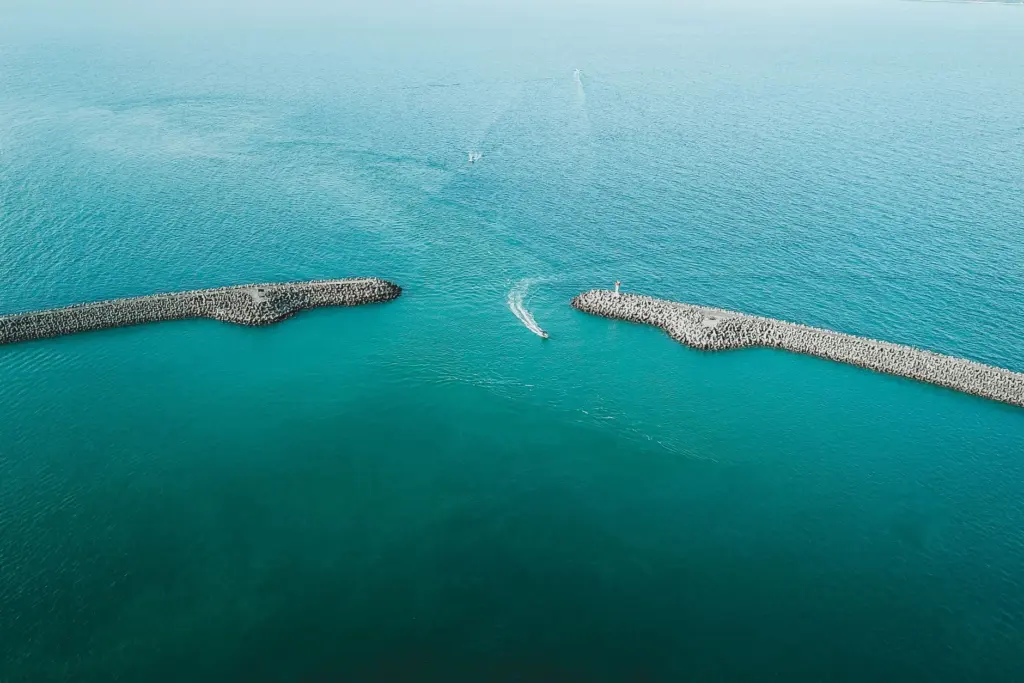
The safest place to cross the impact zone is the line where you can keep control, not the line that looks shortest. Forum contributors point out that as you traverse across the whitewater you go downwind a bit, so a line that looks clear at the start can end somewhere very different.
Leave from a spot that gives you room to drift, and hold an upwind angle so the crossing does not push you toward the harder-breaking part of the lineup. If the waves are too big, the simplest plan is the forum’s advice to stay in the whitewater and not push on to the outer break.
Dead onshore wind is the exception to any confident plan. One contributor describes kiting in the surf in dead onshore wind as difficult and dangerous. If that is the day’s wind, choose a more modest session over a heroic exit.
Step 3: Set the kite position before the wave arrives
When a wave is about to hit, the kite needs to be in a position that keeps you pulled forward. The forum advice is to keep the kite at around 9/10 o’clock while riding in waves. A kite parked in a stable, controllable spot gives you pull and leaves you free to deal with the water in front of you.
Ride toward your kite, but not directly toward it. Pointing straight at the kite lets the power drain away, and in waves you need that pull to keep moving through whitewater.
Step 4: Ride over the wave without being stopped
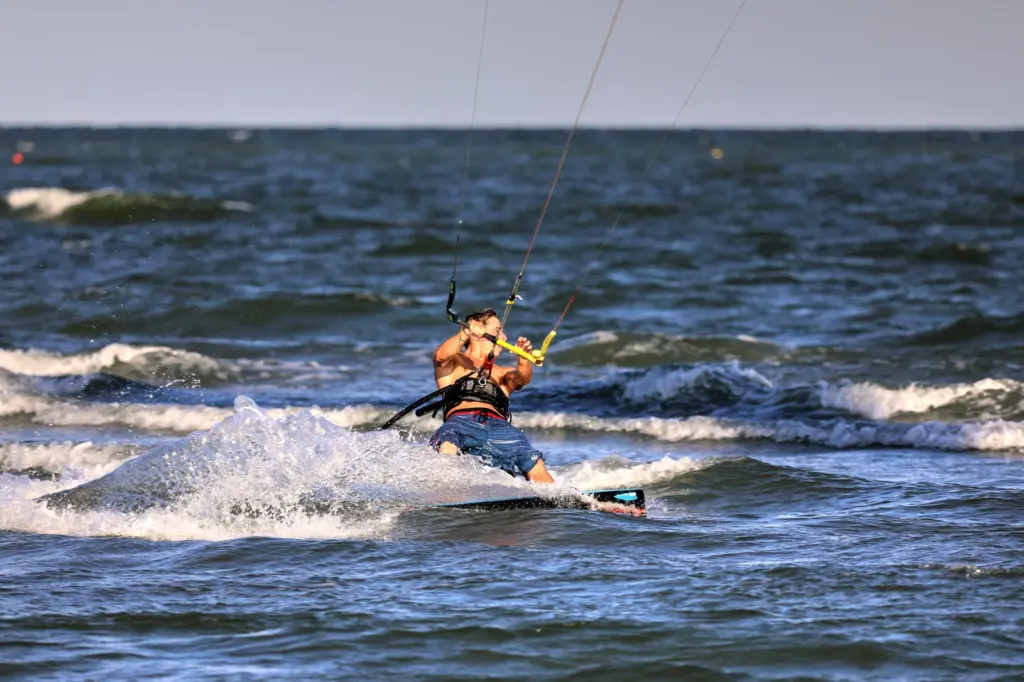
To ride over a wave without being stopped, stay powered, keep moving and meet the wave at an angle. A rider who slows down or points straight at the kite loses the pull that carries the board up and over the lip.
Timing matters too. If the plan includes a turn on the wave, the forum rule is that the kite should already be turning the way the board will turn. For the outbound trip, the practical lesson is to steer the kite first and let the board follow.
Step 5: Keep the lines tight through the whitewater
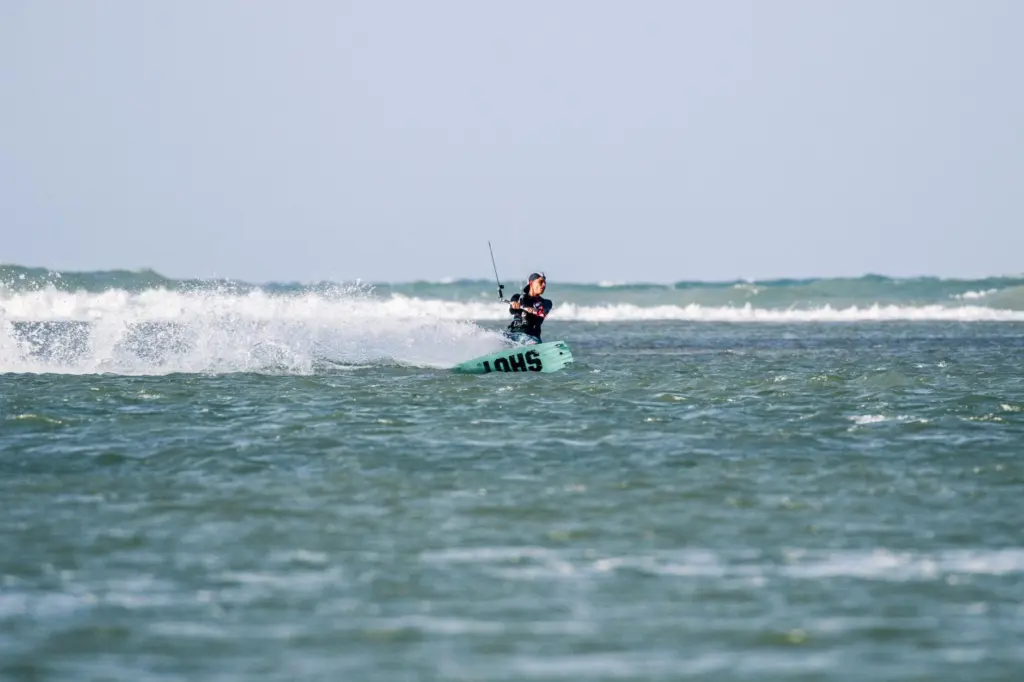
Whitewater is where power is most easily lost. Kiters on the forum explain that in onshore surf the waves push you downwind toward the kite, so the lines are always slack. They add that it is very hard to turn against the whitewater to get the lines taut again.
That makes a difference to how you cross. Aim to arrive at the whitewater already powered and already moving, so you never need to re-tension lines in the middle of the foam. If the lines do go slack, expect the recovery to be harder than it would be in clean water.
Step 6: Handle getting stuck in the whitewater
If you get stuck in the whitewater, the priority is to keep the kite under control and stop the situation getting worse. Do not try anything new with the kite while you are being pushed around. The forum warns against practising downloops in waves, because it is easy to get confused and dive the kite into the water.
Staying in the whitewater is also a valid decision, not a failure. If the exit is not working, ride back in, reset and wait for a better moment rather than forcing a second attempt through a bigger set.
Step 7: Reassess after each attempt
A failed exit tells you something about the lineup. Look at where you ended up and how the downwind drift changed your line. Check whether the kite was where you wanted it when the wave hit. Then adjust the start point or wait for a lull before going again.
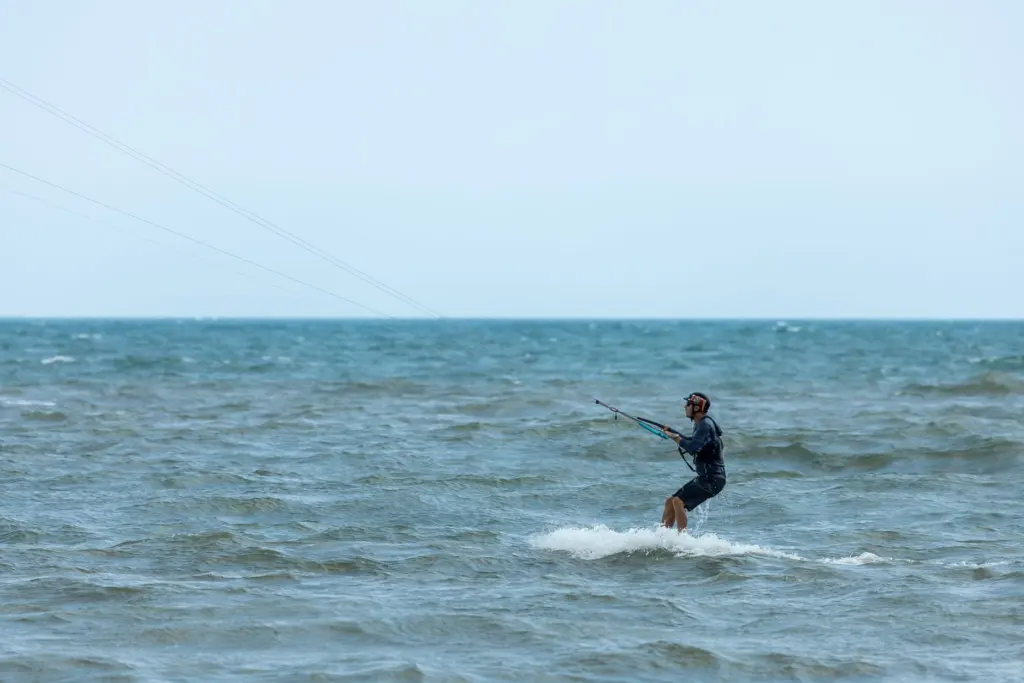
Once the whitewater is behind you, the aim is to settle, keep the kite powered and set up for the ride back in. Do not relax the kite handling just because the breaking waves are behind you.
Checkpoint table for the outbound trip
Use this table as a final check before and during the exit. It condenses the conditions and the judgement each one calls for.
| Situation | What kiters report | Planning use |
|---|---|---|
| Cross-shore wind | Best condition, and the easiest and safest to learn in | Choose this wind for your first outbound attempts |
| Dead onshore wind | Difficult and dangerous in the surf | Wait for a different day or stay out of the surf |
| Waves too big | You can still go out, but stay in the whitewater | Limit the session to the inside zone |
| Crossing whitewater | You drift downwind as you traverse | Start with upwind angle and room to drift |
| Kite while riding waves | Around 9/10 o’clock, riding toward but not directly at the kite | Set it before each wave arrives |
These points come from kiters’ advice in the Seabreeze thread on flying the kite in waves, so use them as rider experience to weigh against your own conditions.
When to wait and when to go
Go when you can see a repeatable pattern in the lineup, the wind angle suits your skills and you have a clear line with room to drift. Wait when the wind is dead onshore, when the waves are bigger than you can handle or when you cannot find a line that lets you stay powered.
Riders still building confidence should favour cross-shore days and sessions that stay in the whitewater. Riders with solid power control can work on the full exit, but the same logic holds: the kite leads, the board follows, and the plan allows for downwind drift.
Frequently asked questions
Which wind direction is easiest for getting out through waves?
Kiters on the Seabreeze forum rate cross-shore wind as the best and easiest to learn in, and onshore as the worst.
Should I practise downloops while crossing the surf?
No. Experienced riders advise skipping downloop practice inside the waves, since it is simple to lose track and plunge the kite into the sea.
Which turns first, the kite or the board?
The kite. When you are about to turn the board down the wave, the kite should already be turning that way.