Riders are the people on the boards in a kitesurfing team expedition. They fly the kites, ride each leg and carry their own safety kit, while the boat crew and the planners handle the vessel and the route.
The role sits at the centre of any kitesurfing team expedition, and it works best when each rider knows exactly what belongs to them and what belongs to everyone else.
Where the rider sits in an expedition
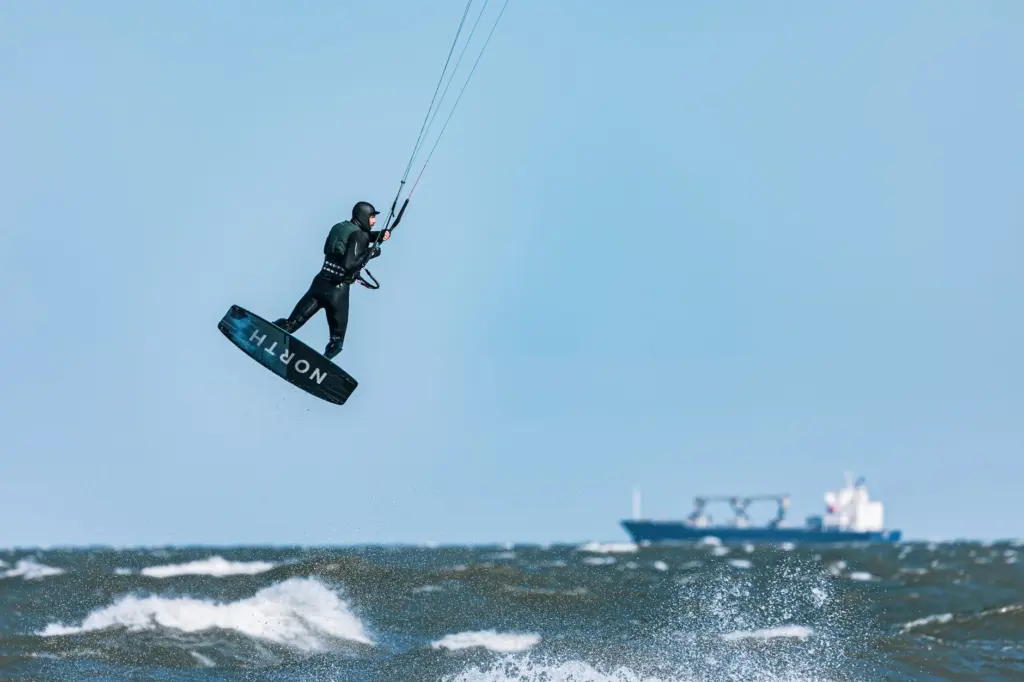
An expedition has three layers of responsibility. The plan decides where the group goes and when. The boat crew keeps the vessel positioned, watches the water and stands ready to recover people and kit. The riders do the part that only a person on a board can do: manage a kite in changing wind, hold a line across open water and make constant small decisions about whether to carry on.
That split explains most of what is expected of a rider. Because the rider is the person exposed on the water, the rider is also the first to notice that a gust has built, that a kite feels overpowered or that fatigue is setting in. A rider who keeps quiet about those signals removes the one early warning the rest of the team depends on.
What stays with the boat and the plan
Riders do not run the vessel, choose the route alone or set the timetable. Those jobs belong to the people responsible for them, and a rider who tries to override them adds confusion on a day that already has many moving parts. The sensible habit is to contribute information, ask questions in the briefing and then follow the agreed plan.
Skills a rider brings to the team
A rider is not simply someone who can stay upright on a board. Expedition riding rewards a particular set of abilities, roughly in this order of importance.
- Reliable kite control. The rider launches, flies and lands the kite calmly and without help from the boat. Comfort with the kite matters more than any trick.
- Self-rescue knowledge. A rider should know how to depower the kite, use the safety system and recover without assuming a rescue boat is already alongside.
- Judgement about conditions. Reading the sky, the water surface and the way the kite loads up lets a rider flag a problem before it becomes an incident.
- Clear communication. Agreed signals and plain reports to the boat keep everyone aware of who is on the water and how they are coping.
- Stamina and pacing. A rider who burns energy early has less left for the end of a leg, when decisions get worse.
These skills decide who suits a given expedition. A confident rider in familiar conditions may still be the wrong choice for a leg that demands more endurance or more open-water experience, and honest self-assessment is part of the job.
Personal kit every rider carries
Riders are responsible for their own equipment. The boat may carry spares and the plan may specify what to bring, but the rider is the one wearing and trusting the gear, so the rider should check it before every session rather than assume someone else has.
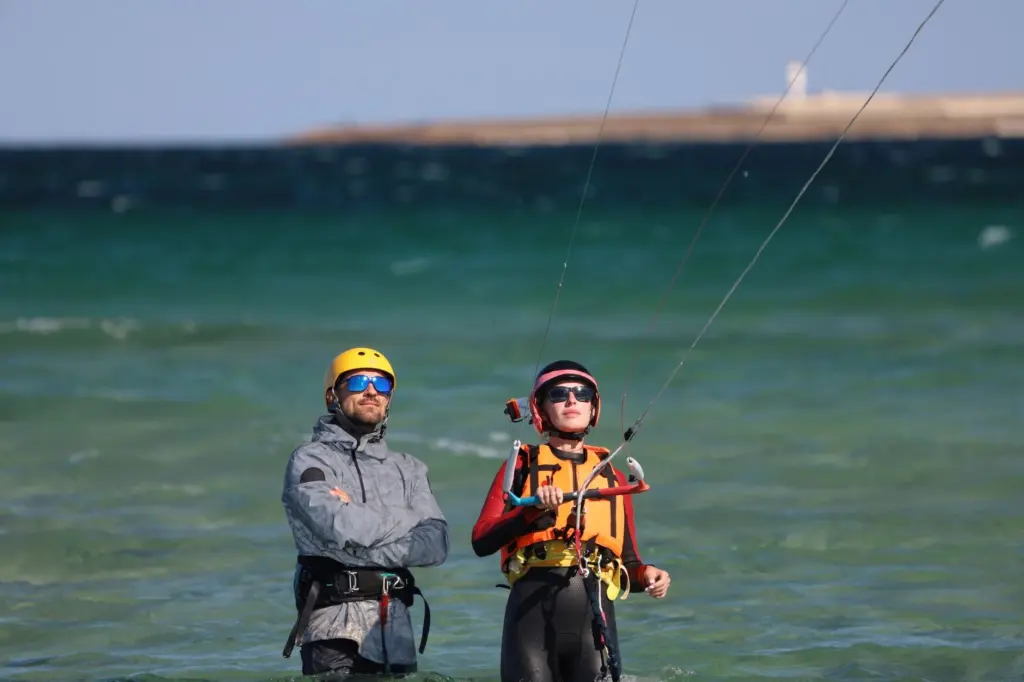
- Harness with a quick release. The harness carries the kite’s pull, and the release is the rider’s means of letting go. Test that it operates smoothly before launching.
- Impact vest. A vest adds protection and some buoyancy when a rider falls or is dragged. It should fit snugly enough not to ride up.
- Helmet. A helmet is sensible on open water where a crash, a collision with the board or a fall in rough chop can happen quickly.
- Kite, bar and lines. Inspect lines and connections for wear and tangles each time the kite is laid out. A problem found on the beach costs minutes, while the same problem found on the water costs far more.
- Board and wetsuit. Choose them for the water temperature and the conditions the plan expects, and bring what suits your own build and riding style.
Kite equipment manufacturers publish safety documentation for their own products, and a rider should read the guidance for the specific kite and bar in use rather than rely on general habit. Equipment differs, and the release system on one bar is not necessarily operated the same way as on another.
A rider’s duties from briefing to recovery
A rider’s responsibilities run in a sequence. Treating them as stages helps a group avoid skipping the unglamorous ones.
- Attend the briefing. Riders take part in the discussion of the forecast, the chart and the route. Bringing questions early is more useful than raising doubts once everyone is already on the water.
- Prepare the kit. Lay out the kite, inspect the lines, check the release and put on the vest, helmet and harness before the boat is committed to a position.
- Agree signals and positions. Confirm how you will tell the boat you are fine, struggling or coming in, and know where the boat will be relative to the group.
- Ride the leg within the plan. Stay with the group, keep within your own limits and report any change in the kite, the wind or your own condition.
- Come in when told, or when you should. A rider who feels unsafe ends the session. Staying out to avoid disappointing the group is the pattern that turns a manageable situation into an emergency.
- Recover and debrief. Pack the kite away, rehydrate and share what you noticed about conditions and equipment so the next leg benefits.
Pacing across several legs
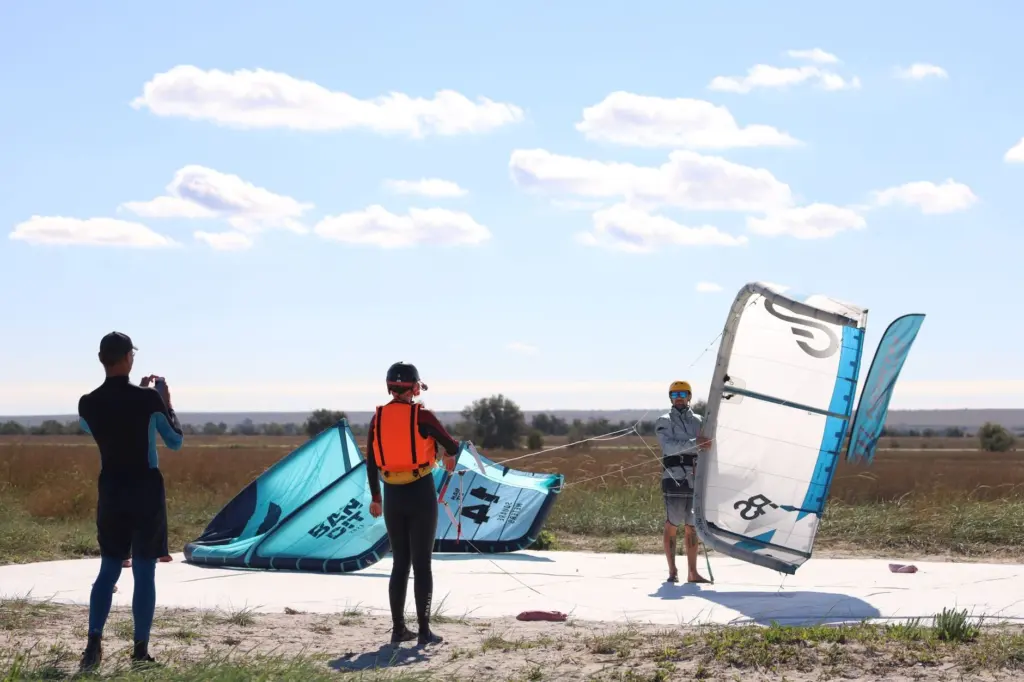
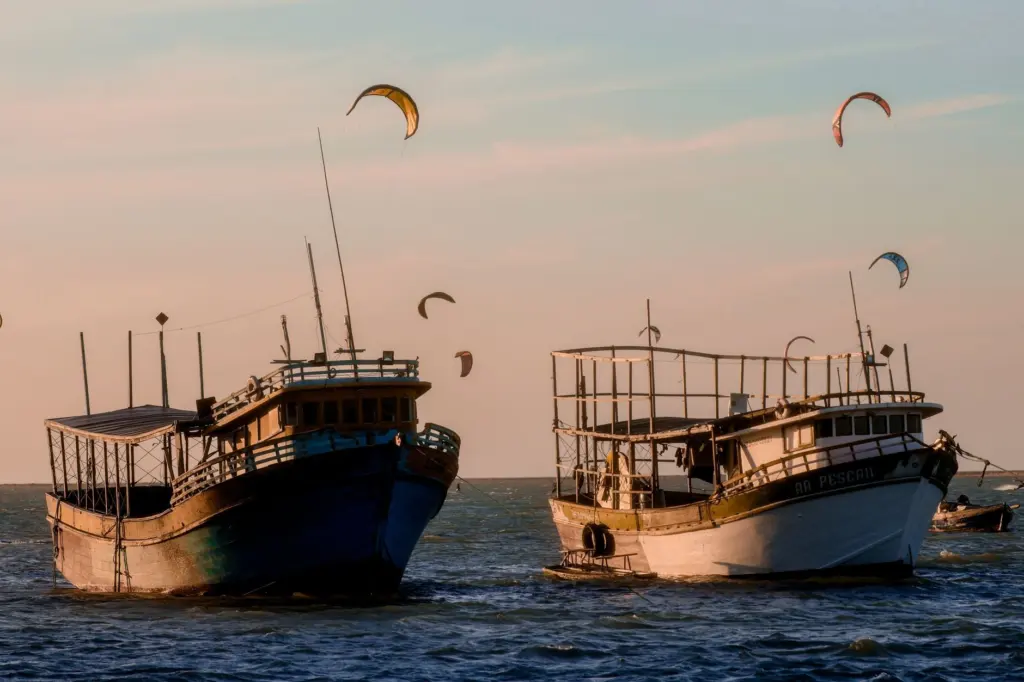
On a multi-leg expedition the physical load accumulates, so recovery between sessions is a real part of the rider’s job. Eating, drinking and resting properly makes the later legs safer, and a rider who is visibly flagging should say so rather than push on. Boats and kites at rest, as in the image below, are a reminder that the downtime is planned into the day on purpose.
Team riders and brand support
The word “rider” also has a commercial meaning that is worth separating from the expedition role. A brand’s team rider receives gear, travel and competition support from the brand, and the arrangement is a two-way deal rather than a gift.
Those deals are not uniform. They vary widely in what they cover, from current gear and travel to event support and media production. A rider joining an expedition may or may not have such a deal, and the expedition role does not depend on it. What defines a rider on the water is the set of on-board duties above, not who supplies the kite.
One related role is useful to understand. Development riders also shape next year’s kites and boards through testing feedback, which means careful, specific reporting is part of what makes them valuable. That habit carries over well to expeditions: a rider who can describe clearly how a kite behaved, and in what conditions, gives the team information it can act on.
Choosing who rides and when to wait
Selecting riders for an expedition is a judgement about fit, not status. A rider with sponsorship but little open-water experience may be a weaker choice for a demanding leg than a quieter rider with sound self-rescue skills and good judgement. Match the leg to the people, and be willing to rest a rider who is tired, unwell or uncomfortable with the day’s conditions.
When a rider is unsure about the forecast, the kit or their own readiness, the right default is to wait and raise it in the briefing. Delaying a session costs little, whereas going out unprepared can put the whole team, including the boat crew, into a difficult position.
Frequently asked questions
Is a rider the same as a team rider?
No. A rider on an expedition is defined by the duties of being on the board. A team rider is someone with a brand arrangement, and a rider can be one without the other.
Do all team rider deals include a salary?
No. Deals vary widely, and salary appears only at the top level, while many arrangements centre on gear, travel and event support.
Do riders plan the route and run the boat?
No. Riders contribute information in briefings, but the vessel and the plan stay with the boat crew and organisers. The rider’s focus is the kite, the board and personal safety.
What should a rider do if they feel unsafe mid-leg?
Signal the boat using the agreed method and come in. Ending a session early is a normal, responsible decision, and the team can only help if the rider reports the problem.