Short answer: the skills needed to kitesurf in waves are solid kite control with depower, body dragging, consistent upwind riding and confident toeside edging, all proven on flat water first.
This checklist covers the flat-water prerequisites only. For the wave technique itself, see our guide on how to kitesurf in waves.
Who should wait and who can move on
Treat the move to ocean waves as a pass-or-wait decision. Waves add moving water, a more demanding position for the board and less room to correct mistakes. Flat water shows up all your weaknesses just as much as the waves, so it is the cheaper place to find them.
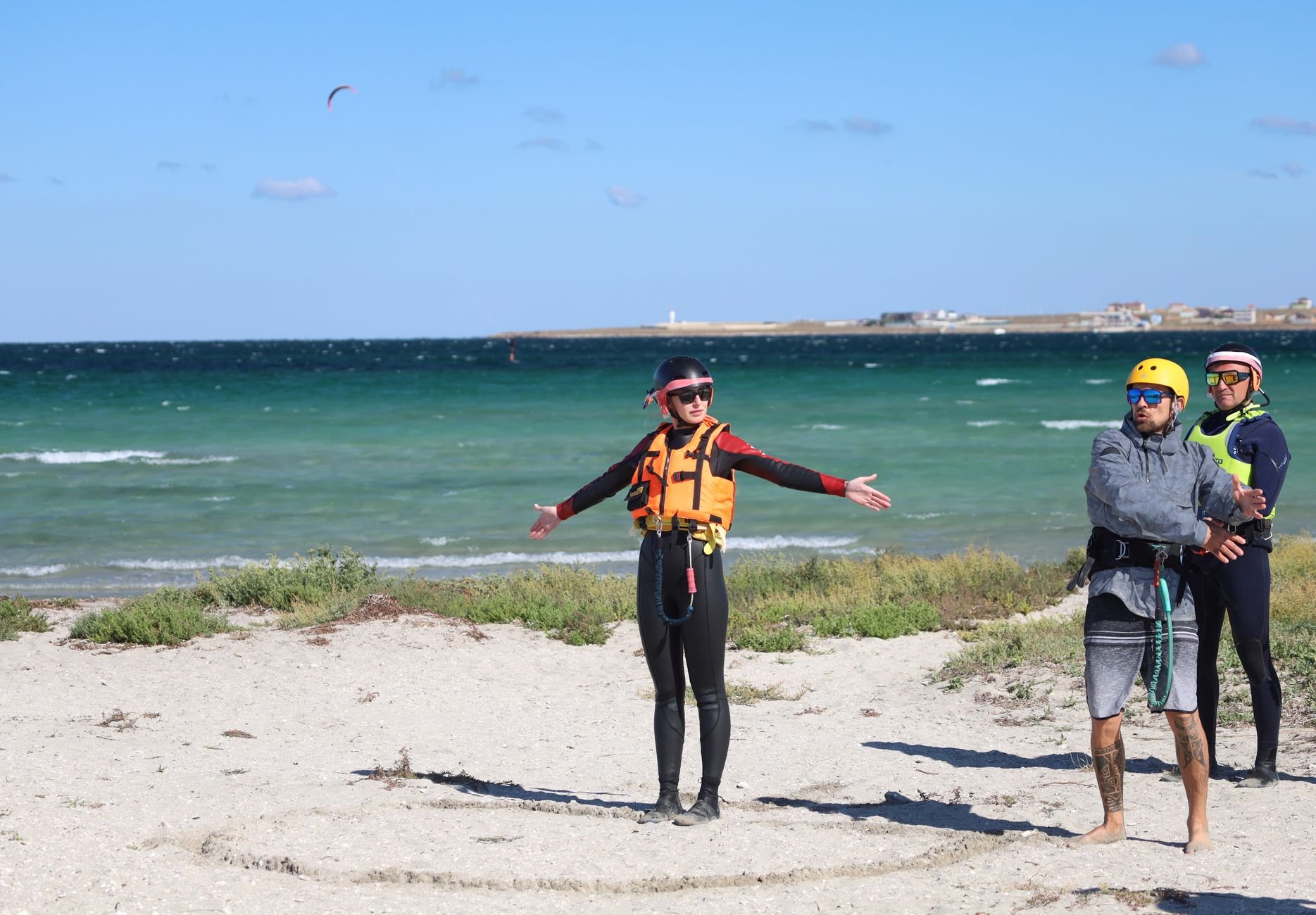
- Wait if any single skill is shaky. One weak skill, such as body dragging, is enough to keep you on flat water. A strong upwind ride does not make up for it.
- Move on when the skills work together. You are ready when you can fly the kite, recover your board, hold ground upwind and edge toeside without thinking about each step.
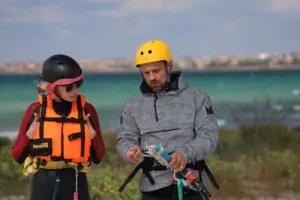
- Get your skills checked by a person. Instruction by a certified instructor is regarded by most as essential, and an instructor can judge your weak points in a way self-assessment cannot.
The flat-water skills checklist at a glance
Use the table to decide which skill to practise next. Each row names the prerequisite, what to be able to do, and how to use that information in planning.
| Skill | What to be able to do | Planning use |
|---|---|---|
| Kite control and depower | Understand power and depower techniques, and use depower and trim to decide how much of the window you cut | If you still rely on luck to keep the kite steady, stay on flat water |
| Body dragging | Retrieve your board when you lose it and stay comfortable in deeper water | Practise until recovering the board feels routine, not stressful |
| Upwind riding | Ride against the wind well enough to stay in your launch area without walking back | A critical milestone, so do not skip ahead if you still lose ground |
| Toeside edging | Finish a turn on a decent upwind toeside edge with the kite no higher than 11 or 1 o’clock | If you cannot edge against a low kite, you are not ready to link turns |
These skill descriptions come from Kite Tribe’s essential skills guide and IKSurf’s wave-riding technique article.
Kite control and depower
Kite control comes first because every later skill depends on it. Kite Tribe lists understanding power and depower techniques among the skills taught early, and it says water starts only follow once kite control and body dragging are comfortable.
In practice, depower is your way of managing pull when conditions change. How much you can depower the kite, and where your trim sits, determine how much of the window you can cut. If you cannot comfortably change the kite’s power while riding, the next gust or a change in the board’s position will decide things for you.
Body dragging to retrieve your board
Body dragging is how you get to a lost board, and it is learned before standing on a board. It is a core part of the essential skills because it lets you retrieve your board and builds confidence and comfort in deeper water.
Why upwind matters when you drag
The progression described in the kitesurfing wikibook is that body dragging follows good kite flying skills. It also notes body dragging upwind to avoid board leash use. That is the standard to aim for: travel upwind toward the board so you are not drifting past it. Treat your kite leash and board leash as safety equipment, not a substitute for being able to recover your own gear.
Swimming comfort
Being a confident swimmer makes you feel more relaxed in the water, which helps while you body drag. If swimming in open water makes you tense, work on that before you rely on body dragging as your recovery plan.
Upwind riding
Upwind riding is a critical milestone in kitesurfing. Once you can do it, you gain more independence and can spend more time kiting instead of walking back along the beach.
For wave riding the same ability has a practical meaning: you can hold your position instead of drifting downwind from the spot where you want to ride. Test it on flat water by riding a line and checking whether you finish where you started or further downwind. If you keep losing ground, the answer is more flat-water time, not a smaller surf spot.
Toeside riding and carving turns
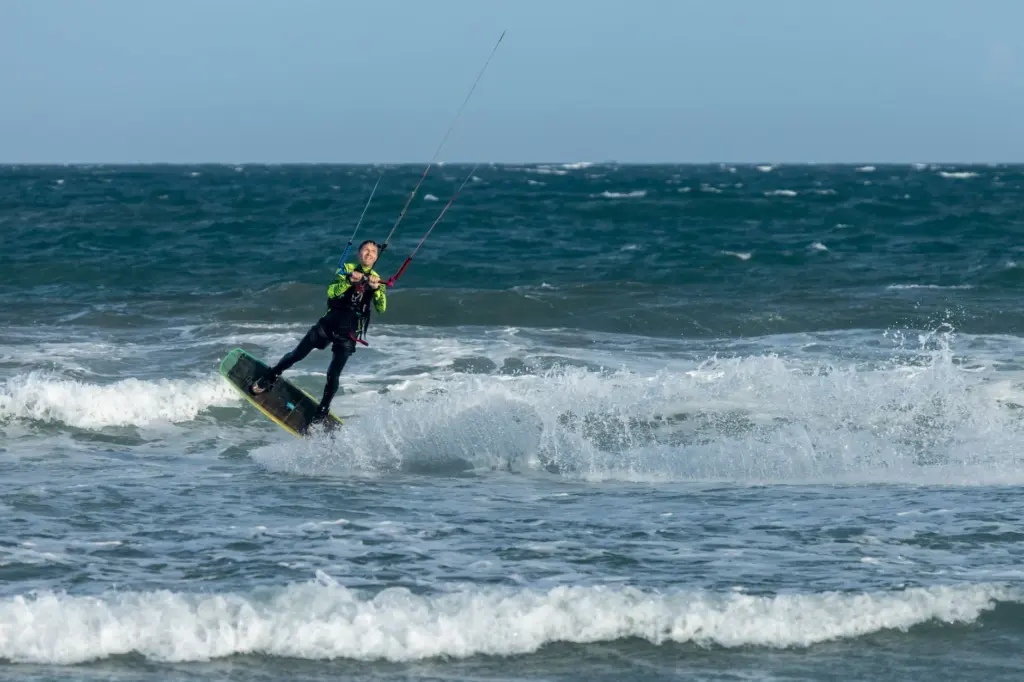
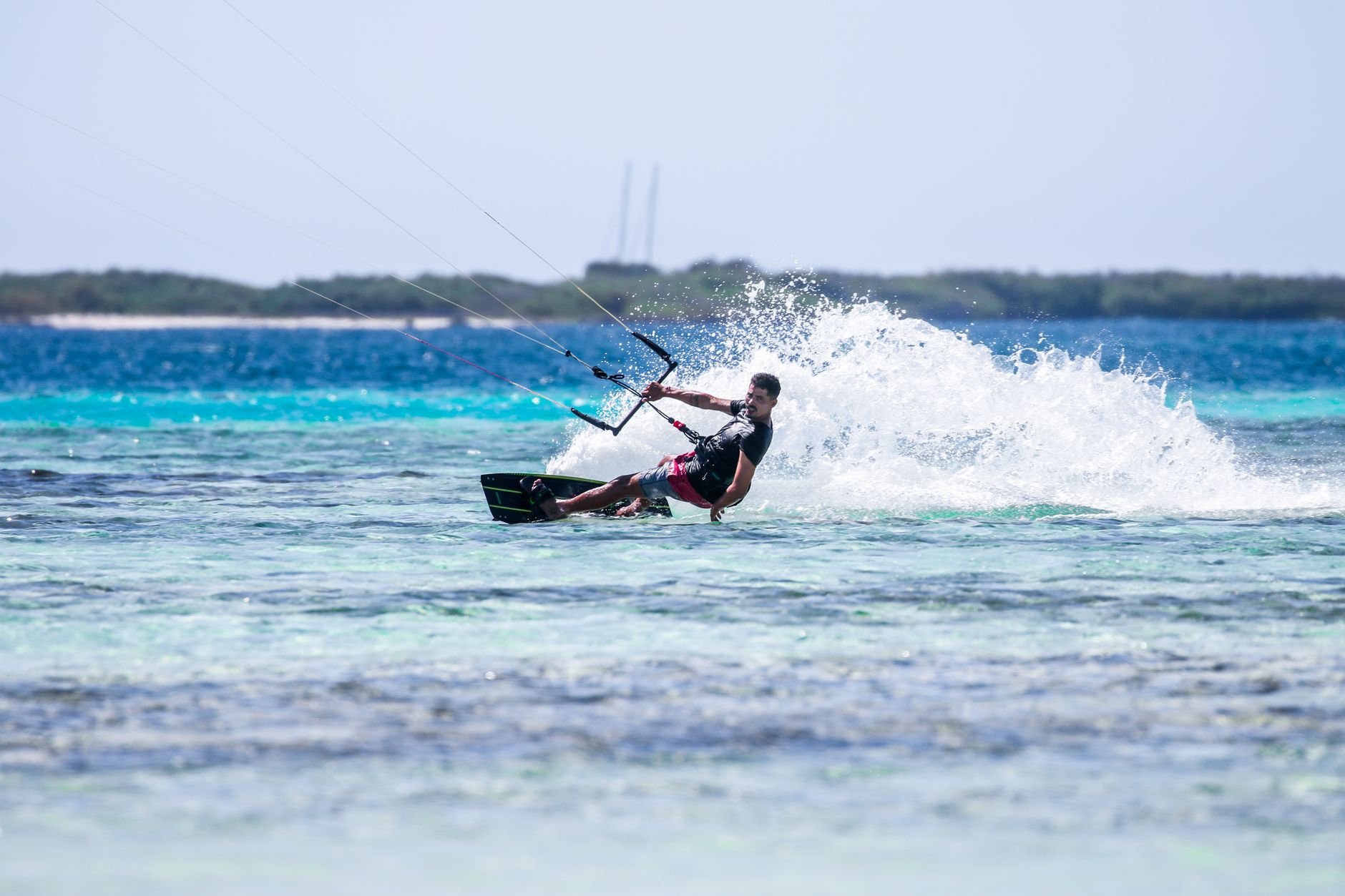
Toeside riding means riding with the board edged on your toes, and it matters in waves because wave riding is about carving turns, heel to toe and toe to heel. The turn is only useful if you can finish it on a decent upwind toeside edge.
Kite position for toeside
Your kite needs to be low enough to edge against, so no higher than 11 or 1 o’clock. A kite parked high gives you nothing to lean on and tends to lift you instead of letting you edge. Practise holding the kite low and steady while you commit to the toe edge.
Using flat water to build the habit
On flat water you can spend up to 20 m if needed to reset your toeside position, and that room is what you are giving up when you go into waves. Use it to make the edge automatic, so you are not recovering a poor toeside position at the moment you need to turn.
Board type and what it means for your checks
Directional kiteboards, meant for wave riding, work differently from the twin tip you probably learned on. A twin tip is a symmetrical bi-directional board. The kitesurfing wikibook notes that single-direction boards derived from windsurfing and surfing designs became the dominant form by 1999, and that wakeboard-style bi-directional boards became more popular from 2001 onwards.
The practical point is that your checklist skills should not depend on the board in your hands. A rider who can edge upwind, ride toeside and recover a board on a twin tip has the foundations, but a directional board puts you on one set of edges, so it is worth confirming the same skills hold when you switch.
Getting your skills assessed
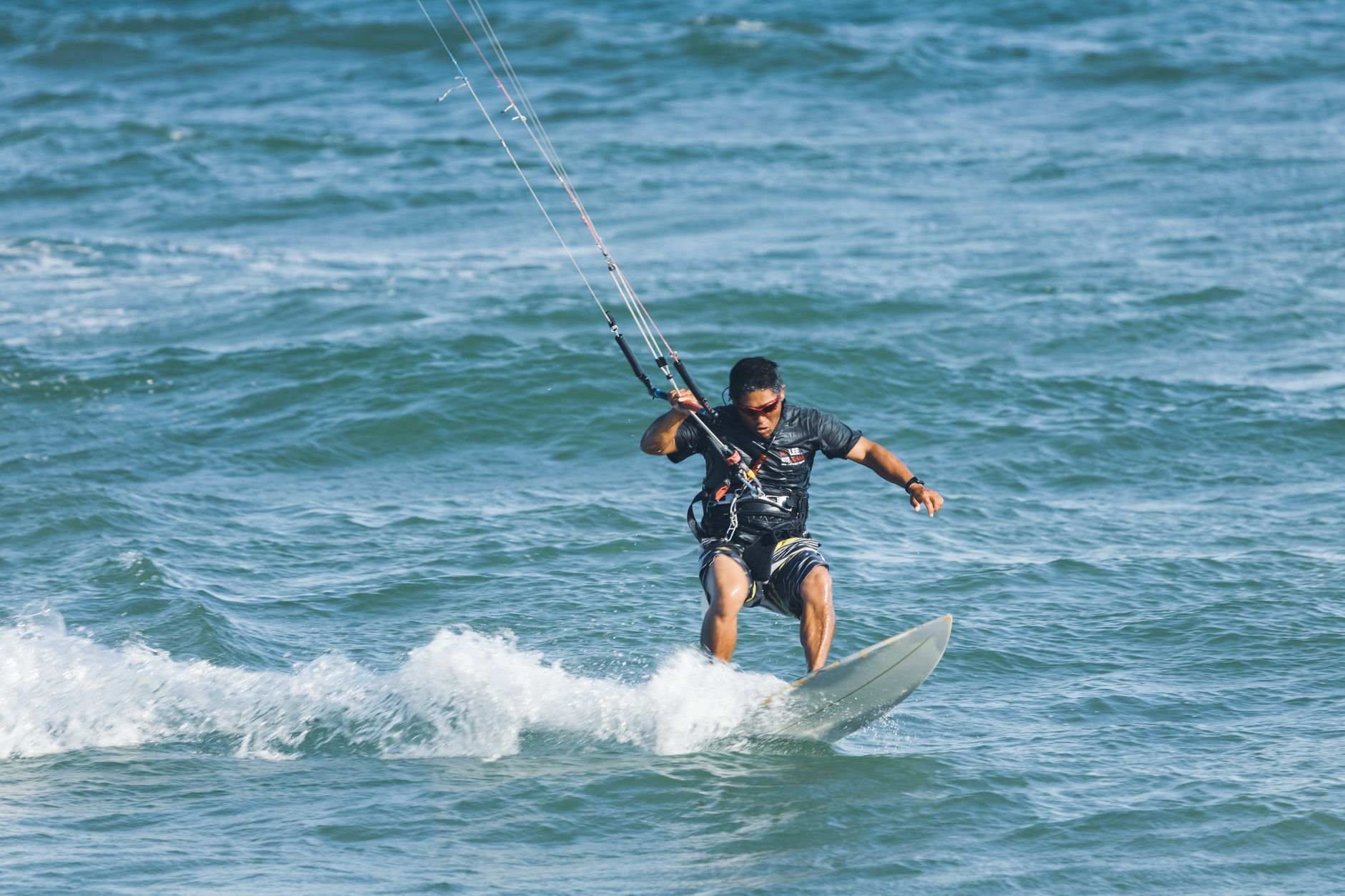
Self-assessment is useful, but it works best alongside a qualified instructor’s view. Ask them to watch you fly the kite, body drag to your board, hold an upwind line and edge toeside, then listen to which one they would work on first.
Ready to move to waves
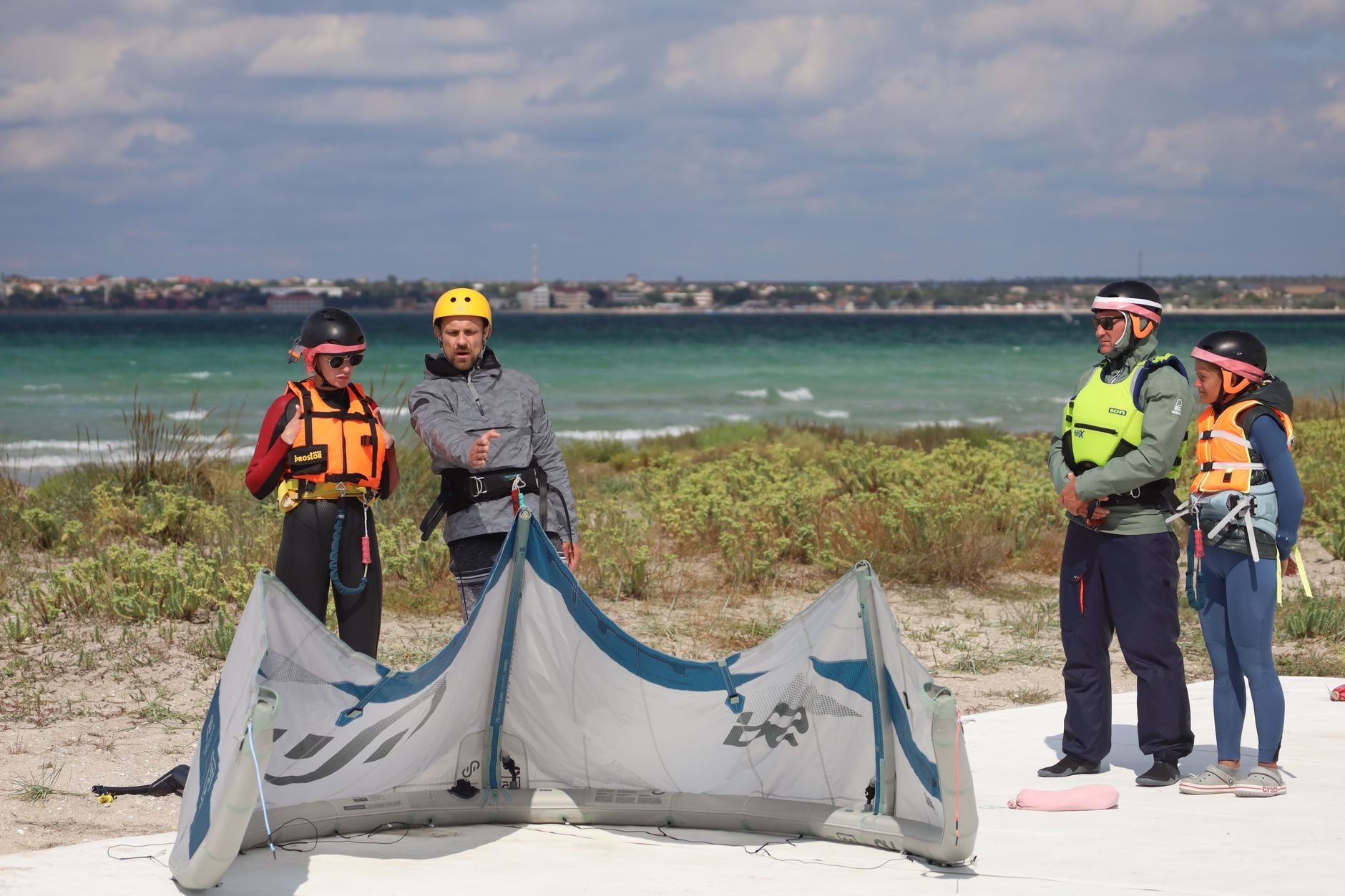
You are ready when the checklist holds up repeatedly, not once on a good day. Water starts follow kite control and body dragging in the learning order, and the same logic applies here. If one step still feels uncertain, repeat it on flat water, then use our guide to how to read waves kitesurfing to start choosing where to ride. Conditions matter as well as skill, so read up on kitesurfing squall safety before you pick a day.
Troubleshooting weak spots
- You lose ground upwind. Return to flat water and work on holding a steady edge against the kite. Do not take the problem into surf.
- You turn but cannot finish on the toe edge. Check your kite height first, since it needs to be no higher than 11 or 1 o’clock for you to edge against it.
- Body dragging feels tiring or stressful. Spend more time in deeper water without the board, and build swimming confidence, since it helps you relax.
- Power surprises you. Go back to practising depower and trim until adjusting the kite is routine.
Frequently asked questions
What skills do I need before kitesurfing in waves?
You need kite control including power and depower, body dragging, upwind riding and toeside edging, ideally checked by an instructor.
Do I need an instructor to judge whether I am ready?
Certified instruction is regarded by most as essential, and an instructor can spot weaknesses you may miss yourself.
Why practise body dragging if I use a leash?
Body dragging upwind avoids board leash use, and it also builds comfort in deeper water, so it works as a skill, not a backup.
Does the kind of board change which skills I need?
The core skills stay the same. A twin tip is symmetrical and bi-directional, while a directional board is ridden on one set of edges, so recheck your edging when you change.