Quick answer: Learning how to read waves kitesurfing starts on the beach. Find the peak, note which way the shoulder runs, and track the gap between sets before you rig. Watch longer if the break keeps changing.
This routine is the observation layer under how to kitesurf in waves. It needs no forecast tool, only a fixed viewing spot and patience. Once the water makes sense from the sand, the decision to launch, wait or choose another beach becomes much easier.
Wave anatomy: peak, shoulder and wave shape
A breaking wave is not a single line of foam. It has a peak, a shoulder and a shape that tells you how it will behave. Barefoot Surf Travel explains that the highest point of a wave is also the first part to break, and that this point is the peak.
Peak
The peak is where a wave starts to break, so it is your first reference point. Cornish Wave notes that peaks form where waves first meet shallow water, such as sandbars, reefs and points. If peaks keep appearing in the same spot, something on the bottom is causing it. That is the spot to locate before anything else.
Shoulder
The shoulder is the part of the wave that has not broken yet. Its angle tells you about pace: the steeper the angle of the shoulder, the slower the wave will break. A gentle, sloping shoulder peels away quickly. A steeper one breaks more slowly. Judge this by watching the foam travel along the face, then compare several waves from the same peak.
Wave shapes
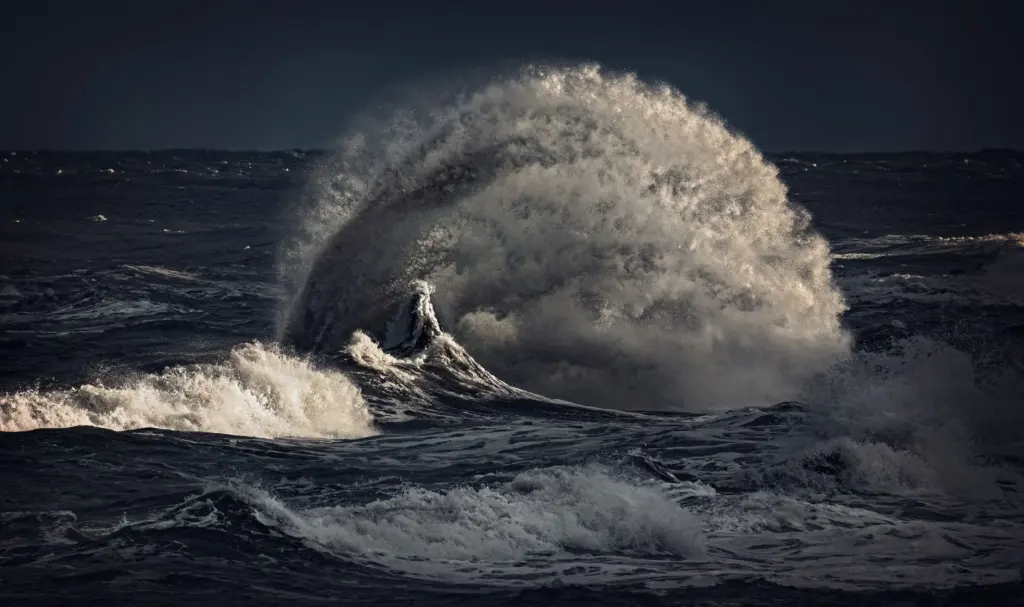
Most waves can be labelled as a right, a left, an A-frame or a closeout. Left and right describe the direction the wave breaks along, as seen from the beach. An A-frame has a central peak with equal-quality shoulders on both sides. A closeout breaks along its whole length at once. For a rider, a closeout is the shape to avoid, because there is no clean unbroken section to work with.
How waves break and why they break where they do
Waves break when the seabed gets in their way. According to Surf with Amigas, wind-blown waves travel on indefinitely until they meet a shallow bottom, which slows the lower part of the wave. The top keeps moving, and the wave tips forward.
Height, depth and steepening
As waves approach shallow water, they slow down, compress and steepen until they break. Cornish Wave adds that waves break when they reach a certain depth relative to their height. That ratio is the useful link between wave height and depth. A larger wave breaks over deeper water than a smaller one, so a bigger day moves the break line further out from the beach.
Steepness has its own definition: the ratio of a wave’s height to its wavelength, the distance between waves. For the same wave height, waves that are packed closer together are steeper. This is why a short, choppy sea looks more abrupt than a smooth swell.
Abrupt bottoms and powerful waves
The abruptness of the change in bottom contour affects the power of the breaking wave. A sudden shallowing makes a wave stand up and break hard. A gradual one lets it spill more gently. From the beach, you can often read this in the look of the break: a thick, sudden curl points to a sharp change underneath, while a long, soft roll of white points to a gradual one.
Beach break and reef break compared
The bottom type decides how reliable the waves are, so identify it first. A beach break is waves breaking over a sandy bottom. A reef break breaks over a fixed structure. The table below sets out what that means for planning.
| Break type | Bottom | Predictability | Planning use |
|---|---|---|---|
| Beach break | Sandy bottom with sandbars | Sandbars can shift with different storm and swell patterns | Re-read the peaks every session, even at a beach you know |
| Reef break | Fixed reef that does not move | Waves break in generally the same spot, so more predictable than a beach break | Learn the break spot once, then watch for how each swell changes how it behaves |
These distinctions come from Surf with Amigas.
At a beach break, treat last month’s knowledge as a hint, not a map. After a storm, the peaks may have moved along the beach. At a reef break, the position is dependable, but the reef is also the point where waves break most abruptly, so watch how hard the waves land before committing.
Spotting a gap in the breaking waves
At a beach break, look for a stretch where fewer waves are breaking. Surf with Amigas describes a rip current as a great place to choose to paddle out, because the gap has fewer breaking waves. A kiter can use the same observation to plan a launch and return line, but it should be confirmed locally before relying on it.
A shoreline observation routine
The routine below turns the anatomy into a repeatable habit. Do it before you rig, from a spot where you can see the whole break.
- Pick a fixed viewing spot. Stay in one place so that changes you see are in the water, not in your angle.
- Find the highest point first. Kima Surf advises identifying the highest point of the wave before anything else, because that is where the wave starts to break.
- Follow the break along the shoulder. Note whether it runs left, right or both ways, and whether it closes out.
- Choose an indicator. An indicator can be a boat anchored out at sea, or an outer reef. Use it to see sets arrive before they reach the break.
- Track the average time between sets. Count the gap from one set to the next, then compare against the next set.
- Check the break line. Notice where the waves first stand up and whether that spot stays the same from set to set.
How long to watch before going out
Watch until you can predict the next set, not until a timer ends. Keep track of the average time between sets, and keep watching until your guess for the next gap matches what arrives. If the breaks are changing between sets, or the peak moves along the beach, keep watching. A spot where the pattern is clear after a short look is a good sign. A spot where you are still guessing is a reason to wait.
Spotting where the sets break
Sets break where the bottom first shallows, so look for the same peak repeating. Where waves bunch up and stand taller, the depth is least. Where they pass through without breaking, it is deeper. Combine that with your indicator: when a set appears at the boat or outer reef, you have time to watch where it stands up and which shoulder opens.
Wave period and what it means for kite riding
Wave period is the time gap between one wave and the next as they pass a fixed point. You can read it from the beach without any tool by counting that gap. It sits alongside wavelength, which is the distance between waves, and the two describe the same spacing in time and in distance.
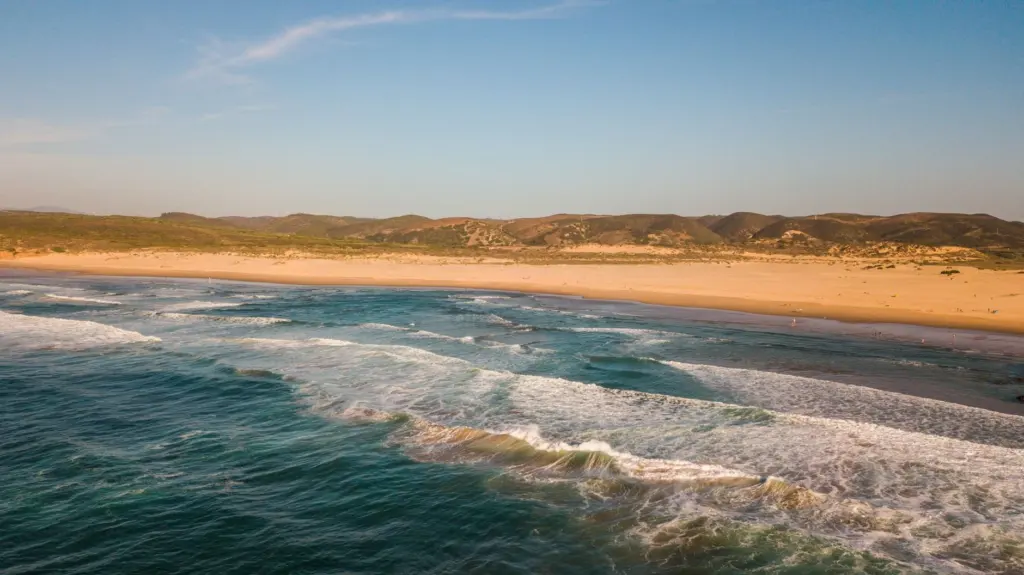
For wave period for kitesurfing, the practical lesson comes from steepness. Because steepness is the ratio of height to wavelength, widely spaced waves of a given height are less abrupt than closely spaced ones. Closely packed, steep waves give you less room between breaks. Evenly spaced lines give you a clearer rhythm to time your launch and exit around. Treat the gap you count as part of your go or no-go judgement, alongside the break type and shoulder angle. Longer or shorter gaps matter most for how much time you have between sets, which is why you track the average rather than a single wave.
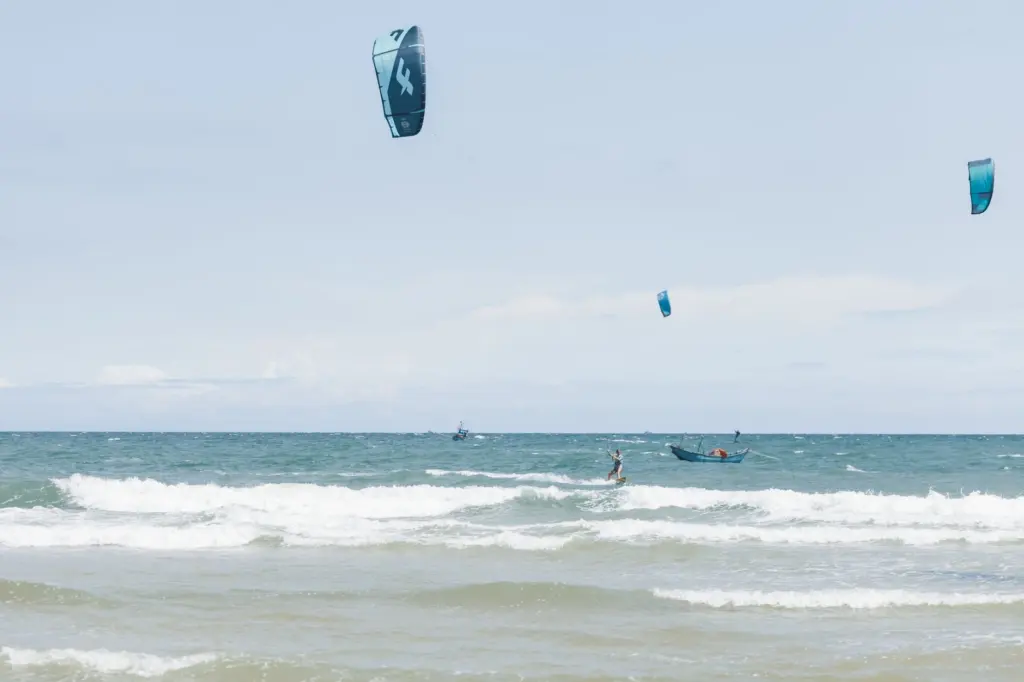
If you want to compare what you see on the sand with predicted conditions, how to read a kitesurfing forecast shows how the same ideas appear in forecast data. Your own observation still decides whether the water in front of you matches the numbers.
Troubleshooting what you see
- The waves look random. Pick one peak and follow only that one for several sets. Randomness often fades once you focus on a single sandbar or reef.
- The peak keeps moving. At a beach break, sandbars can shift with storms and swell, so the peak may relocate. Keep watching and re-identify the highest point.
- You cannot see sets coming. Add an indicator such as an anchored boat or the outer reef, and watch for the swell passing it.
- Everything closes out. A closeout breaks all at once, so there is no clean shoulder. This is a reason to wait or to move to another stretch of beach.
- The break looks too abrupt. A sharp change in bottom contour gives the wave more power. If you cannot see a gentler section, choose another spot or wait for conditions to change.
Reading the water is one part of readiness. The skills needed to kitesurf in waves cover what you should be able to do once you are actually out there.
Frequently asked questions
How do I know where a wave will break first?
Look for the highest point of the wave. That is the peak, and it is the first part to break, usually where the wave first meets shallow water over a sandbar, reef or point.
Is a reef break easier to read than a beach break?
Generally yes. A reef does not move, so waves break in generally the same spot. A beach break changes as sandbars shift with storm and swell patterns, so it needs fresh observation each time.
What does the angle of the shoulder tell me?
It shows how fast the wave will break. The steeper the angle of the shoulder, the slower the wave breaks, and a gentler angle means the break peels along faster.
Can I read waves without a forecast?
Yes. From the beach you can find the peak, follow the shoulder, spot an indicator and track the average time between sets. A forecast adds detail, but the water in front of you decides what is happening now.