| Feature | Published detail | Planning use |
|---|---|---|
| Route | Fuerteventura (Canary Islands) to Blue Haven Resort, Turks and Caicos Islands | A one-way route with a fixed start and finish, so progress can be judged against a clear endpoint. |
| Distance | 5986 km in relay across the Atlantic Ocean | A planned total for the whole team, not a distance any one rider covered. |
| Duration | Approximately 15 days, depending on wind speeds | A wind-dependent estimate, so the finish date stayed open. |
| Riders | Six international kiteboarders | The riding load was shared across six people rather than carried by one. |
| Shifts | Two two-hour shifts per kiter per day, one daytime and one at night | Night riding was part of the plan, which shaped kit and safety choices. |
| Support vessel | Double-A, a 50-foot catamaran | The boat was the base for rest, safety and comfort between shifts. |
| Medical cover | A doctor on board | Medical support travelled with the riders for the whole passage. |
| Tracking | Live tracker on the organisers’ website | Progress could be followed remotely while the team was at sea. |
The figures above come from iKSURFmag’s report on the start of the crossing.
The Atlantic Kite Challenge was a six-rider, boat-supported relay attempt to cross the Atlantic Ocean by kite, from Fuerteventura towards Turks and Caicos, planned at 5986 km. Its main condition was wind: the schedule of about 15 days depended on it.
It is a clear example of a kitesurfing team expedition, where the way the group is organised matters as much as the riding itself. The sections below explain what the format meant in practice, then how the pieces fitted together.
What the relay format means in practice
A relay meant no single rider had to carry the crossing. iKSURFmag reports that this approach allowed the team to cover the whole distance in approximately 15 days, depending on wind speeds. The consequences of that choice are easier to see than the mechanics, so they come first.
- The timeline is a forecast, not a promise. The 15-day figure was explicitly tied to wind speeds. Anyone reading the plan should treat it as a target that wind could move in either direction.
- Darkness is part of the job. Every rider was scheduled for one daytime and one night shift each day, so the team could not simply wait for daylight. That is why equipment and communication get as much attention in the report as the kites.
- The boat decides the safety envelope. The riders were supported by the catamaran Double-A, described in the report as there to ensure the riders’ safety and comfort. Riding was never separated from the vessel.
- Non-riding roles carry weight. A captain, a doctor and a cameraman travelled with the six riders. The crossing was a crewed passage with riding built into it, not six people on kites alone.
This pattern differs from a single rider attempting a long open-water passage alone, which is the territory of a wider kitesurfing ocean crossing. A kitesurfing downwinder is another format again and gets its own treatment.
Route and scale across the Atlantic Ocean
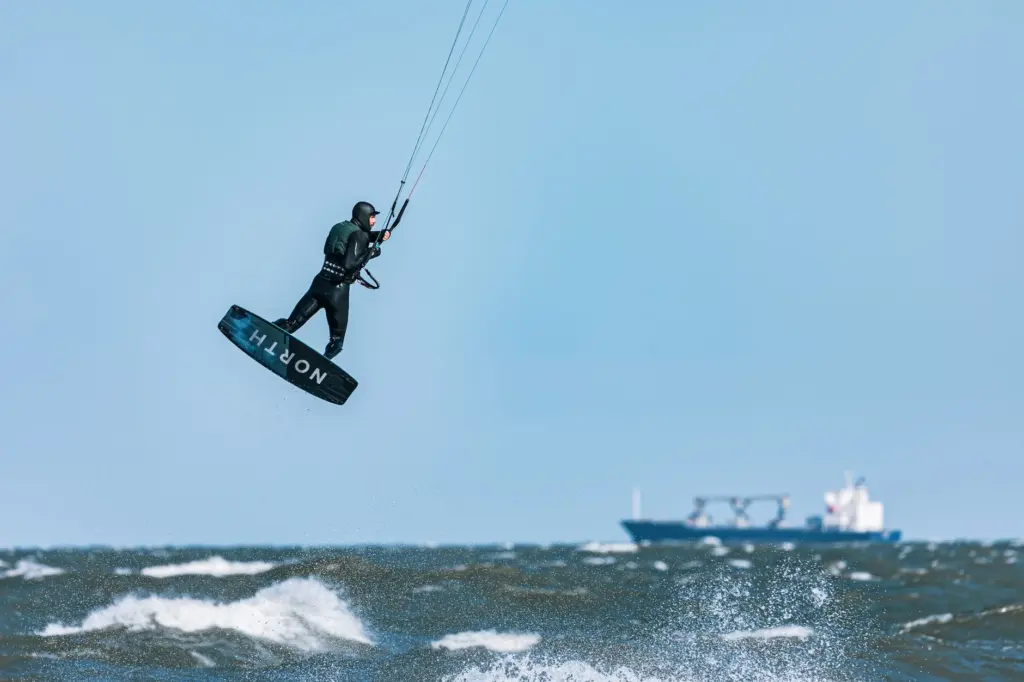
The route ran from Fuerteventura in the Canary Islands to the Blue Haven Resort on the Turks and Caicos Islands in the Caribbean. According to iKSURFmag, the team boarded their catamaran in front of the René Egli Centre on Fuerteventura on the morning of departure, and the planned relay distance was 5986 km.
The same report describes the six kiteboarders as starting an attempt to be the first ever to cross the Atlantic Ocean with a kite. The wording matters: the report frames the crossing as an attempt, and the claim of being first is the report’s own framing of the goal.
The organiser Allard Janssen, quoted in the report, said the idea for the Atlantic Kite Challenge came from a passion for kitesurfing and business ventures. That places the project as an organised, partly commercial undertaking rather than a spontaneous trip, which fits the structured crew, equipment and tracking described elsewhere.
Relay riding and shifts
Each kiter rode two two-hour shifts a day, one in the daytime and one at night, as iKSURFmag reports. The rest of each day was off the water, on the catamaran.
Why the shift pattern suits a boat-supported route
Short, fixed shifts spread effort across the six riders, and the day and night split means every rider takes both easier-to-see and harder conditions. The report does not say how handovers were carried out on the water, so the mechanics of each changeover are left to the team’s own accounts.
Support vessel and crew
The support vessel was Double-A, a 50-foot catamaran owned by Arne Ostby of Norway. The captain was Erik van Vuuren of the Netherlands, who led an experienced crew, according to iKSURFmag.
Two other named crew members show how the roles were divided. Sophie Cohen of the Netherlands was the doctor on board, and Bram de Vos of the Netherlands, winner of the HTC Reporter Election, joined as cameraman. Having a doctor and a cameraman on the same boat shows that the expedition covered both safety and storytelling.
The riders
The riders came from several countries, with the Netherlands, Norway and the USA among them. The report names Camilla Ringvold of Norway and Max Blom Jr. of the Netherlands among the six.
Conditions and rider equipment
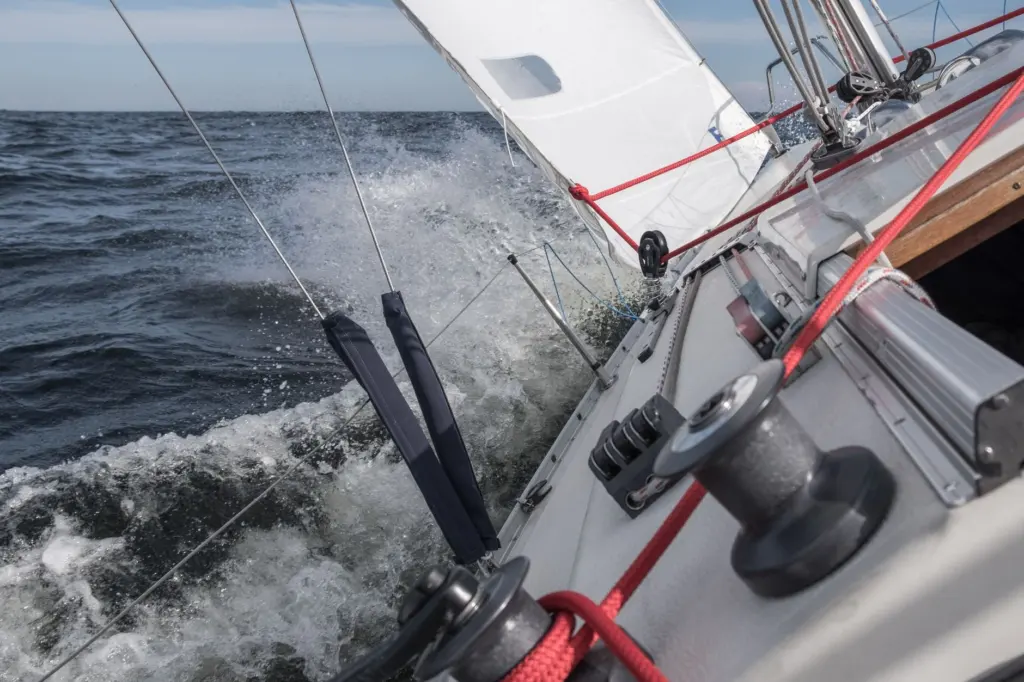
The published plan ties the timeline to wind speeds but attaches no wind or current figures to the 15-day estimate, so wind stayed the open variable for the whole route. What the report does describe in detail is how riders were prepared for long exposure on the water.
- Custom wetsuits. The report says Mystic developed a customised wetsuit for each rider to fit perfectly, a sensible response to hours of repeated shifts.
- Warmth for long days. Gear was supplied so that each rider and crew member would be comfortable and warm during the long days, which covers the boat as well as the water.
- Equipment within reach. Special life jackets were developed so that radios and flares stay within reach of the rider rather than stowed on the boat.
The last point is the most telling about the conditions the team expected. Equipping each rider with their own signalling and communication gear means the plan treated every shift as a situation where help might need to be called quickly.
Radios, flares and live tracking
Communication on the Atlantic Kite Challenge combined personal and public tools. Riders carried radios and flares in their custom life jackets, while the organisers published a live tracker on their website for anyone following the crossing, as iKSURFmag notes.
Published detail stops at radios and flares; the type of marine VHF radio and the channels used are not given. The same applies to the GPS tracker hardware: the report describes a live tracker for followers but not the unit fitted to the catamaran.
The pairing is the useful lesson. The on-board kit served the people at sea, while the tracker served everyone else, and together they let a relay spread across a long route stay visible and contactable.
Frequently asked questions
Who owned the support catamaran?
Arne Ostby of Norway owned the catamaran. Erik van Vuuren of the Netherlands was captain during the challenge.
Where could followers check progress?
The organisers provided a live tracker on their website, and the launch report pointed readers there for more information.
Why was the duration given as approximately 15 days?
The estimate was explicitly dependent on wind speeds, so it expressed the relay’s planned pace rather than a fixed schedule.
Who filmed the crossing?
Bram de Vos of the Netherlands, winner of the HTC Reporter Election, joined the team as cameraman.