| Situation | Accessory | Listed price | Planning use |
|---|---|---|---|
| Before launching | Hook knife | — | Buy first. Fit it to the harness where either hand can reach it. |
| Before launching | Kite leash | From $74.99 for a 130cm kite leash | Core kit. It keeps the kite with you after a crash or equipment failure. |
| Setting up | Kite pump | — | Choose for your kite’s valve and for how many kites you inflate. |
| Setting up | Pump gauge | $19.99 | Add it if your pump has no gauge of its own. |
| Repairs | Mini repair kit | $12.00 (listed down from $17.00) | Cheap insurance. Keep it in the kite bag. |
| Spares | Harness lineset | $23.99 for 28 inch | Worth carrying if your harness uses a lineset. |
| Spares | Depower rope | $35.00 for the Sentinel bar system | Buy the part that matches your bar. |
| Spares | Flagging line | $30.99 with PU cover, Slingshot Sentry bar | Bar-specific, so match it to your bar. |
| Comfort | Gloves | — | Optional. They add grip and protect your hands. |
| Carrying | Gear bag | — | Optional at the local beach. More useful once you travel. |
Prices are current listings from one retailer’s kiteboarding parts and accessories collection, and they will move over time.
The kitesurfing accessories worth buying first are the ones that prevent trouble far from help: a hook knife, a leash, and a pump with a working gauge. Repair patches, spare lines, gloves and a gear bag follow in that order.
Beginners building a kit from scratch can pair this ranking with the wider advice on kitesurfing gear for beginners, which covers the main equipment these accessories support.
Deciding what to buy first
Rank accessories by how much trouble they prevent, not by how useful they feel on a calm day. The items that matter most are the ones you hope never to use, and they are the cheapest to skip and the most expensive to lack.
- Essential: hook knife, leash and pump. The knife and leash deal with the worst moments of a session. The pump decides whether you get on the water at all.
- Strongly advised: repair kit and spare line parts. A small tear or a failed line should end a repair, not your day. Both are inexpensive next to the cost of being stranded with unusable gear.
- Optional: gloves and a gear bag. Both make sessions more comfortable and organised. Neither stops a session going wrong, so buy them after the rest.
If your budget only stretches to a few items, cover the first group completely before spending on the second.
Before launch: safety items
These two accessories matter in the moments when you cannot fix a problem on the beach, so they come first in any kit.
Hook knife
A hook knife is the accessory that decides whether a tangle or a runaway situation far from shore stays manageable. It is meant for cutting lines when you need to get free, so it earns its place before any comfort item.
Where you mount it matters as much as which model you buy. A knife you cannot find or reach quickly under stress is not doing its job. Clip it to the harness where either hand can get to it without looking, and practise drawing it on dry land before you rely on it on the water.
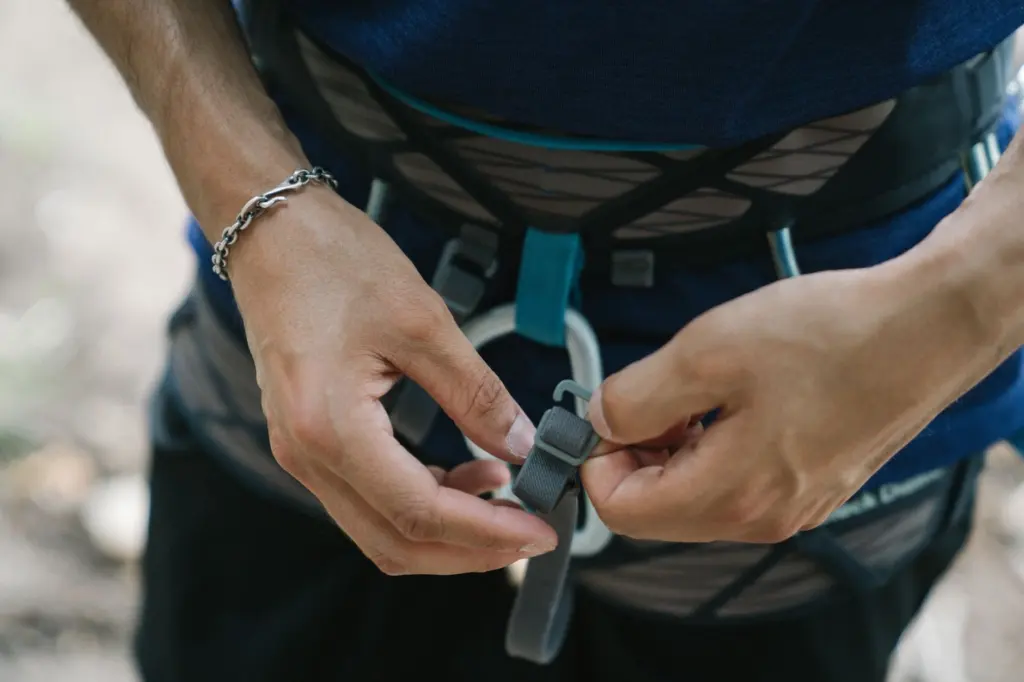
The limitation is that cutting lines is a last resort. It frees you, but it also means a lost or damaged kite and lines to replace. That is why the knife sits beside the repair and spare items below rather than replacing them.
Kite leash
A leash prevents the kite from getting away from you in a crash or equipment failure, according to retailer product descriptions. That makes it a core item rather than an upgrade.
One listed kite leash, the Mystic Kite HP leash, has a length of 130cm and starts from $74.99. A wrist and waist leash listed for wing use starts from $46.00. Prices depend on the discipline a leash is designed for, so confirm that the one you pick is intended for kites before you buy.
Setting up: pump and gauge
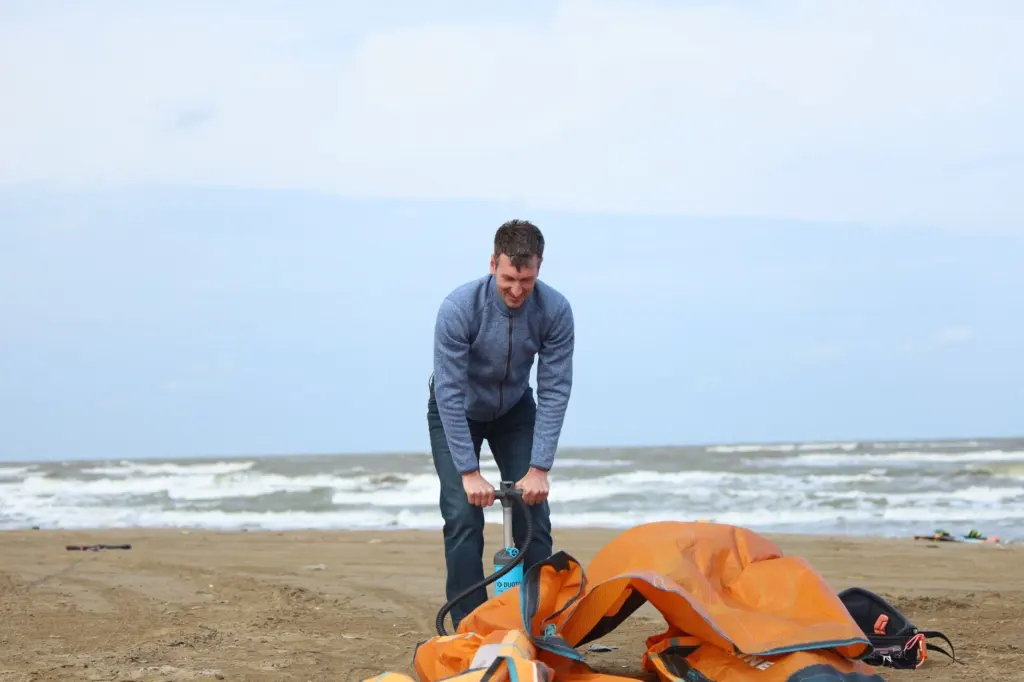
Inflation is the first job of every session, and a poor pump turns it into the slowest and most frustrating part of the day.
Choosing a kite pump
Retailers list pumps as their own category under kiteboarding accessories, alongside leashes, fins and footstraps. This makes the pump a separate decision, not something that comes with the kite.
Base the choice on a few practical questions:
- Valve compatibility. Check that the pump’s hose and fitting suit your kite’s valve before you buy.
- Volume and effort. A larger-volume pump suits anyone who inflates several kites or rides often. A smaller one is easier to carry but asks more effort at each inflation.
- A readable gauge. Built-in or separate, a gauge lets you inflate to a known pressure instead of guessing by feel.
- Stability underfoot. A pump that stays put on sand or shingle is easier to use alone.
Match the pump to how you actually ride. Someone who keeps a single kite in the car can accept a compact pump. A rider with several kites should lean towards a larger one and a clear gauge.
Pressure gauge
Some pumps do not include a gauge, and retailers sell a pump gauge as a separate item. In that case the gauge is a small addition rather than a reason to replace a pump that otherwise works well. If you already own a pump without one, adding a gauge is the cheaper fix.
For step-by-step handling once the kite is inflated, see this guide on how to pack a kite.
When something breaks: repairs and spares
A small tear or a worn line is common wear. The accessories in this group decide whether it ends your session or just delays it.
Repair patches and a field kit
A mini repair kit from Airtime, called Stickies, is described as a super small compact kit that belongs in the kite bag or glove box. Its listed contents are 10 white peel-and-stick Dacron rounds, and it is currently listed at $12.00 against an original $17.00.
That gives a realistic picture of a basic field kit: self-adhesive patches that cover a small tear quickly, in a pack small enough that you never have a reason to leave it behind. Larger damage is a different matter. Retailers list repair products and repair services as separate categories, which suggests treating a field kit as a stop-gap and sending bigger damage to a professional.
Spare lines and bar parts
Line parts are the spares that most often fit one bar and not another. Listed replacements name the bar they suit: a replacement trim or depower rope for the Sentinel bar system is listed at $35.00, and a replacement flagging line with PU cover for the Slingshot Sentry bar at $30.99. A Mystic harness lineset with soft handles, 28 inch, is listed at $23.99, according to the same retailer collection.
Buy the spare that matches the bar you actually own, not a generic one. If you are still deciding which bar and kite system to commit to, the comparison of the best kitesurfing brands can help, because spare availability follows the brand you choose. Retailers also list repair kits, screw sets and general spare parts alongside bar-specific lines.
Comfort and carrying
These items do not prevent a session going wrong, but they make regular riding easier to sustain.
Gloves
Kiteboarding gloves provide an extra grip on the control bar and protect your hands from the elements. They suit riders in cold or harsh conditions, or anyone whose hands tire early on a long session. In mild weather they can wait until the rest of the kit is covered.
Gear bag
A kiteboarding bag lets you transport and store your gear easily. If you ride close to home and keep everything in the car, it can wait. If you carry kites, bar and pump on public transport or in the boot of a crowded car, it moves up your list quickly, because it keeps small items together and stops spares being left behind.
Trips away from shore
Riding far from a shop or from help changes the ranking. Anything you cannot replace on the spot moves from optional to necessary.
- Safety first. Check that the hook knife and leash are in good order and fitted before you leave, since nobody nearby can lend you one.
- Repair and spares. Put the mini repair kit and the bar-specific line spare in the bag. Remember that a remote spot cannot offer a repair service.
- Pump and gauge. Check the pump fits your valve and that the gauge works before departing.
- Gear bag. This becomes the thing that holds the rest together and keeps the small items from going missing in transit.
Gloves are the one item that depends on the destination’s weather rather than on its distance from help.
Frequently asked questions
| Question | Answer |
|---|---|
| Where should a mini repair kit be kept? | In the kite bag or glove box. The Airtime Stickies kit is described as small enough for either. |
| Is a pressure gauge part of the pump? | Not always. A pump gauge is listed as a separate item, at $19.99 in one retailer listing, so check whether your pump already has one. |
| Do replacement lines fit any bar? | No. Listed replacements name the bar system they suit, such as the Sentinel or the Sentry, so match the part to your bar. |
| Do I need both a leash and a hook knife? | Yes. They do different jobs: the leash keeps the kite from getting away after a crash or failure, and the knife is for cutting lines when you need to get free. |