For a twin tip vs directional kiteboard decision, choose a twin tip for learning, jumping and freestyle. Choose a directional for waves and strapless riding once basic board control is solid.
The choice sits inside a wider kit decision, covered in kitesurfing gear for beginners. This comparison covers turning, wave use, upwind behaviour and the learning curve, then gives a verdict by riding goal.
Side-by-side comparison
| Criterion | Twin-tip board | Directional board | Planning use |
|---|---|---|---|
| Shape | Square shape | Shape of a normal surfboard | A directional is the surfboard-style kiteboard; a twin tip is not. |
| Foot retention | Always straps or boots | Often no straps | Straps add control; no straps allow strapless riding. |
| Changing direction | Symmetrical; rides the same either way, so direction changes cost nothing | Gybe the board or move your feet | A twin tip removes a skill from the early learning stage. |
| Best-supported use | Very high jumping and freestyle tricks | Surfing waves comfortably | Match the board to the water you ride most. |
| Typical length | Roughly 130 to 160 cm | About 5’4″ to 6’2″ (165 to 190 cm) | Directional sizing does not follow twin-tip sizing. |
| Beginner start | Manufacturer advises learning here first | Better as a second board, or once basics are in place | Start with straps, then move to surf-style riding. |
Design, use and learning advice come from Apple Tree Surfboards’ twin tip or directional guide, while direction changes and lengths come from Kitesurfing Official’s comparison.
Board design and foot retention
A twin-tip board has a square shape, and Apple Tree Surfboards notes that it always carries footstraps or boots. A directional board has the shape of a normal surfboard and often has no straps at all. Foot retention is therefore the most practical difference between the two families.
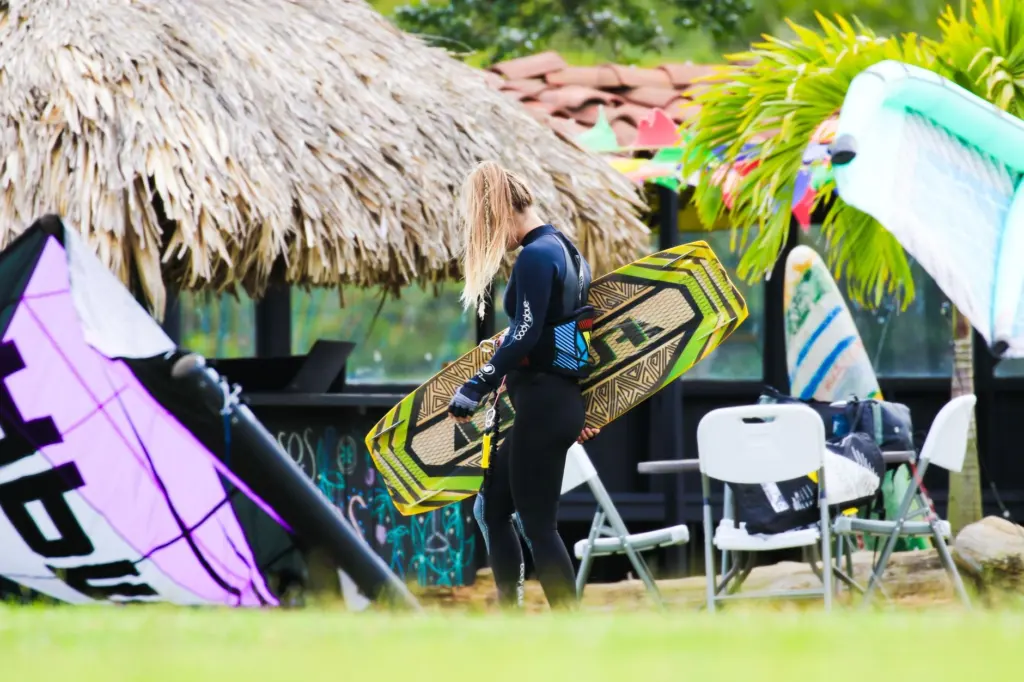
Retention changes what each board can do:
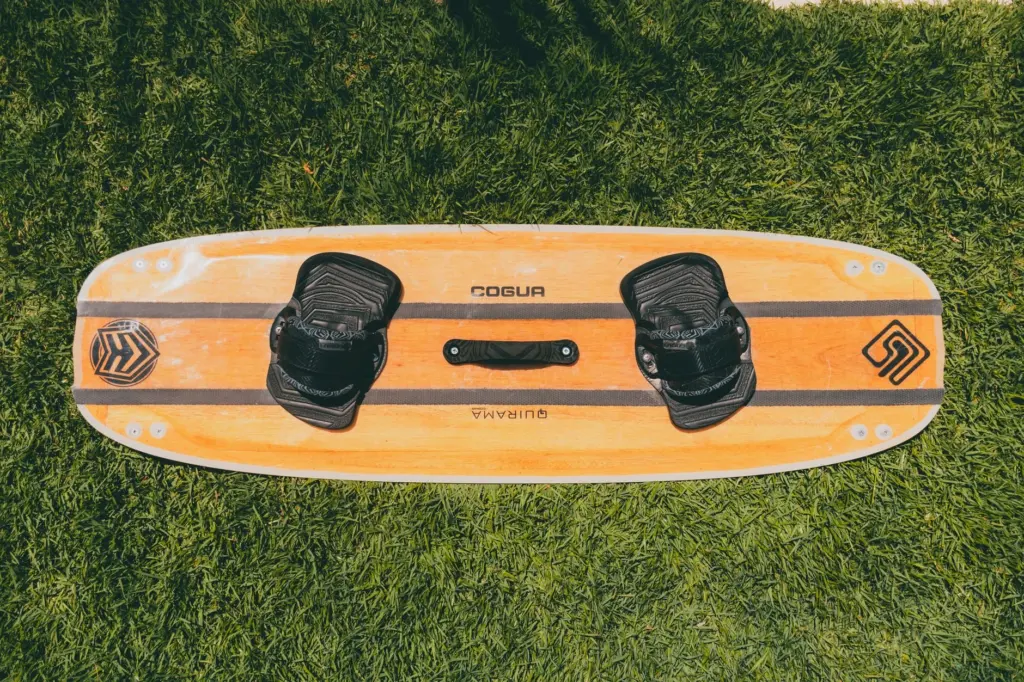
- Straps for control. The manufacturer says straps give more control, which is one reason it favours the twin tip for learning.
- Boots for performance. Boots let a rider edge faster, ride faster and jump higher, according to the same guide.
- The cost of being attached. In boots, board-offs and one-footers are not possible because the rider is stuck to the board.
Turning and changing direction
A twin tip is symmetrical. Both tips are identical, so the board rides the same in either direction, according to Kitesurfing Official. The same guide says waterstarts work in both directions and direction changes cost nothing.
A directional has a nose and a tail. To change direction, the rider either gybes the board or moves their feet. That is an extra skill to learn, so a directional rewards a rider who already controls the kite and board. It suits a rider who has chosen it for waves or strapless riding.
Kite handling matters as much as the board when turning. The kitesurfing control bar explained guide covers the bar side of that pairing.
Waves and flat water
For waves, the directional is the better board. Apple Tree Surfboards says that with a directional you can surf the waves very comfortably. Kitesurfing Official recommends a directional if waves are the reason you kite, if strapless riding appeals, and for light-wind home spots.
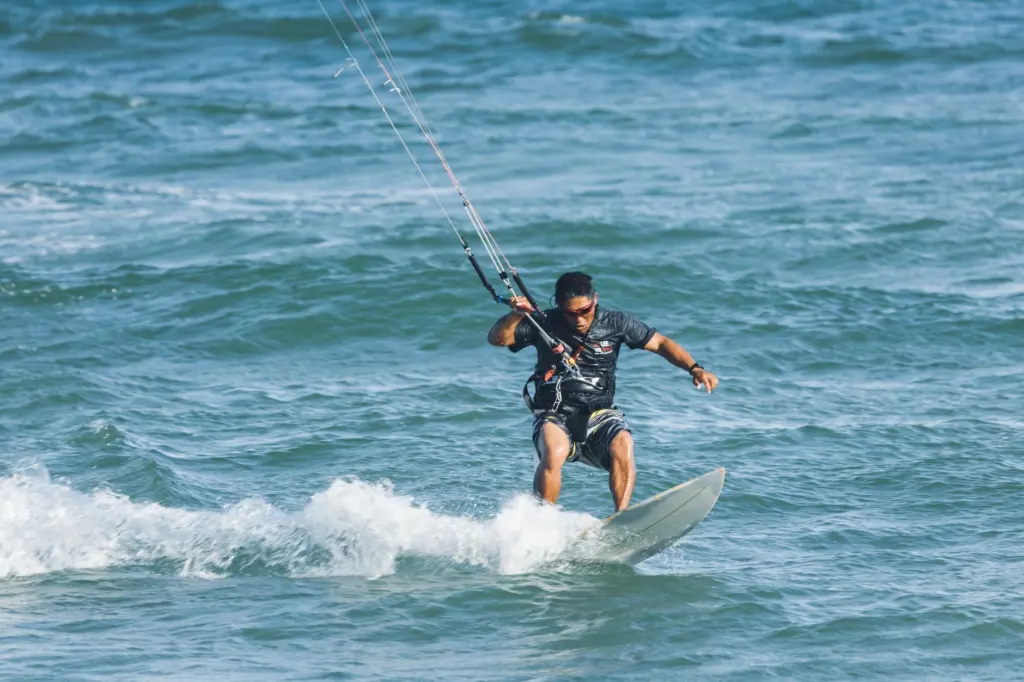
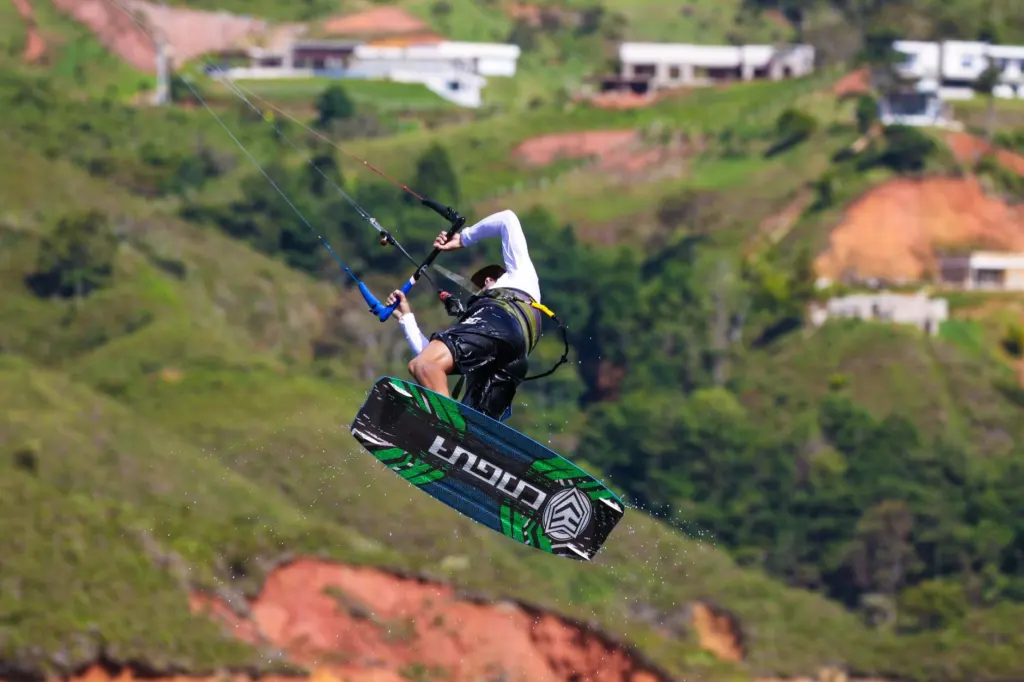
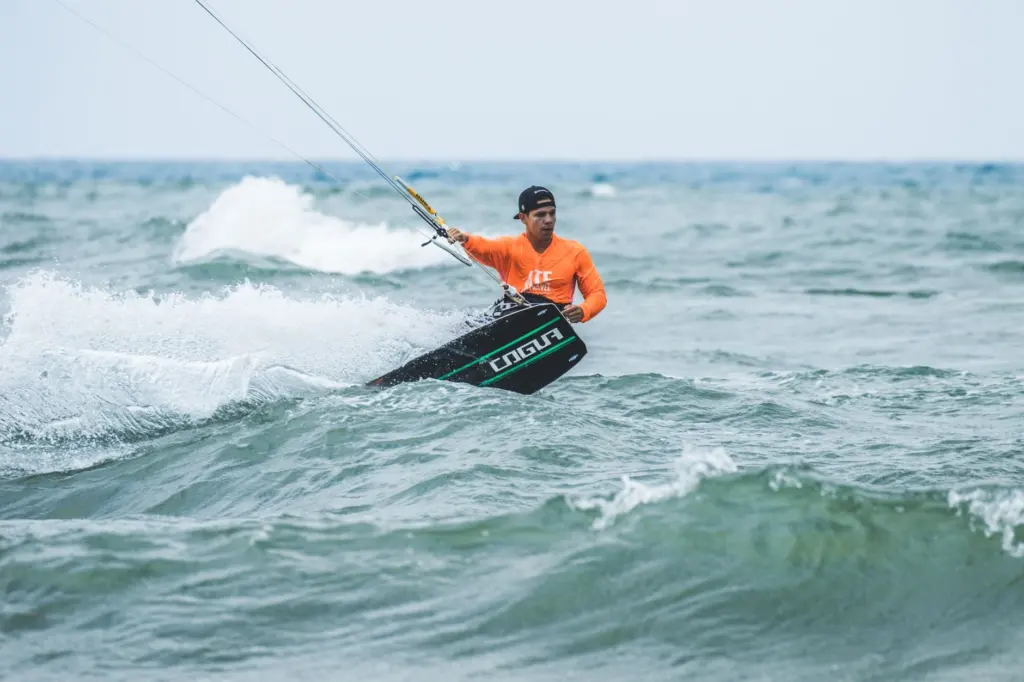
A twin tip is built for the opposite job. The manufacturer describes it as especially for very high jumping and freestyle tricks. Flat water is where that style of riding makes most sense.
Length varies with the discipline. Apple Tree’s strapless board guide puts boards used purely for wave riding at generally longer, around 6 foot. A strapless freestyle board is usually shorter, around the 5 foot mark, and is mainly used on flat water. A directional is not automatically a wave board, so check which job a specific board was shaped for.
Upwind ability and outline
Upwind performance depends on outline and edging more than on the family name. Apple Tree says a parallel outline gives a board more speed down the line and helps it go upwind. The trade-off is that it makes turning a little more challenging than a curved outline.
For a rider who values pointing upwind or covering distance, a parallel outline is worth looking for. For a rider who wants tight, responsive turns in surf, a more curved outline is the safer direction. Boots on a twin tip help here too, since the same guide says they let a rider edge faster.
Learning curve and strapless starts
Apple Tree Surfboards advises learning to kitesurf on a twin tip, mainly because the straps give more control. Combined with symmetrical riding, where waterstarts work in both directions and direction changes cost nothing, the twin tip is the lower-friction starting point.
A strapless directional is not the first-board choice for a beginner. Riding strapless is still possible, and the sizing guidance shows how to make it easier. Windance says directional boards do not size like twin tips, that beginners should size slightly longer, and that strapless riding benefits from a little extra board because you are not locked in.
Board length also interacts with rider weight and wind. The how to choose a kiteboard guide covers those steps in order.
Choosing by riding goal
- Learning to kitesurf. Take the twin tip. It has straps and rides identically both ways.
- Freeride, jumping and freestyle. The twin tip suits these. Boots add faster edging and higher jumps, but rule out board-offs and one-footers.
- Waves. A directional is the board built for surfing with a kite, often ridden without straps.
- Strapless riding. Choose a directional and size up a touch, since you are not locked in.
- Wanting both. Learn on the twin tip, then add a directional once you control the kite and board. The manufacturer’s learn-first advice points that way.
If upwind distance matters more than turning, put outline ahead of board family when comparing specific models.
Frequently asked questions
Is a twin tip or directional board better?
Neither wins outright. A twin tip suits jumping and freestyle, while a directional suits waves and strapless riding. Pick by the riding you want to do most.
Which is easier for a beginner to learn on?
The twin tip. Apple Tree Surfboards recommends it for learning, and its symmetry means no direction-change skill is needed.
Can I ride a strapless board as a beginner?
It is possible on a directional, but it is not the manufacturer’s recommended starting point. If you try it, size slightly longer, because strapless riding benefits from extra board.
Which board works better for waves?
The directional. It is shaped like a surfboard and is described as comfortable for surfing waves with a kite.
Do I need to change direction differently on each?
Yes. A twin tip rides the same either way, so there is nothing special to do. On a directional you gybe the board or move your feet.