Quick answer: A kitesurfing downwinder is a one-way ride with the wind behind you, so plan the route, the exit points and the pickup before you launch, and go with a group or support crew rather than alone.
Downwinders are a staple of any kitesurfing team expedition, and the organising matters as much as the riding. Crew jobs on the day are covered in kitesurfing expedition team roles, and a much bigger undertaking is the Atlantic Kite Challenge.
Choosing a downwind route and exit points
A good downwind kiteboarding route has a launch you can reach by road, a landing you can identify from the water, and a coastline that lets you stop if conditions change. New Wave Kiteboarding notes that downwind is the easiest direction to ride because the wind carries you. That ease is also why a downwinder cannot be a casual out-and-back session: the whole plan is about getting people from the end of the line back to where they started.
Criteria that decide the route
- Wind direction and strength. Pick a route where the forecast wind pushes you along the coast, not onto or off it. The Oahu guide below pairs each route with a specific wind range and direction.
- Season and swell. The longest, wildest routes can be seasonal. On Oahu, the Laie to Sunset Point run is described as a summer event only, because the swell gets too large and wild in winter.
- Tide. The Kahala to Diamond Head run is described as best at high tide, so check tide timing before committing to a start time.
- Islands and headlands. Islands cast a large wind shadow. Local guidance is to pass downwind of them by 1/3 to 1/2 mile.
- Rider level. Match the route to the weakest rider in the group, not the strongest.
Three Oahu routes compared
Extreme Oahu’s local downwinder guide gives enough detail to compare three routes side by side. Use the table to see how start, exit, conditions and difficulty vary between runs.
| Route | Start and exit | Conditions and difficulty | Planning use |
|---|---|---|---|
| Laie to Sunset Point | About 16 miles of open ocean | Experts only; summer only because winter swell is too large | Choose only with expert riders, a summer date and full support. |
| Kahala to Diamond Head | Start at Kahala Beach Park, exit at Diamond Head | Best at high tide with 15-25 knots from ENE, E or ESE | Set the start time by the tide and confirm the wind direction first. |
| Waimanalo to Kailua | Start at Kaiona Beach Park; park on the road just west of the beach park | 15-25 knots of NE trades and a 3-5 ft swell; the longest of the downwinders described | Leave time for the long run and sort the parking before the session. |
These figures come from the Extreme Oahu downwinder guide, which describes the runs as local knowledge rather than a universal template.
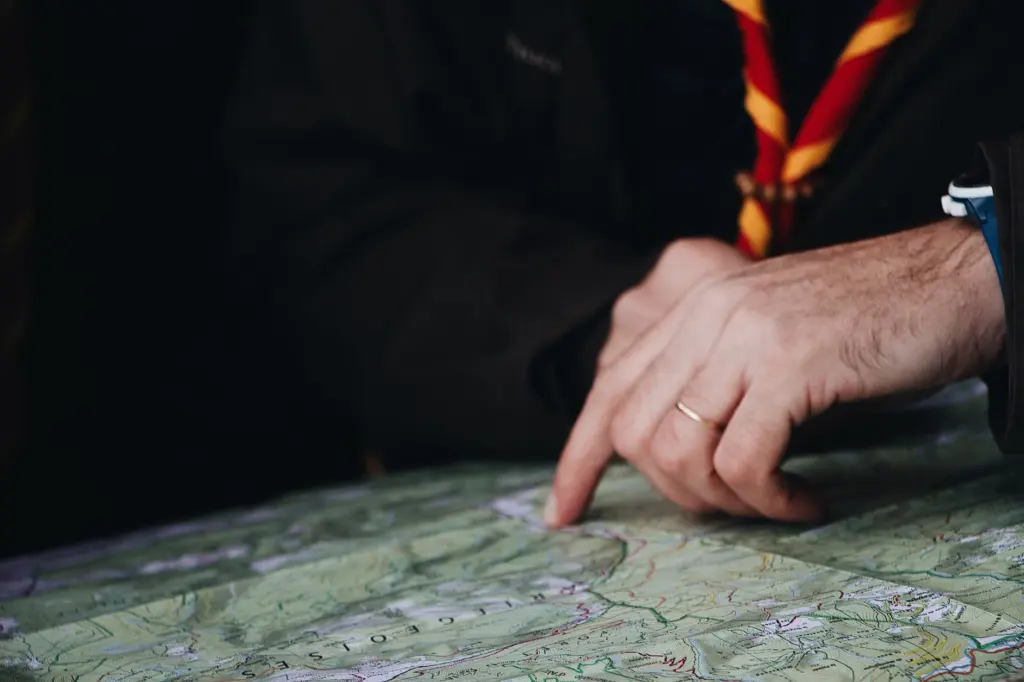
The pattern holds beyond Oahu: reliable trade winds make a steady downwind run possible, but each stretch of coast has its own start, exit and timing rules. Mark the start, the intended exit and any fallback landing on a map, and share that map with the whole crew.
Pickup logistics for a downwinder
Pickup logistics come down to one question: how does everyone get from the exit point back to the start, with all their gear? Because a downwinder ends away from where it began, the plan has to be settled before the first rider launches.
Shuttle and parking
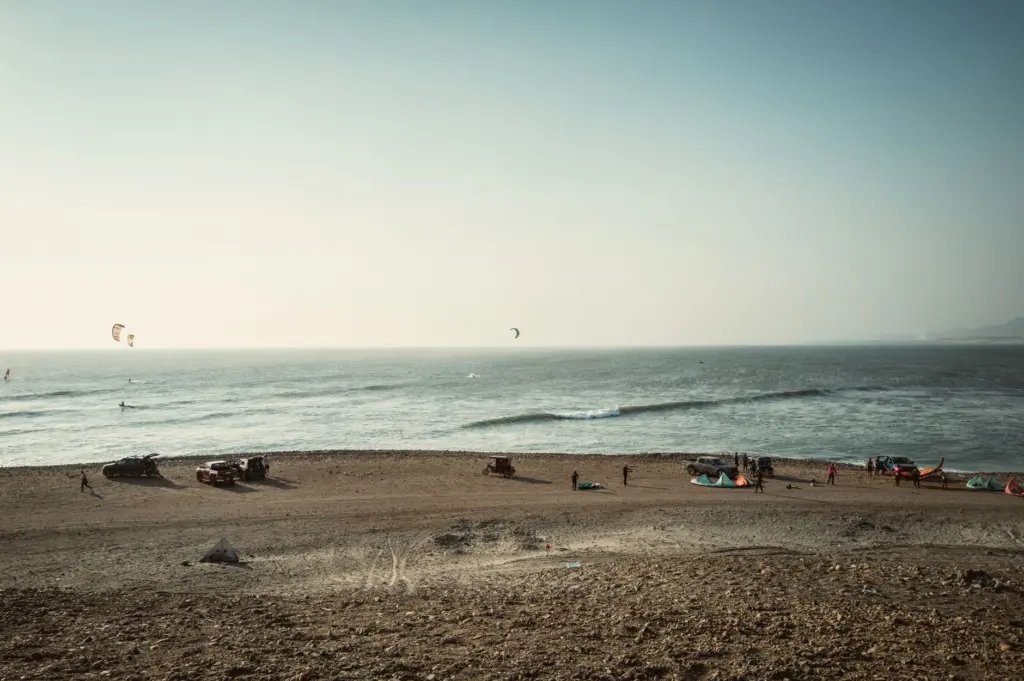
The simplest approach is to treat the exit point as the meeting point and arrange transport from there. The Oahu guide shows how location-specific this can be: for the Waimanalo to Kailua run, Extreme Oahu says to park on the road just west of Kaiona Beach Park. Check parking and access for both ends in advance rather than assuming a beach car park will be available.
- Agree who drives. Decide in advance who stays on land, which vehicle goes where and who collects gear.
- Fix a meeting point. Name the exit beach and a fallback landing in case someone comes ashore early.
- Agree a check-in method. Everyone, on the water and on land, should know how a rider is confirmed as landed.
Support vessel or support crew
Extreme Oahu’s advice is blunt: be prepared and go with a group or support crew. A support vessel following the rider is one form that crew can take, and it suits long or exposed runs where landing early is not an option. A land crew suits routes where the shoreline is accessible for the whole distance. Whichever you choose, give the crew a copy of the route, the exit points and the expected timing.
Skills a rider needs before a long downwinder
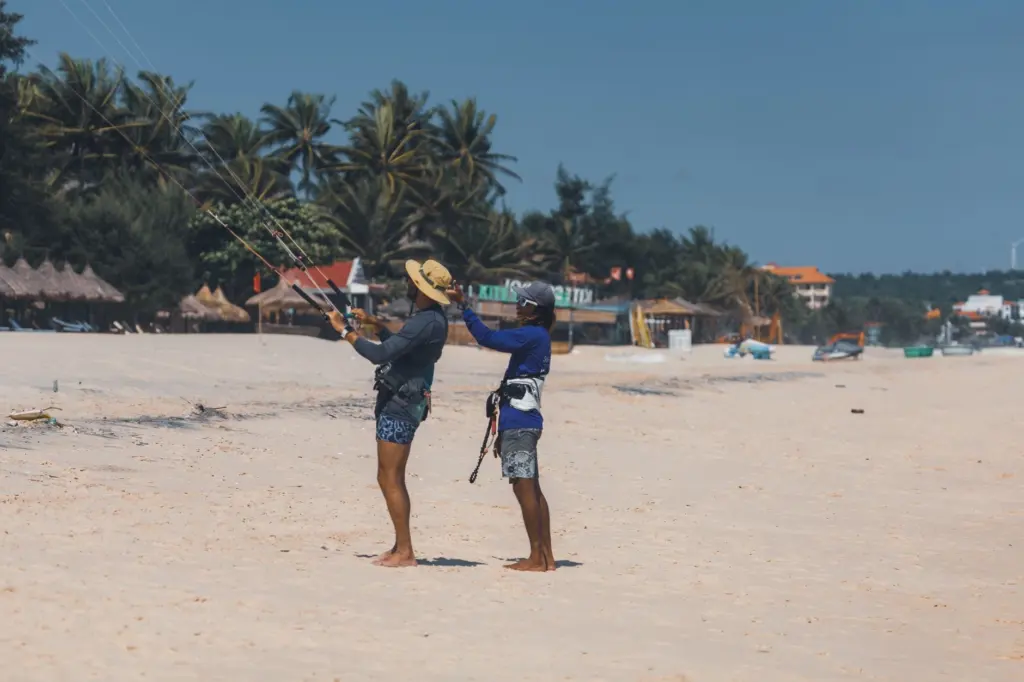
A rider needs to be a proficient kiter before attempting a long downwinder. Extreme Oahu says exactly that, and it rates the Laie to Sunset Point run as experts only. Treat the strongest rating on a route as a real limit, not a challenge.
Competence here means more than staying upright. Riders should be able to control the kite in the wind range of the day, ride in open water away from the beach and stay in control when conditions shift. Action Sports Maui calls kiteboarding a technical sport with a steep learning curve, which is why instruction is worth taking before any long run. A rider who is still working on basics should join a short, supported session first and leave long open-water routes until later.
- Suits a downwinder: riders who are proficient in the kite and comfortable in open water and swell.
- Wait or choose a shorter run: riders still learning control, or anyone who has not ridden in the wind and swell the route calls for.
Safety checks when there is no boat
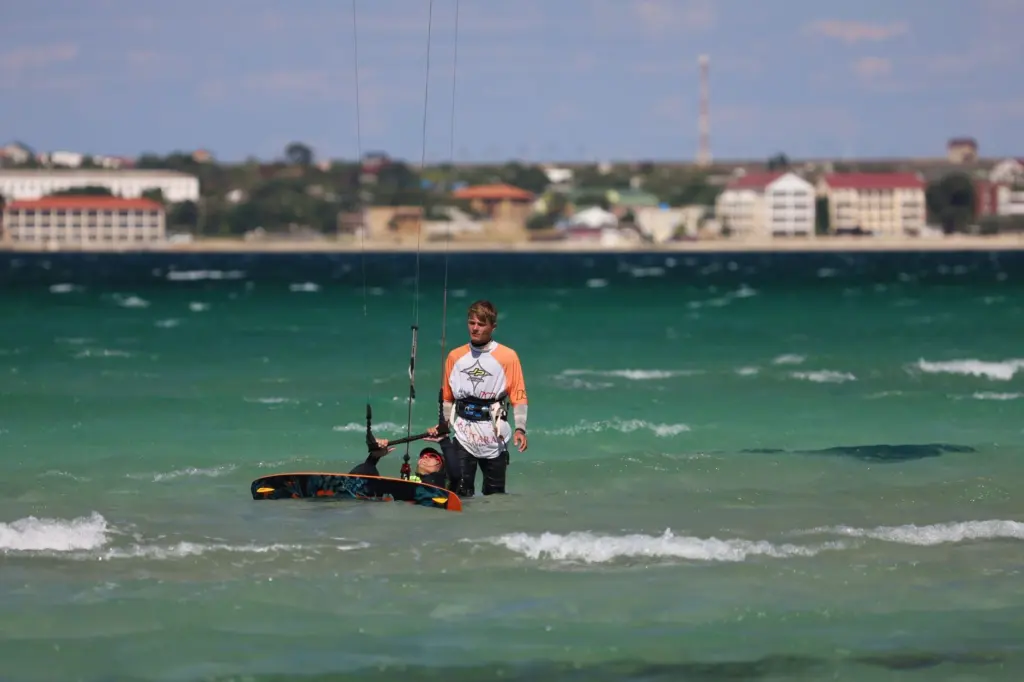
Without a boat, safety rests on the group, the route choice and a few disciplined habits. The first check is the group itself: the guidance is to go with others or a support crew, not alone.
On the water
Plan the line so you clear islands by 1/3 to 1/2 mile downwind, as Extreme Oahu advises, because of the wind shadow they cast. Riders also need to keep clear of each other. One kite-safety guide states that riders must keep at least 50 m away from other kiters when turning or doing tricks, so spread the group out rather than riding in a bunch.
At launch and landing
Before launching or landing, look in all directions and check that nothing is hazardous around you, as this right-of-way guide advises. The same guide says kiting in the take-off and landing zone is not permitted, so plan to launch and land beside it rather than in it.
Troubleshooting common problems
- The forecast is outside the route’s range. Wait. Each Oahu route above is tied to a wind range and direction, and a day that falls outside it is a different route.
- Swell is bigger than planned. Pick a different day or a shorter run. Laie to Sunset Point is already a summer-only run because winter swell is too large.
- The wind drops behind an island. This is the wind shadow. Stay downwind of the island by 1/3 to 1/2 mile, as the local guide advises.
- A rider needs to stop early. Head for the fallback landing you marked on the map and tell the crew straight away, so that no one is left waiting at the exit point.
- The pickup vehicle is not at the exit. Agree a meeting point beforehand, and name a second one so that everyone knows where to go.
Frequently asked questions
Who has right of way at launch and landing?
Kiters who are starting and landing their kites have the right of way, according to a right-of-way guide for kitesurfers. Give them space and keep clear of the take-off and landing zone.
What wind and water suit kitesurfing?
Action Sports Maui says kites like medium to strong wind, 10-25 miles per hour, and shallow water a few feet deep. Specific downwinder routes can ask for more narrowly defined conditions, so use the route’s own guidance too.
How long does it take to learn enough kiteboarding for a downwinder?
Basic skills can be learned in a week or two, according to Action Sports Maui, and most people will be riding upwind in 6 to 8 weeks. A long downwinder asks for more than the basics, so build experience before attempting one.