| Yacht attribute | Typical value | Planning use |
|---|---|---|
| Catamaran draft | Often less than 1.2 m | Shallow draft widens the choice of anchorages close to a launch beach. |
| Catamaran width | Often almost half the boat’s length | A wide beam gives deck room for gear and a seating area, so ask for the deck layout before booking. |
| Catamaran passenger capacity | Smallest up to 4 people; largest 12 or more | Match berths to the whole group, including non-riders and any crew. |
| Source of stability | Widely spaced hulls, not a keel | A steadier platform suits rigging, storing boards and moving around on deck. |
Figures follow a catamaran design overview and a charter guide on choosing a catamaran.
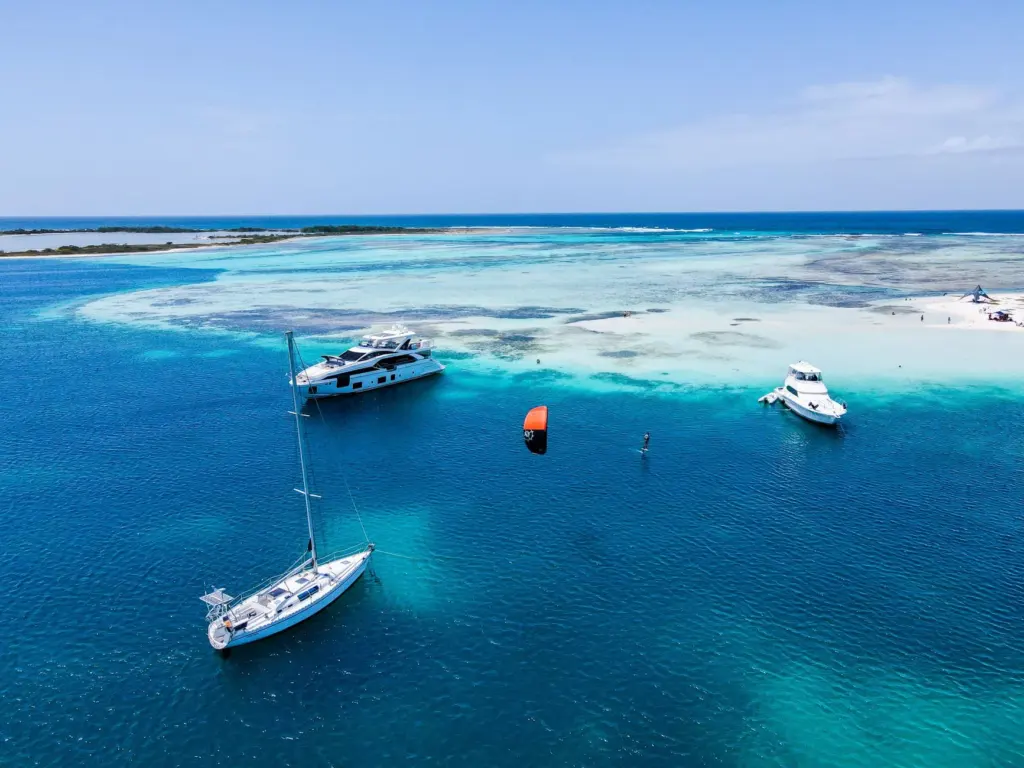
A kitesurfing mothership expedition works best on a stable, shallow-draft yacht anchored upwind of a clear launch area, with every rider able to drift back to the swim platform.
The yacht is the base camp: it provides beds, a galley, storage and a platform for the tender. For the rescue side of the operation, read about the support boat for kitesurfing expedition planning. For the wider picture of how groups organise trips, see the kitesurfing team expedition hub.
Before booking: catamaran or monohull
For a live-aboard kite trip, a catamaran is usually the better base. It stays level and its draft lets it anchor in shallow water near a launch spot. A monohull is a sensible choice only when it is the boat available in your region and you accept less deck stability and less rigging room.
Why a catamaran suits a kite base
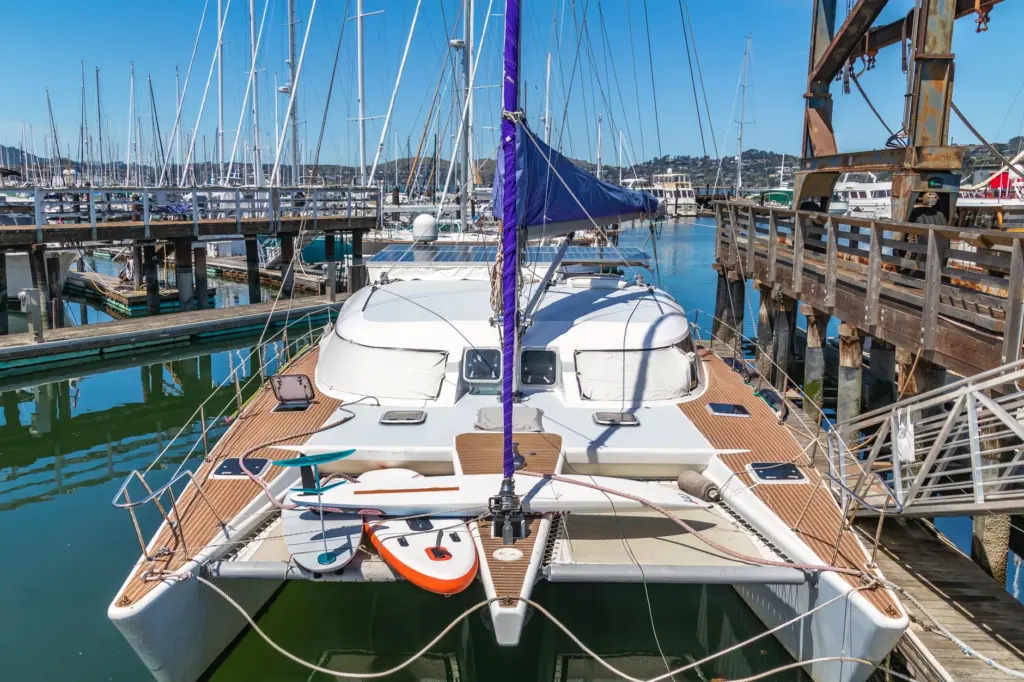
A catamaran owes its stability to the geometry of its widely spaced hulls, and its draft is often less than 1.2 m. Both matter on a kite trip. The stable deck is easier to work on when you are handling lines and boards. The shallow draft lets you tuck closer to a beach than a deep-keeled boat can.
What a monohull offers
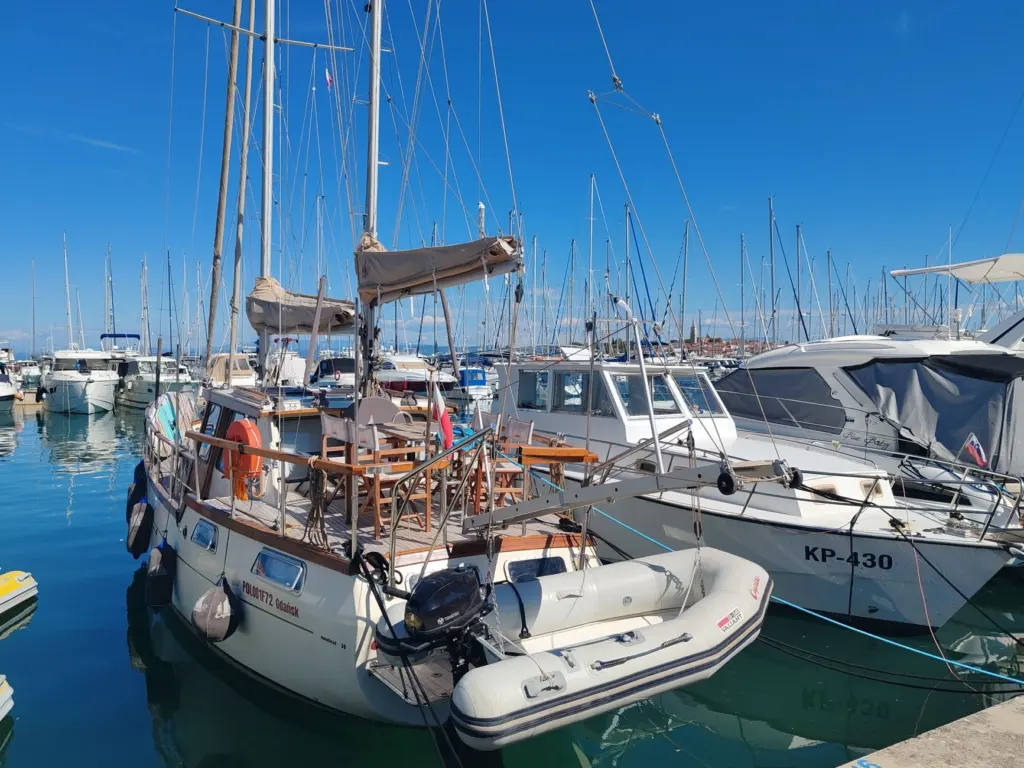
The same source describes a monohull as relying on a heavy keel under the hull for stability, which means the boat heels rather than sitting flat. That is a trade-off for deck work, not a safety verdict. On a typical 40-foot cruiser, you will be fighting the mast, shrouds and anchor windlass while rigging, so check how much clear deck the boat really has.
Guests, cabins and gear space
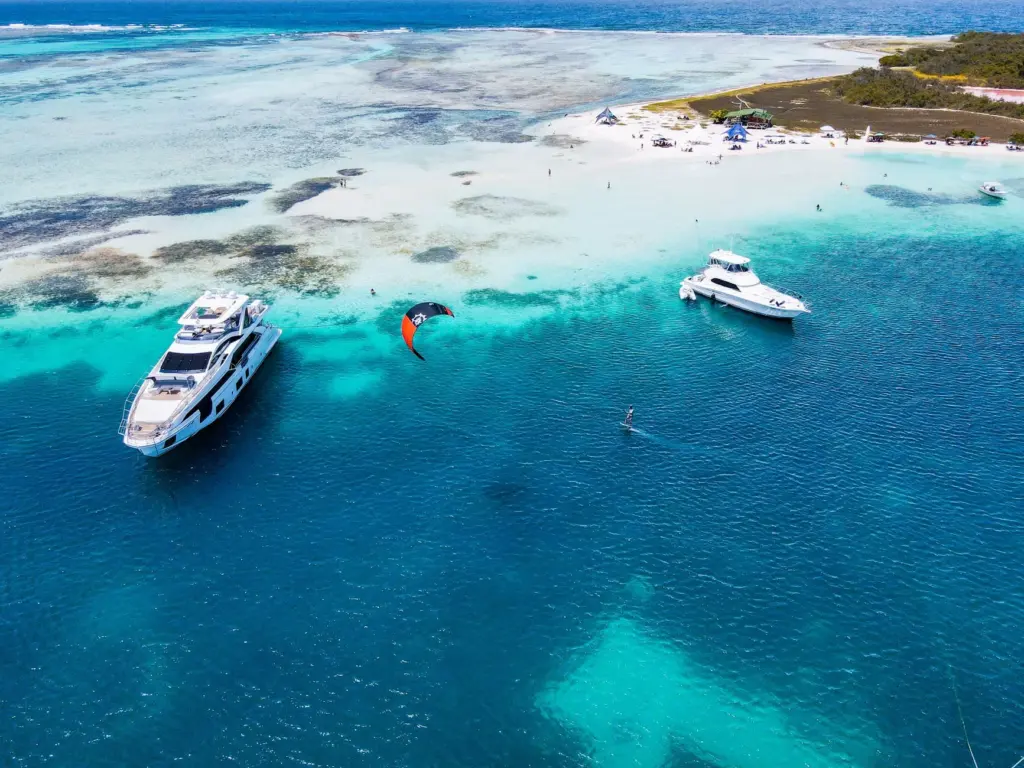
Charter catamarans range from the smallest, which accommodate up to 4 people, to the largest, which take 12 or more, according to a charter guide on choosing a catamaran. Those figures count people aboard, not riders. Plan the rider group first, then add anyone who will stay on the boat.
At the top end of the market, one broker lists a 73 m Feadship with 12 guests in 7 cabins from $800,000 per week. That is a motor yacht, not a catamaran, and it shows that the same 12-guest ceiling can come with a very different price and boat. For most groups, the practical question is how the cabins are laid out and whether the galley can feed everyone aboard, so ask the charter company for the layout plan before committing.
Kite gear is less demanding than the people. Most kite gear is highly compressible and fits easily into a standard cockpit locker or a spare cabin. Give boards and bars a dry, fixed place so the cockpit stays clear for meals and for rigging.
Choosing the anchorage
Anchorage choice decides whether the yacht is a convenient base or a daily logistics problem. The easiest setup is a marina physically right next to a launch beach. Riders can walk to the water and the tender becomes a backup rather than the main transport.
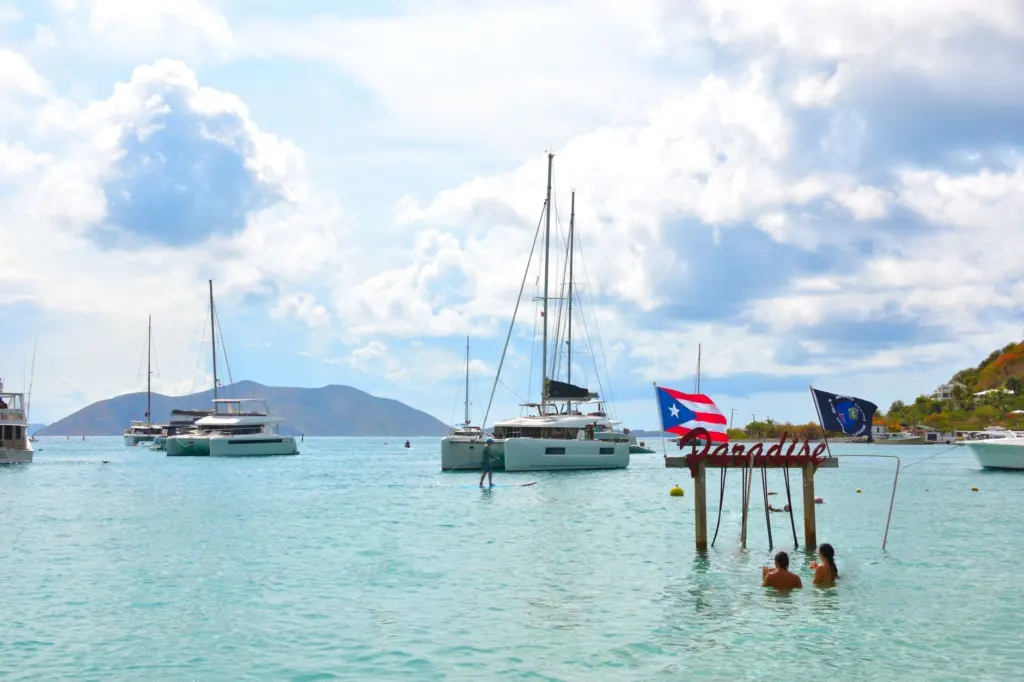
When no marina sits beside the beach, anchor where the tender run is short and the boat can swing without crowding the launch area. A catamaran’s shallow draft helps here. Remember the yacht itself disturbs the wind: the hull, sprayhood and bimini create a massive dead zone of turbulent air directly behind the swim platform. Pick an anchorage where the wind arrives clean across open water, not through the boat.
Launching and landing around a moored yacht
Riders launch and land to the side of the yacht, never behind it, and they stay upwind of it. You cannot launch a kite directly behind the boat, because that is the turbulent zone. Always stay upwind of the boat, and drift the kite and lines well out to the side, clear of the wind shadow.
- Check the swing. Confirm which way the yacht lies at anchor and where the wind shadow falls before anyone rigs.
- Rig on the cockpit or in a clear area. Keep lines away from the mast, shrouds and windlass.
- Move the kite to the side. Let it drift out well clear of the dead zone before launching.
- Ride upwind of the boat. Keep the yacht downwind of you for the whole session.
- Plan the return. Use the platform as the landing point, as described below.
The return needs thought, because a rider heading downwind has little margin. You must be able to drift or slowly paddle downwind back to your own swim platform. This is the logic of downwind kiteboarding from a yacht: the boat is the finish line, so start upwind of it. A floating fender line trailed 10 to 15 meters off the stern gives a rider in the water something to reach.
Tender use and wind limits
The tender is the link between the mothership and the water, so treat it as a ferry first. It carries riders and gear from yacht to launch beach when the yacht cannot anchor beside it. Its limits matter. The same source warns against trying to rescue someone against 20+ knots of wind in a tiny inflatable dinghy with a 2.2HP outboard. A small tender suits calm ferrying, not heavy-wind recovery. For recovery work, see the support boat for kitesurfing expedition guide.
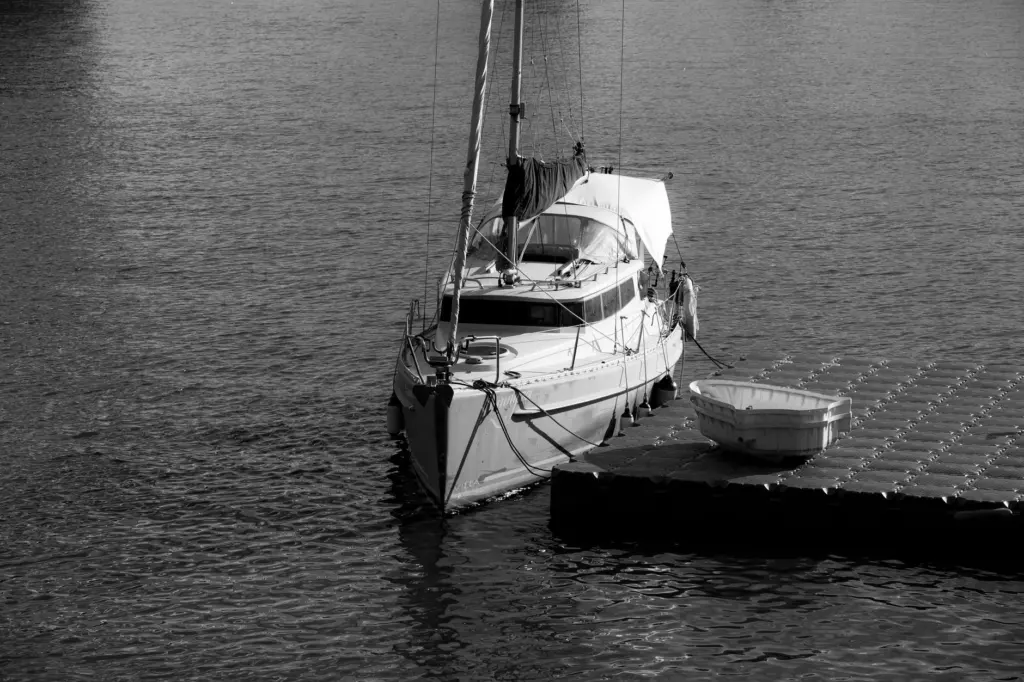
Wind also affects whether the yacht can be left alone while everyone rides. 18 to 20 knots is enough for most wind sports, and the yacht needs a good anchor, chain and snubber to hold in that range. Never leave the yacht unattended in high winds unless you have absolute trust in your anchor and snubber. If you have any doubt, keep a crew member aboard. Assigning that responsibility is part of the kitesurfing expedition safety officer role.
Troubleshooting common problems
- The kite loses power on launch. You are probably too close behind the yacht. Move the kite and lines well out to the side, clear of the turbulent air from the hull, sprayhood and bimini.
- Riders cannot get back to the boat. They have drifted too far downwind. Start upwind of the swim platform and keep the yacht downwind so the drift back is manageable.
- Deck is too cramped to rig. Rigging near the mast, shrouds and windlass is awkward. Rig in the cockpit or the clearest deck area and keep lines away from fittings.
- Tender is struggling in strong wind. A small outboard is not a rescue tool in heavy wind. Use it for calm ferrying and bring in a more capable boat for recovery.
- The anchorage feels uncertain. Do not leave the yacht unattended. Stay with it, or move to a marina near a launch beach.
Frequently asked questions
Is a catamaran or monohull better for a live-aboard kite trip?
A catamaran is usually the better choice. It gets its stability from widely spaced hulls and has a shallow draft, often less than 1.2 m, so it can anchor closer to launch spots. A monohull relies on a heavy keel and heels.
How many guests and riders fit on a typical charter yacht?
The smallest charter catamarans take up to 4 people and the largest take 12 or more. Those figures count all guests, so work out your rider group first and then add anyone who will stay aboard.
How do riders launch and land kites around a moored yacht?
They launch to the side, never directly behind the boat, and stay upwind of it. They must be able to drift or paddle back to the swim platform. A fender line trailed 10 to 15 m off the stern helps a rider in the water.
Where does the kite gear go on board?
Most kite gear is compressible, so it fits in a standard cockpit locker or a spare cabin. Keep it dry and fixed so the cockpit stays clear.
Can the yacht be left at anchor while everyone rides?
Only with a trusted anchor, chain and snubber. Wind of 18 to 20 knots is enough for most wind sports, but the yacht should not be left unattended in high winds unless you have absolute trust in that setup.